
Product Short Description
Product Name
Yokogawa CENTUM CS 1000 Distributed Control System
Product Introduction
Yokogawa CENTUM CS 1000 is a small- and medium-scale distributed control system for production control, monitoring and engineering. It combines human interface stations, field control stations and a control network to execute continuous and batch process control.
Description
Technical Specifications
Monitored tags: 8000 maximum
Stations: 24 maximum in one system
Minimum configuration: one Human Interface Station, one Field Control Station, one VLnet control bus
Control bus: VLnet, 10 Mbps, token-passing, 10BASE2 logical base, Vnet-compatible architecture
Control bus distance: up to 20 km with fiber-optic repeaters
HIS platform: IBM PC/AT-compatible PC, Windows NT/Windows-based operator and engineering environment
FCS CPU options: basic and enhanced controller models, synchronous hot-standby duplex CPU available
I/O nests: two or five nests selectable by system configuration
I/O connection: direct I/O modules to FCS without external signal conditioners in standard configurations
Redundancy options: CPU, power supply, I/O modules and control bus can be specified as redundant
Subsystem communication: PLCs and data-acquisition equipment connect through communication interface modules
Functional Features
Function-block engineering provides PID, selector, calculator, sequence, SFC and panel functions. The HIS delivers graphical mimics, hierarchical alarm management, trend display and Windows-based operation. The FCS executes regulatory and sequential control with optional duplex CPUs for seamless takeover during faults. VLnet carries process data, messages and control signals, while Ethernet can be used for engineering and information exchange. Communication I/O separation allows PLC or subsystem data to be used by control functions without rewriting function blocks.
Application Scenarios
Small refineries and petrochemical units, chemical batch and continuous plants, power auxiliary systems, water and wastewater treatment, food and beverage process lines, pharmaceutical utility systems, pilot plants and regional control rooms requiring centralized DCS functions with moderate tag counts.
Performance Parameters
System performance depends on tag count, FCS CPU model, control execution interval, I/O nest loading and VLnet traffic. The architecture supports 8000 monitored tags and 24 stations for mid-size applications. Duplex FCS CPUs run synchronously so control computation continues during a processor failure. I/O update rates are governed by FCS task周期, module type and engineering database loading.
Material Composition
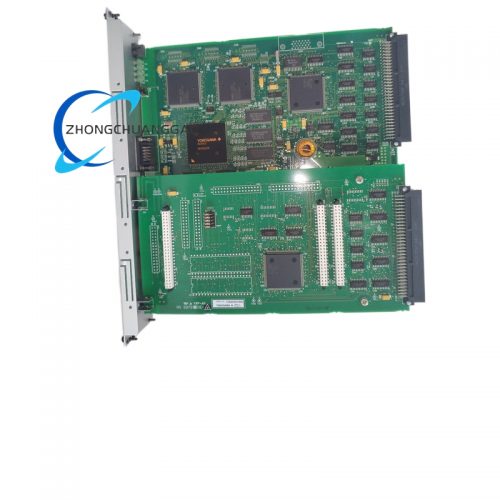
HIS uses industrial PC or console hardware with display, keyboard, mouse and PCI control-network interface. FCS uses metal/nested rack hardware with CPU cards, power cards, VLnet coupler cards, battery backup units, backplane and I/O module printed circuits. I/O modules use industrial-grade analog/digital conditioning components, relays or solid-state output devices according to card type.
Structural Characteristics
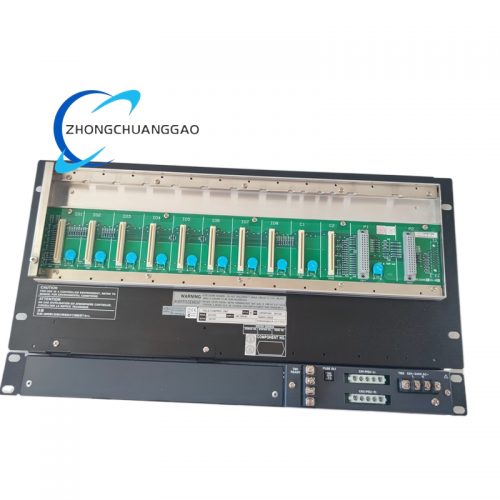
The system is divided into HIS for operation and engineering, FCS for real-time control, and VLnet for station communication. FCS nests house CPU, power, VLnet coupler, battery and I/O modules on a common backplane. Optional redundancy installs duplicate CPU, power, coupler and I/O paths. HIS consoles may be desktop, open-console or enclosed-console builds with CRT/LCD operator screens.
Working Principle
Field transmitters and switches connect to FCS I/O modules. The I/O modules convert signals and send process values to the CPU. Control function blocks execute PID, sequence or calculation logic according to the engineering database. The CPU writes output commands to I/O modules for valves, drives and alarms. VLnet transfers process data, alarms and setpoints between FCS and HIS. The HIS presents operator graphics, acknowledges alarms, logs trends and performs engineering downloads.
Installation Requirements
Install HIS PCs in a controlled room with stable power, UPS and adequate ventilation. Install FCS nests in a grounded control cabinet with clearance for wiring and maintenance. Use Yokogawa-approved VLnet cable, repeaters and terminators; apply fiber media for long-distance or electrically noisy runs. Configure PCI control-network cards according to HIS hardware requirements. Ground shields at the designated DCS earth point and separate signal cables from high-voltage power cables.
Usage Precautions
Energize FCS power and VLnet before starting HIS engineering functions. Verify redundant CPU synchronization, power-diode isolation and I/O module addressing before placing loops in automatic mode. Do not modify function-block parameters online without proper operator/engineering authority. Maintain cabinet temperature, humidity and dust conditions within Yokogawa FCS limits. Back up the system database, firmware and I/O configuration before hardware replacement.
Reviews
There are no reviews yet.