
Product Short Description
Product Overview:
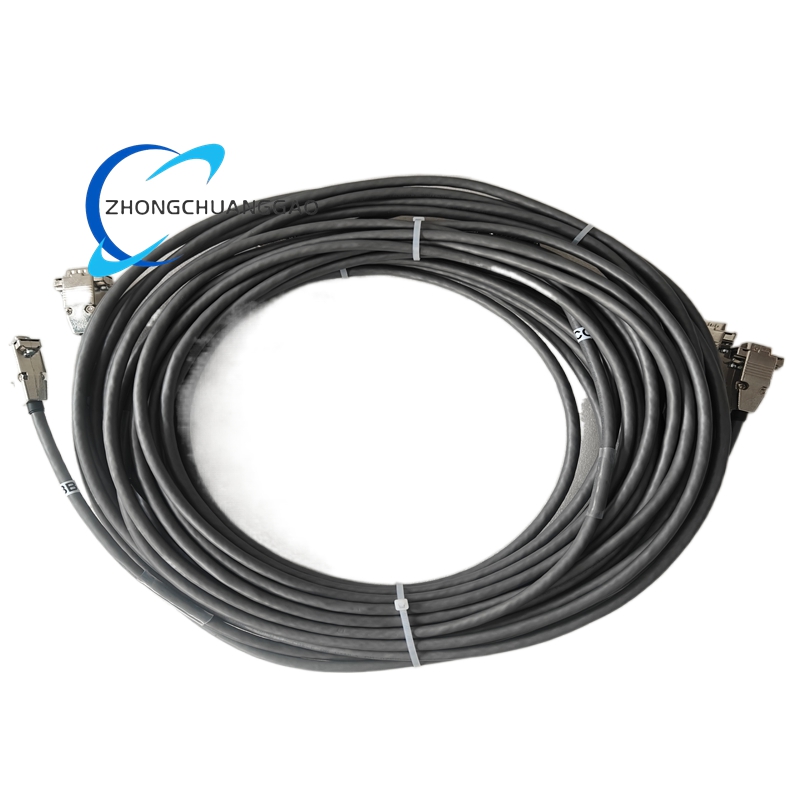
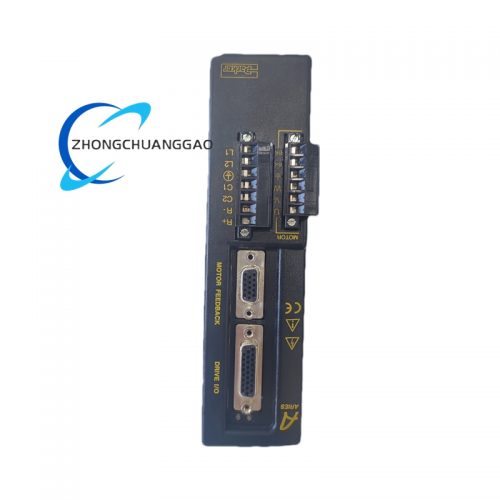
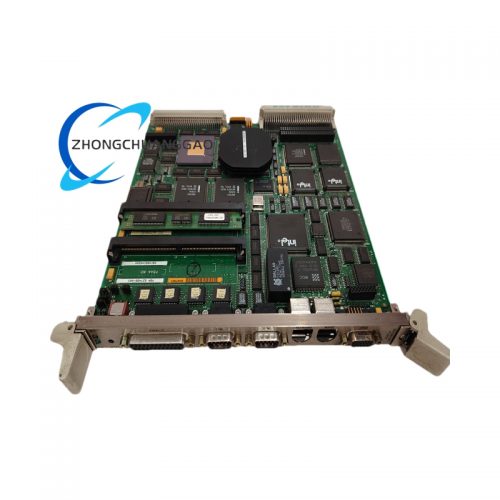
The Tricon 9000-025 is a safety-certified programmable logic controller (PLC) module from the Tricon 9000 Series. It is a triple modular redundant (TMR) processor designed for Safety Instrumented Systems (SIS) in hazardous industrial environments. The unit executes safety logic to bring a process to a safe state when predetermined conditions are violated. It is SIL 3 certified and used for emergency shutdown (ESD), fire and gas detection, and critical process protection.
Description
Product Category: Safety Instrumented System (SIS) Controller — Triple Modular Redundant (TMR) Processor Module
Application: Emergency shutdown, fire and gas systems, burner management, turbine control, reactor protection
Function:
Executes safety logic programs with triple modular redundancy to detect hazardous conditions and initiate protective actions (shutdown, isolation, venting) within a certified response time. All three processors execute the same program simultaneously; a 2-out-of-3 (2oo3) voting architecture ensures continuous operation even if one processor fails.
Technical Specifications:
| Parameter | Specification |
|---|---|
| Part Number | 9000-025 |
| Manufacturer | Schneider Electric / Triconex |
| Series | Tricon 9000 |
| Module Type | Central Processing Unit (CPU) — Safety Controller |
| Redundancy Architecture | Triple Modular Redundant (TMR) — 2oo3 Voting |
| Processor Type | 32-bit RISC microprocessor |
| CPU Clock Speed | 50 MHz |
| Program Memory | 2 MB flash memory (non-volatile) |
| Data Memory | 512 KB RAM (battery-backed) |
| I/O Capacity | Up to 30 I/O modules (15 per bus) |
| Communication Ports | 2× Tricom (TriBus), 1× Modbus RTU, 1× Ethernet (optional) |
| Communication Protocols | Tricom, Modbus RTU (Master/Slave), Ethernet/IP (with option card) |
| Program Execution Time | < 10 ms per scan cycle (typical) |
| Safety Response Time | < 50 ms ( certified for SIL 3 ) |
| Digital Inputs | 24 VDC sinking/sourcing (configurable per channel) |
| Digital Outputs | 24 VDC / 120 VAC (dry contact relay or solid-state) |
| Analog Inputs | 4–20 mA, 0–10 VDC, 1–5 VDC, RTD, TC (per module) |
| Analog Outputs | 4–20 mA, 0–10 VDC (per module) |
| Operating Voltage | 24 VDC nominal (20–28 VDC range) |
| Power Consumption | 12 W typical (per module) |
| Operating Temperature | 0°C to 60°C (32°F to 140°F) |
| Storage Temperature | -40°C to 85°C (-40°F to 185°F) |
| Relative Humidity | 5% to 95% non-condensing |
| Vibration | 5 g (operating), 15 g (survival) |
| Shock | 30 g (operating), 50 g (survival) |
| Enclosure Rating | IP20 (indoor use only) |
| Mounting | DIN rail (35 mm TS 35) or panel-mount |
| Dimensions (approx.) | 145 mm × 130 mm × 110 mm (5.7 in × 5.1 in × 4.3 in) |
| Weight (approx.) | 0.9 kg (2.0 lb) |
| Certification | SIL 3 (IEC 61508), SIL 2 (IEC 61511), FM, CSA, ATEX, IECEx, TÜV, GL |
| Compliance | IEC 61508, IEC 61511, ISA 84.01, NFPA 85, API RP 554 |
| Hazardous Area Classification | Class I, Division 2 (Group A, B, C, D) |
| Failure Rate (PFDavg) | < 1 × 10⁻³ (SIL 3 certified) |
| MTBF | > 200,000 hours |
| MTTR | < 1 hour (hot-swappable modules) |
| Diagnostic Coverage | > 99% (internal diagnostics + online testing) |
Material Composition:
| Component | Material |
|---|---|
| Housing | Zinc die-cast alloy with powder-coat finish (RAL 7035) |
| Front Bezel | ABS plastic with UV-resistant coating |
| PCB | FR-4 glass epoxy with conformal coating (IPC-CC-830 Class 3) |
| Connector Pins | Phosphor bronze with gold plating (30 µin minimum) |
| Terminal Blocks | PA66 nylon with brass threaded inserts |
| Internal Heat Sink | Aluminum 6061-T6 with anodized finish |
| DIN Rail Clip | Zinc-plated cold-rolled steel |
| Internal Wiring | PTFE (Teflon) insulated wire, 200°C rated |
| Battery (RAM backup) | Lithium CR2032 (3V, 10-year life) |
| LED Indicators | GaN (Gallium Nitride) high-brightness LEDs |
| Fan (if applicable) | Ball-bearing brushless DC fan (optional cooling module) |
Structural Features:
- Triple modular redundant CPU — three independent processors in one module, each executing the identical safety program
- 2oo3 voting architecture — output is valid only when at least 2 of 3 processors agree
- Hot-swappable I/O modules — modules can be replaced without shutting down the system
- Tricom dual-redundant communication bus — two independent communication paths for zero-downtime data exchange
- Front-panel LED indicators — Power (green), Run (green), Fault (red), Communication (amber), I/O Status (per channel)
- Modular I/O rack — accepts up to 15 I/O modules per bus (30 total with dual bus)
- DIN rail or panel-mount — fits standard 35 mm TS 35 top-hat rail or 19-inch rack via adapter
- Battery-backed RAM — retains program and data during power loss for up to 72 hours
- Conformal-coated PCB — provides moisture and chemical resistance in harsh industrial environments
- Removable terminal blocks — allows field wiring without specialized tools
- Dual Tricom ports — primary and secondary communication buses for redundant fieldbus connectivity
- Modbus RTU port — for integration with DCS/SCADA systems (master/slave mode)
- Ethernet port (optional) — with add-on communication module for TCP/IP integration
Working Principle:
- The Tricon 9000-025 receives process signals from field instruments (pressure transmitters, temperature sensors, gas detectors, flame scanners) via analog and digital I/O modules.
- All three CPUs execute the same safety logic program simultaneously and independently.
- Each CPU produces an output decision (trip or no-trip) based on the input conditions and programmed logic.
- The 2oo3 voter compares the three outputs: if 2 or more CPUs agree on a trip condition, the system initiates the protective action.
- If one CPU fails or produces a different result, the voter ignores the outlier and continues normal operation — this is the core of TMR redundancy.
- The output signal is sent to final elements (solenoid valves, relay contacts, actuator drivers) to execute the safety function (shutdown, isolation, venting).
- Online diagnostics run continuously — the system detects CPU mismatches, I/O faults, communication failures, and power supply anomalies in < 10 ms.
- Upon detection of a dangerous fault (CPU failure, I/O fault, communication loss), the system automatically transitions to a safe state (all outputs de-energize or energize per fail-safe configuration).
- The battery-backed RAM preserves the program and data during power loss — the system resumes operation automatically when power is restored.
- The Tricom communication bus provides redundant data exchange between the controller and remote I/O racks — if one bus fails, the other takes over with zero data loss.
Key Advantages:
- SIL 3 certified (IEC 61508) — highest safety integrity level for process industries
- Triple Modular Redundant (TMR) architecture — 99.99% availability with zero single-point failures
- < 50 ms safety response time — fastest certified response in the SIS market
- Hot-swappable I/O modules — replacement without system shutdown
- Online diagnostics with > 99% coverage — detects faults before they cause failure
- Dual Tricom redundant communication — zero-downtime fieldbus connectivity
- Battery-backed RAM (72-hour retention) — no program loss during power outage
- Modbus RTU + Ethernet (optional) — seamless integration with DCS/SCADA
- SIL 3 PFDavg < 1 × 10⁻³ — meets the most stringent safety requirements
- MTBF > 200,000 hours — extreme reliability for critical applications
- IP20 indoor-rated — clean installation in control rooms and cabinets
- UL Listed / FM / CSA / ATEX / IECEx — globally recognized certifications
- 10-year battery life (CR2032) — no scheduled battery replacement during normal operation
- Conformal-coated PCB — resistant to moisture, dust, and chemical contamination
Applicable Industries:
| Industry | Application |
|---|---|
| Oil & Gas (Upstream) | Wellhead ESD, pipeline SCADA safety, separator shutdown |
| Oil & Gas (Downstream) | Refinery ESD, tank farm fire & gas, catalytic cracker protection |
| Chemical / Petrochemical | Reactor ESD, distillation column protection, storage tank safety |
| Pharmaceutical | Batch reactor safety, cleanroom HVAC shutdown, sterilizer protection |
| Power Generation | Boiler ESD, turbine trip, generator protection, fuel gas shutoff |
| Mining | Gas detection ESD, ventilation fan control, conveyor belt safety |
| Pulp & Paper | Digester ESD, recovery boiler protection, chemical recovery shutdown |
| Water / Wastewater | Chlorine gas ESD, pump station protection, SCADA safety |
| Marine / Offshore | FPSO ESD, LNG terminal safety, shipboard fire & gas |
| Nuclear (non-safety-class) | Balance of plant ESD, HVAC protection, fire suppression |
| Food & Beverage | Ammonia refrigeration ESD, dust collector shutdown, oven safety |
| Data Centers | Fire suppression ESD, HVAC shutdown, gas detection |
| Commercial Buildings | Fire alarm integration, HVAC safety, elevator control |
Compatible I/O Modules:
| Module Type | Part Number Range |
|---|---|
| Digital Input (24 VDC) | 9000-301, 9000-302, 9000-303 |
| Digital Output (24 VDC) | 9000-401, 9000-402, 9000-403 |
| Digital Output (120 VAC) | 9000-410, 9000-411 |
| Analog Input (4–20 mA) | 9000-501, 9000-502 |
| Analog Input (RTD/TC) | 9000-510, 9000-511 |
| Analog Output (4–20 mA) | 9000-601, 9000-602 |
| Analog Output (0–10 VDC) | 9000-610, 9000-611 |
| High-Speed Counter | 9000-701 |
| Communication Module (Tricom) | 9000-801 |
| Communication Module (Modbus) | 9000-802 |
| Communication Module (Ethernet) | 9000-803 |
| Power Supply Module | 9000-100, 9000-101 |
Compatible Software:
| Software | Function |
|---|---|
| Triconex TriStation 1131 | Programming, configuration, and diagnostic software |
| Triconex Safety Manager | Asset management, online diagnostics, event logging |
| Triconex Control Builder | Logic development and simulation |
| Triconex System View | Real-time monitoring and alarm management |
Installation Requirements:
- Mount on standard 35 mm TS 35 DIN rail in a clean, dry control room or cabinet
- Maintain minimum 50 mm (2 in) clearance above and below the module for heat dissipation
- Ensure ambient temperature remains between 0°C and 60°C (32°F to 140°F) at all times
- Connect 24 VDC power supply to terminals P+ and P− — use Schneider Electric Tricon 9000-100 power supply (redundant PSU recommended)
- Connect Tricom communication cables to terminals TC1+/− and TC2+/− — use shielded twisted-pair cable (120 Ω characteristic impedance)
- Connect Modbus RTU to terminals MB+ and MB− — use shielded twisted-pair cable, maximum 1200 m (3937 ft)
- Connect I/O modules to the I/O bus connector — ensure all modules are seated fully and locked
- Connect field wiring to terminal blocks — torque screws to 0.8 Nm (7.1 in-lbs) maximum
- Connect earth ground wire to chassis ground terminal — use minimum 10 AWG copper wire
- Verify all I/O modules are configured correctly in TriStation 1131 before commissioning
- Configure 2oo3 voting in the safety program — do not operate in 1oo1 (non-redundant) mode for SIL 3 applications
- Perform online diagnostic test after installation — verify all LEDs are green (no faults)
- Perform proof test per IEC 61511 — verify safety function operates within < 50 ms
Usage Precautions:
- Do not operate outside 0°C to 60°C range — internal components degrade above 60°C
- Do not apply voltage exceeding 28 VDC — overvoltage destroys input circuitry permanently
- Do not disconnect Tricom bus while system is running — loss of communication triggers safe-state transition
- Do not remove I/O modules under load — hot-swap only when module LED is green (no fault)
- Do not modify safety logic without re-certification — any program change requires SIL re-assessment per IEC 61511
- Do not ignore fault LEDs — any red LED requires immediate investigation before restart
- Do not use non-Triconex I/O modules — third-party modules void SIL certification
- Do not disable online diagnostics — diagnostic coverage must remain > 99% for SIL 3 compliance
- Perform proof test every 12 months per IEC 61511 — document results in safety management system
- Replace battery (CR2032) every 10 years — even if not depleted, schedule preventive replacement
- Do not block ventilation openings — overheating causes thermal shutdown and permanent damage
- Do not mix Tricon 9000 modules with Tricon 3000 modules — incompatible communication protocols
- Document all configuration changes in the safety management system per IEC 61511
- Verify Tricom bus termination — both ends of the Tricom bus must have 120 Ω termination resistors
- Do not connect Ethernet port without approved communication module — unauthorized modules void ATEX/IECEx certification
- Perform SIL verification after any hardware change — new I/O modules require updated PFDavg calculation
Cross-Reference / Equivalent Part Numbers:
| Manufacturer | Part Number |
|---|---|
| Schneider Electric / Triconex (OEM) | 9000-025 |
| Invensys (Legacy) | 9000-025 |
| Honeywell (Equivalent) | SM902 |
| Emerson / Fisher (Equivalent) | R421 |
| Yokogawa (Equivalent) | F3SPJC-C11 |
| Siemens (Equivalent) | S7-400H (functional equivalent, lower SIL) |
| ABB (Equivalent) | AC500-eCo (functional equivalent, lower SIL) |
| Rockwell (Equivalent) | GuardLogix 5580 (functional equivalent, lower SIL) |
Warranty:
Schneider Electric provides a 36-month (3-year) limited warranty from date of shipment against defects in materials and workmanship under normal operating conditions. Warranty covers repair or replacement of defective modules at no charge. Warranty does not cover damage from misuse, overvoltage, incorrect installation, unauthorized modifications, or acts of nature. Extended warranty options (60-month and 120-month) are available through Schneider Electric authorized distributors. Warranty registration is required within 30 days of installation via Schneider Electric’s online portal.
Service Life:
15 to 20 years under normal operating conditions with annual proof testing per IEC 61511. Replace at each major plant shutdown or when firmware reaches end-of-support. The unit is designed for 100,000+ operating hours with proper maintenance. The CR2032 battery should be replaced every 10 years as a preventive measure. All I/O modules should be inspected every 5 years for terminal corrosion and contact wear.
Documentation Reference:
- Tricon 9000 Series Installation Manual — Doc No. 041000-001 Rev. M
- Tricon 9000 Series Operation Manual — Doc No. 041000-002 Rev. L
- TriStation 1131 User Guide — Doc No. 041000-003 Rev. K
- Triconex Safety Manager User Guide — Doc No. 041000-004 Rev. J
- IEC 61508:2010 — Functional Safety of Electrical/Electronic/Programmable Electronic Safety-Related Systems
- IEC 61511:2016 — Functional Safety — Safety Instrumented Systems for the Process Industry Sector
- ISA 84.01:2004 — Safety Instrumented Systems for the Process Industry
- NFPA 85:2020 — Boiler and Combustion Systems Hazard Code
- API RP 554:2007 — Process Control Systems for Refineries
- Schneider Electric Application Note AN-9000-001: SIL Verification Guide
- Schneider Electric Application Note AN-9000-002: Tricom Network Wiring and Termination Guide
Reviews
There are no reviews yet.