
Product Short Description
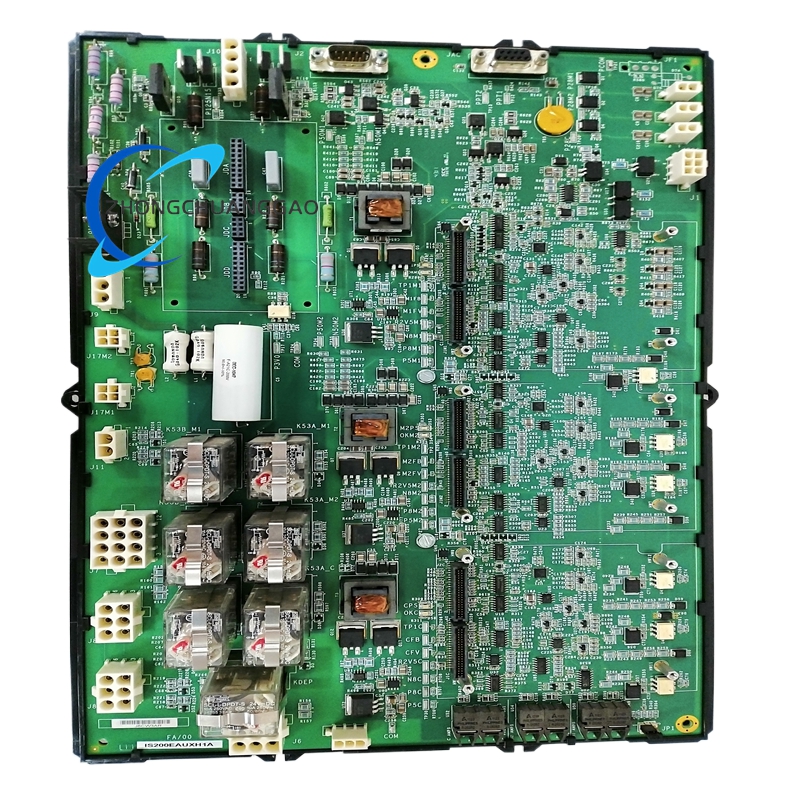
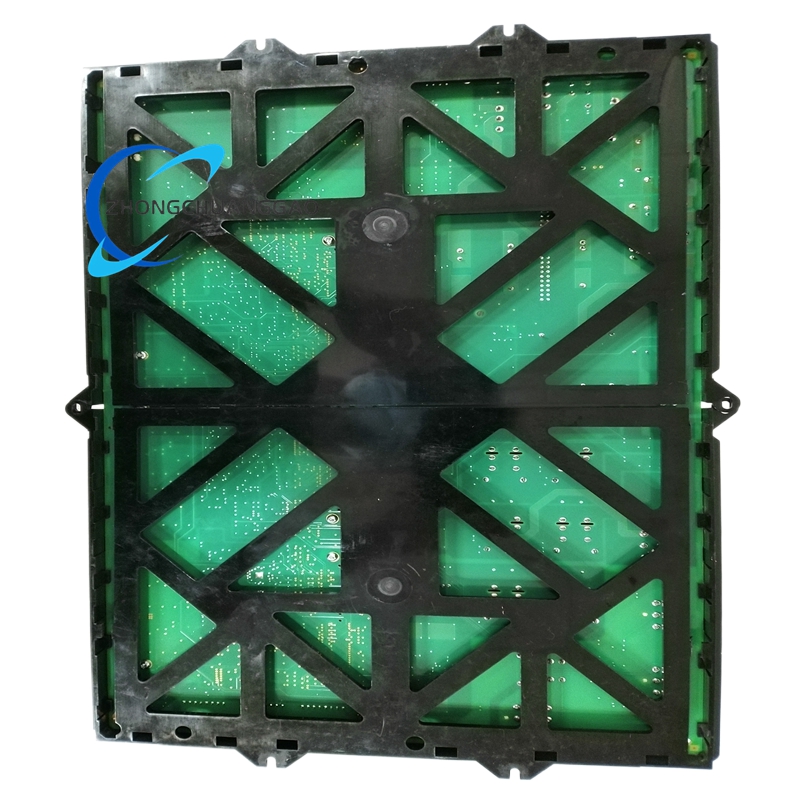
The GE IS200EAUXH1A is a high-reliability auxiliary I/O interface board belonging to the GE EX2100e excitation control system for large generators. It serves as the critical intermediate module connecting the main excitation controller to on-site sensors, actuators, and auxiliary devices. Designed for synchronous generator excitation control in power plants, it processes and transmits digital and analog signals to ensure stable, safe, and efficient operation of the excitation system. The board adopts surface-mount technology (SMT) and industrial-grade components, providing superior vibration resistance, electromagnetic interference (EMI) immunity, and long-term operational stability in harsh industrial environments.
Description
Technical Specifications
- Manufacturer: General Electric (GE)
- Model Number: IS200EAUXH1A
- Product Series: EX2100e (Enhanced Excitation Control System)
- Module Type: Exciter Auxiliary I/O Terminal Board
- Signal I/O Configuration:
- Digital Inputs: 16 channels (opto-isolated, 24 VDC)
- Analog Inputs: 4 channels (±10 VDC / 4–20 mA, 16-bit resolution)
- Relay Outputs: 8 groups of SPDT (5 A @ 250 VAC)
- Special Output: 41 VDC flashing output for thyristor control
- Communication Interface:
- High-Speed Serial Link (HSSL): Connects to the main EX2100e controller for real-time data exchange
- Serial Ports: RS-232 / RS-485 dual-channel support
- Protocols: Modbus RTU/TCP, PROFIBUS DP V1
- Power Requirements:
- Operating Voltage: 24 VDC ±10% (primary); 125 VDC (auxiliary)
- Power Consumption: 15 W (typical, full load)
- Environmental Ratings:
- Operating Temperature: -30°C to +65°C (-22°F to 149°F)
- Storage Temperature: -40°C to +85°C (-40°F to 185°F)
- Protection Class: IP20 (dust and solid object ingress protection)
- Physical Dimensions:
- Size: 233 mm × 128 mm × 45 mm (9.2″ × 5.0″ × 1.8″)
- Weight: 0.68 kg (1.5 lbs)
- Certifications: CE, UL 508, IEC 61800-5-1, RoHS
- Compliance: EN 61000-6-4 (industrial EMC standards)
Key Features
- Comprehensive Signal Processing: Integrates 16 digital inputs, 4 analog inputs, and 8 relay outputs to handle diverse sensor and actuator signals in excitation systems.
- High-Speed HSSL Communication: Ensures fast, reliable data exchange with the main EX2100e controller for real-time excitation regulation and monitoring.
- Isolated & Protected I/O: Opto-isolated digital inputs and relay outputs provide electrical isolation, preventing damage from voltage spikes and ground loops.
- High-Resolution Analog Conversion: 16-bit analog inputs deliver precise measurement of voltage, current, and other process parameters for accurate AVR (Automatic Voltage Regulator) control.
- Robust Industrial Design: SMT construction, wide temperature tolerance, and vibration-resistant components ensure reliable operation in power plant environments.
- Flexible Protocol Support: Compatibility with Modbus and PROFIBUS enables seamless integration with DCS, PLC, and SCADA systems for plant-wide monitoring.
- Hot-Swap Capability: Supports online replacement without system shutdown, minimizing maintenance downtime and enhancing system availability.
- Enhanced System Diagnostics: Provides real-time status monitoring and fault logging for I/O channels, communication links, and power supplies, simplifying troubleshooting.
Application Scenarios
- Thermal Power Plants: Controls excitation systems for steam turbine-driven synchronous generators, ensuring stable voltage output and grid synchronization.
- Hydroelectric Power Plants: Manages excitation control for hydro turbine generators, supporting variable-speed operation and reactive power regulation.
- Gas Turbine Power Plants: Integrates with gas turbine excitation systems for fast-response voltage control and grid frequency stabilization.
- Combined Cycle Power Plants: Serves as auxiliary I/O interface for multi-turbine excitation systems, coordinating control between steam and gas turbines.
- Industrial Cogeneration Facilities: Supports generator excitation control in refineries, petrochemical plants, and large manufacturing sites with on-site power generation.
- Grid Stability & Reactive Power Control: Critical for maintaining power factor and reactive power balance in transmission grids, supporting voltage regulation during load fluctuations.
Reviews
There are no reviews yet.