
Product Short Description
Product Overview
Germany-manufactured passive electrodynamic velocity sensor, adopting spring-mass mechanical vibration induction structure, used to measure vibration velocity amplitude of machinery housing, bearing pedestals and equipment casings, outputting analog voltage signal proportional to vibration velocity without external power supply requirement.
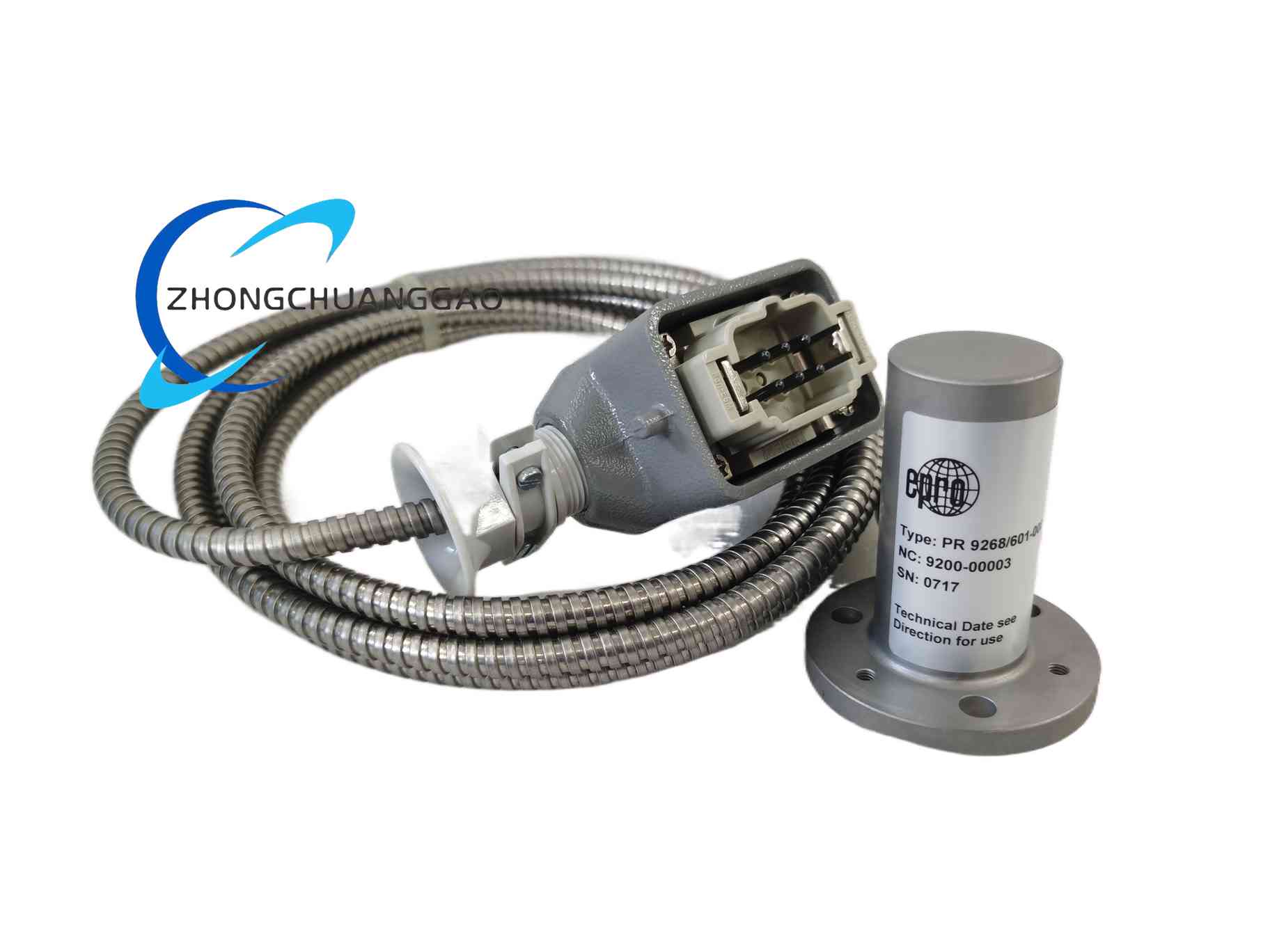
Description
Core Technical Specifications
- Measurement Physical Quantity: Vibration Velocity (mm/s)
- Standard Sensitivity (80Hz, 20°C, 100kΩ load): 28.5 mV/mm/s (±5% tolerance)
- Linear Measuring Range: ±1500 μm peak-to-peak vibration displacement
- Frequency Response Range (-3dB): 4 Hz ~ 1000 Hz
- Operating Ambient Temperature: -20°C ~ +100°C
- Allowable Humidity Range: 0 ~ 100% non-condensing
- Power Supply Requirement: Passive sensor, no external DC/AC power input needed
- Output Signal: Passive alternating analog voltage signal
- Mounting Structure: Standard M8 threaded mounting base for rigid fixing on equipment housing
6.4 Function Features
- Passive electrodynamic induction principle, self-generating vibration signal output, eliminating external power supply wiring cost and power failure measurement risk
- Spring-mass mechanical vibration pickup structure, excellent low-frequency vibration detection performance, capable of capturing low-speed fan, pump housing low-frequency vibration signals
- Wide 4~1000Hz frequency bandwidth, covering all common vibration frequency bands of industrial rotating equipment
- Compact cylindrical stainless steel housing, anti-corrosion, anti-vibration, easy rigid mounting on bearing pedestals and equipment casings
6.5 Working Principle
The internal structure consists of a fixed permanent magnet and a suspended coil mass block supported by precision metal springs. When the equipment housing vibrates, the sensor shell and internal permanent magnet vibrate synchronously with the equipment, while the coil mass block maintains relative static state due to spring damping inertia. The relative motion between the magnet and coil cuts magnetic induction lines to generate induced alternating voltage inside the coil; the voltage amplitude is strictly proportional to the vibration velocity of the measured equipment housing, realizing vibration velocity measurement output.
6.6 Material Composition & Structural Characteristics
- Outer Housing: 304 stainless steel cylindrical shell, fully sealed anti-corrosion structure
- Internal Magnetic Core: High-performance rare earth permanent magnet
- Vibration Pickup Coil: High-purity enameled copper coil wound on aluminum mass block
- Suspension Spring: Precision alloy elastic spring with stable damping coefficient
- Mounting Base: Integrated M8 external thread stainless steel fixed base
- Signal Cable: Oil-resistant PVC shielded signal cable
6.7 Application Scenarios
- Fan, blower, water pump bearing pedestal housing vibration velocity monitoring
- Medium and small power motor casing vibration detection
- Petrochemical plant reciprocating compressor housing vibration monitoring
- Wind turbine cabin mechanical equipment vibration protection measurement
6.8 Installation Requirements
- Rigidly fix the sensor via M8 thread base onto flat, smooth equipment bearing pedestal surfaces; add stainless steel mounting studs for uneven surfaces to ensure rigid contact between sensor base and measured equipment
- Install the sensor vertically or horizontally according to required vibration measurement direction (vertical/horizontal axial vibration); install separate sensors for multi-directional vibration measurement
- Route shielded signal cable with minimum bending radius ≥8 times cable outer diameter, avoid crossing high-voltage power cables to prevent electromagnetic interference
- Single-point grounding of cable shielding layer at signal acquisition cabinet end, floating grounding at sensor end to eliminate ground loop interference
6.9 Usage Precautions
- Strictly avoid heavy impact and falling of the sensor; internal precision spring suspension structure will be permanently deformed after impact, leading to sensitivity loss and measurement failure
- Do not install the sensor in environments with condensed water immersion and strong corrosive chemical gas; long-term corrosion will damage housing sealing and internal components
- The sensor cannot measure shaft displacement; it only detects housing vibration velocity signals, cannot replace eddy current displacement probes for shaft monitoring
- Do not arbitrarily cut or extend the sensor signal cable; cable length change will alter signal load impedance and reduce measurement sensitivity
Reviews
There are no reviews yet.