
Product Short Description
Product Introduction
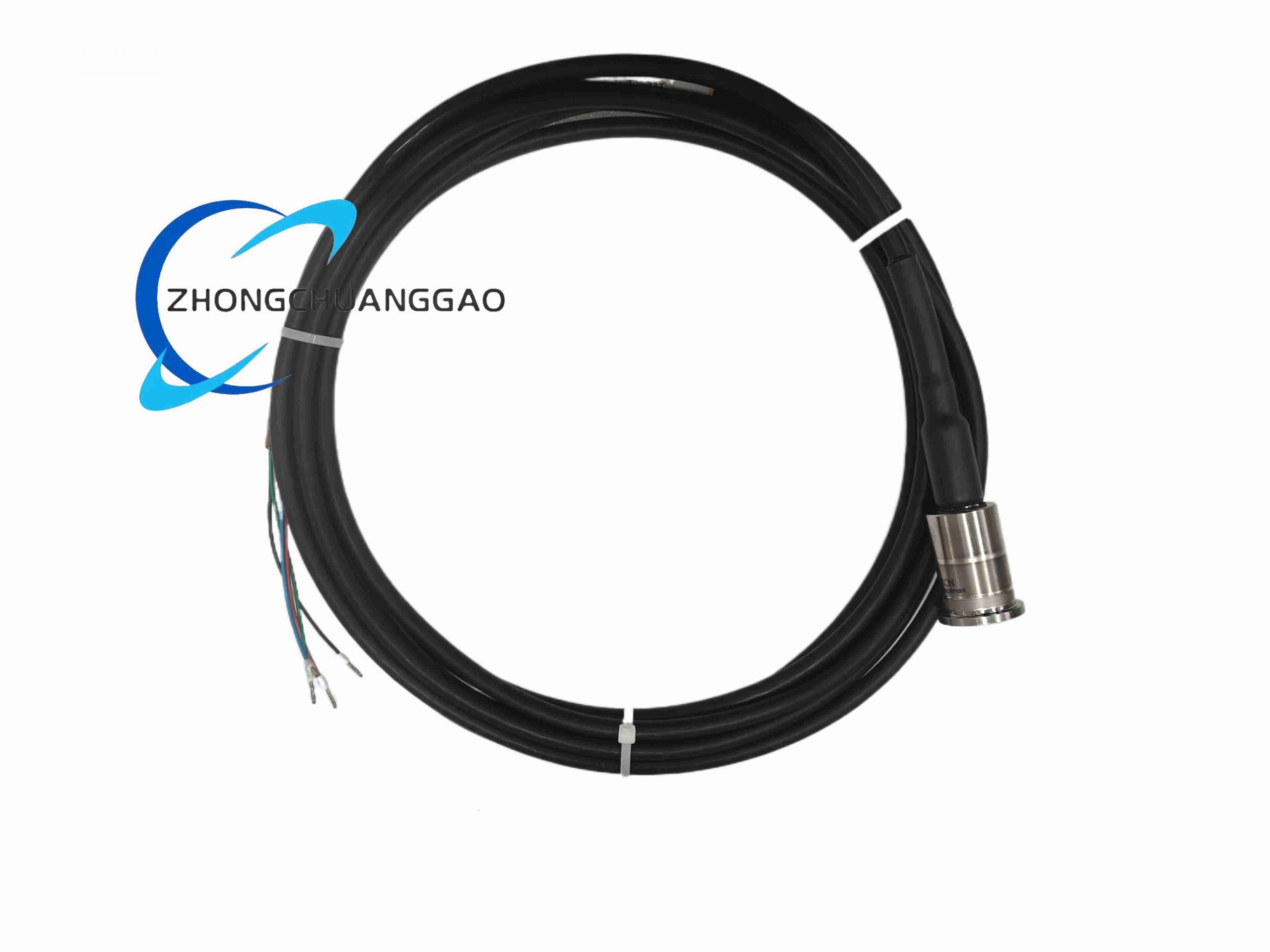
MAS2600 G10-05-01P is a fully welded submersible hydrostatic pressure sensor developed by Emerson for marine vessel ballast tanks, cargo oil tanks and industrial corrosive liquid storage tanks. The full titanium construction eliminates gasket and joint leakage risk, converting liquid hydrostatic pressure into standard analog level signal for tank gauging and draft depth continuous monitoring, certified by all international marine classification societies for shipboard critical measurement applicationsEmerson
Description
Technical Specifications
- Model Code Definition: G10=0–10mH₂O measuring range; 05=standard 4–20mA analog amplifier; 01P=standard submersible cable without built-in Pt100 temperature sensor
- Measuring Medium Range: 0.2 ~ 10 mH₂O hydrostatic liquid level depth
- Output Signal: 4–20mA DC two-wire analog loop output, linear corresponding to full measuring range
- Power Supply: Loop-powered 12VDC ~ 30VDC DC
- Measurement Accuracy: ±0.075% full scale; repeatability ±0.04% full scale
- Ambient Operating Temperature: -40°C ~ +85°C; medium liquid temperature -20°C ~ +125°C
- Protection Grade: Sensing probe IP68 fully submersible; amplifier junction box IP56 splash-proof
- Structural Welding Process: Full electron beam welded titanium housing without mechanical joints or sealing gaskets
- Cable Specification: Standard marine anti-corrosion polyurethane submersible signal cable, length configurable at factory
- Explosion Protection Certification: Ex ia IIC T4 Ga intrinsically safe for hazardous flammable liquid tank environments
Function Features
- Programmable measuring range via amplifier internal dip switches; zero and span calibration adjustable on-site without dedicated calibration equipment
- Built-in anti-corrosion oil-filled isolation layer between silicon strain gauge sensor and titanium diaphragm to prevent medium direct contact with sensing chip
- Overpressure automatic protection circuit; sensor recovers normal measurement after pressure exceeds 200% full range without permanent damage
- EMC full-spectrum surge suppression circuit for stable operation under marine vessel power system electromagnetic interference
- Hermetically sealed amplifier junction box with cable strain relief structure to prevent cable pull damage to internal wiring
- Factory calibrated linearity correction stored in non-volatile memory, retaining calibration data after power cycle
Performance Parameters
- Long-term stability drift: <0.025% full scale per year without mandatory annual recalibration
- Maximum allowable submergence depth: 12m liquid medium (200% rated measuring range)
- Analog output linearity error: ≤0.06% across full 0–10mH₂O span
- Marine Certification: DNV, GL, LRS, ABS, BV, RINA full classification society approval
Material Composition
- Sensing Probe Housing & Diaphragm: Grade 2 pure titanium, full electron beam welded
- Internal Sensing Chip: Silicon piezoresistive Wheatstone bridge strain gauge sensor
- Isolation Filling Medium: Low-viscosity inert mineral insulating oil, anti-corrosion, temperature stable
- Amplifier Junction Box Housing: Sea-water resistant reinforced polyester plastic
- Submersible Signal Cable: Polyurethane outer sheath, tinned copper shielded twisted pair inner conductor
Structural Features
- Cylindrical fully submersible probe structure, compact diameter for installation through small tank top manholes
- Separate split layout: Submersible titanium sensing probe connected via long cable to fixed wall-mounted amplifier junction box
- Cable strain relief gland structure at probe top to eliminate tensile force transmission to internal circuit
- All internal components sealed with silicone potting compound to resist seawater, chemical vapor and condensation corrosion
- Threaded mounting adapter optional for fixed installation on tank top penetration fittings
Working Principle
- Liquid medium hydrostatic pressure acts directly on titanium isolation diaphragm of submerged probe
- Pressure deformation transfers to internal oil-filled layer, evenly conducting pressure to silicon strain gauge Wheatstone bridge sensor chip
- Bridge resistance variation generates tiny differential electrical signal, transmitted through submersible cable to surface amplifier junction box
- Amplifier circuit executes temperature compensation, linear correction and range programming to convert raw signal to standard 4–20mA analog output for control system collection
- Intrinsically safe barrier circuit limits maximum loop current and voltage to meet hazardous area explosion-proof safety standards
Advantage Highlights
- Full titanium construction provides complete corrosion resistance against seawater, crude oil, brine and weak acid/alkali industrial liquid media
- Electron beam full welding eliminates gasket aging leakage failure point, extending service life to 10+ years under continuous submergence
- IP68 full submersible rating allows permanent placement at tank bottom without regular maintenance retrieval
- Global marine classification society certification meets all commercial ship and offshore platform tank gauging regulatory requirements
- Programmable measuring range single model adapts to multiple tank depth specifications, reducing spare part inventory quantity
Applicable Industries
Ocean-going cargo vessel ballast tank monitoring, offshore oil platform crude oil storage tanks, coastal chemical plant brine storage tanks, municipal underground sewage deep tank level measurement, port bulk liquid cargo terminal tank gauging systems
Installation Requirements
- Suspend vertically at tank bottom via stainless steel cable hanging fixture; horizontal placement prohibited to avoid measurement zero drift
- Cable routing maintains minimum 0.5m distance from vessel power cable trunking to reduce electromagnetic signal interference
- Amplifier junction box mounted on tank top wall above maximum liquid level to avoid liquid splash immersion
- Install cable weight sink at probe bottom to prevent floating caused by liquid flow impact
- Intrinsically safe safety barrier must be installed in control cabinet for deployment inside Class I hazardous liquid tanks
Usage Notes
- Regular quarterly inspection of cable outer polyurethane sheath for scratch damage; seawater penetration will corrode internal shield conductor
- Avoid direct probe contact with tank bottom solid sediment; sediment accumulation causes permanent measurement zero offset
- Do not apply tensile force exceeding 50N on submersible cable to prevent internal wire breakage
- Calibrate zero measurement point after tank full drainage and cleaning
- Prohibit use of strong acid solvent to clean titanium probe surface; fresh water flushing only for routine maintenance
-1-500x500.jpg)
Reviews
There are no reviews yet.