
Product Short Description
Product Introduction
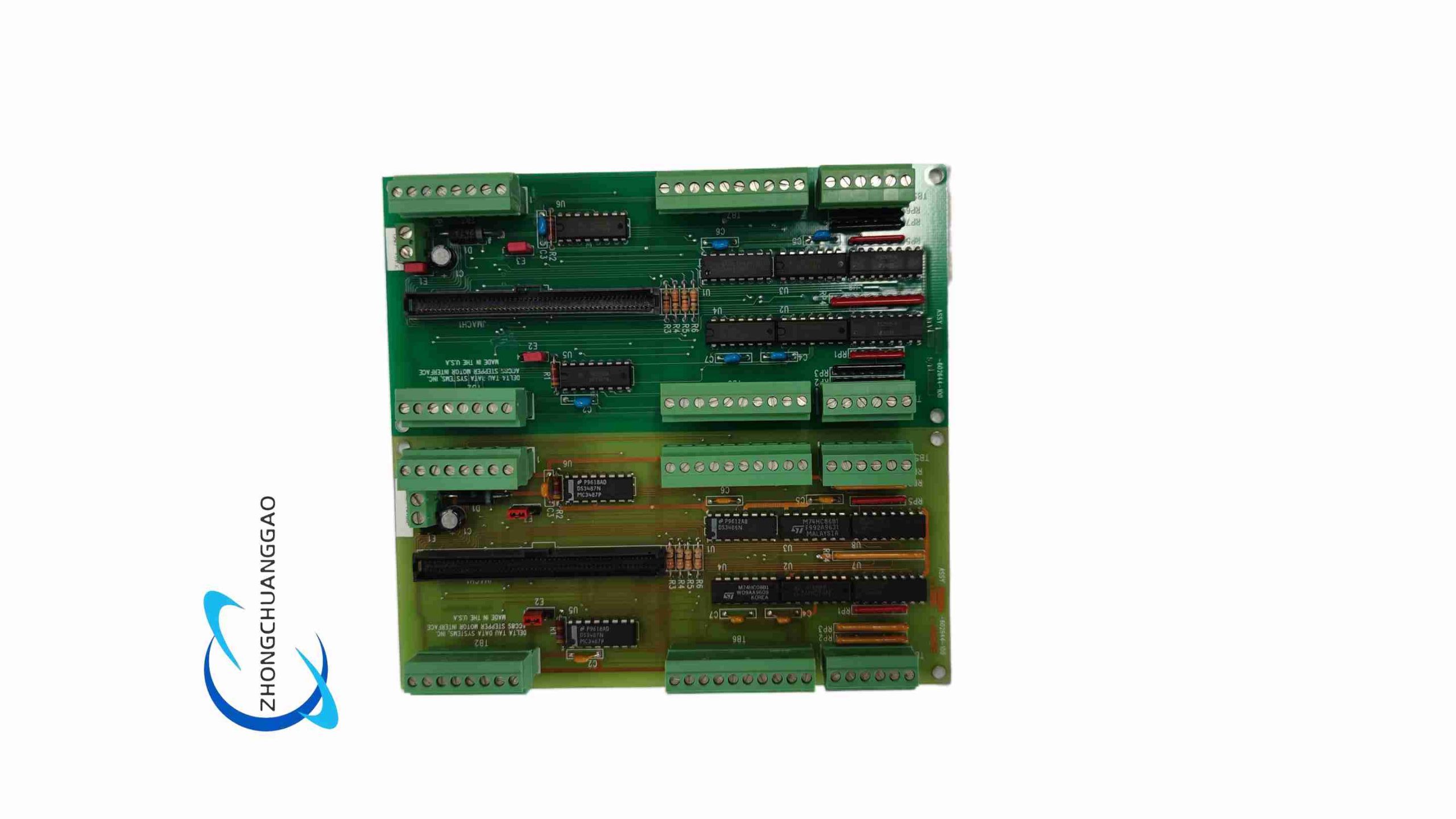
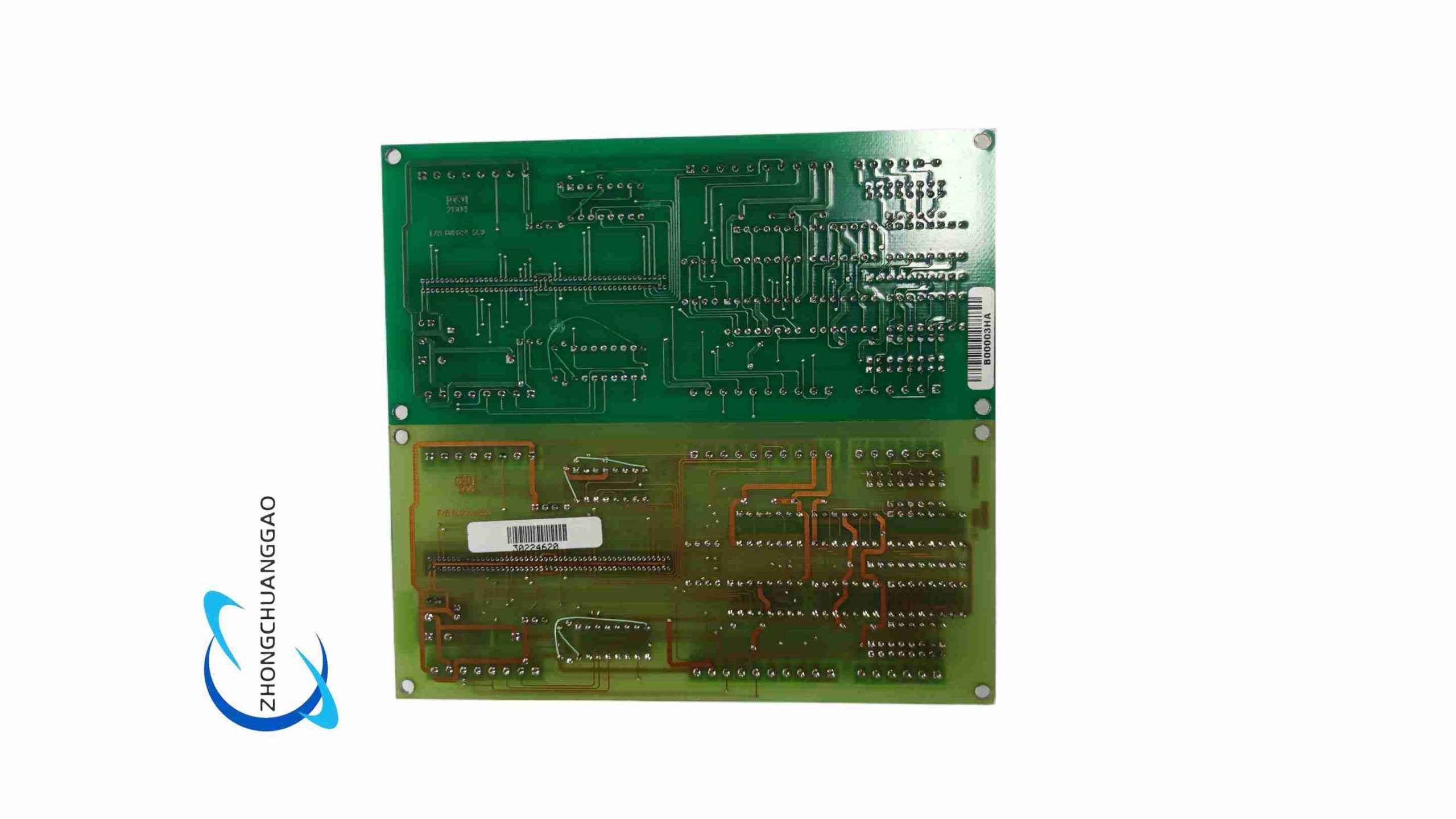
ACC-8S is a dedicated axis expansion daughterboard designed exclusively for Delta Tau PMAC2 series motion controllers. It acts as the signal conversion bridge between PMAC2 master CPU and external stepper drives / pulse-based servo amplifiers. The board outputs industry-standard pulse-and-direction differential signals for closed-loop positioning systems, supporting up to 8 independent motion axes on a single card. It is the primary hardware solution for machine builders deploying stepper motor systems with PMAC2 control platforms
Description
Core Function Features
- 8 fully independent pulse/direction output channels with differential line driver signals for noise immunity
- Per-axis isolated quadrature encoder input interface for position feedback
- Built-in optical isolation (5–24V selectable) for all limit, home, fault digital I/O per axis
- Hardware pulse generation up to 10 MHz maximum output frequency for high-speed positioning
- Compatible with all PMAC2 CPU platforms: PMAC2-PCI, PMAC2-PC/104, Turbo PMAC2
- Onboard DIP resistor sockets to switch input logic voltage between 5V, 12V, 24V without wiring modifications
- Integrated amplifier enable relay output and amplifier fault signal input for safe servo power interlock
- Supports electronic gearing, camming, linear/circular interpolation synchronized across all 8 axes
Technical & Performance Specifications
表格
| Parameter | Standard Value |
|---|---|
| Supported Axis Count | 8 independent motion axes |
| Pulse Output Mode | Differential pulse + direction (CW/CCW) |
| Max Pulse Output Frequency | 10 MHz |
| Encoder Input Type | Differential quadrature A/B/Z index |
| Max Encoder Count Rate | 40 MHz |
| Digital I/O Isolation Voltage | 5–24 VDC optically isolated |
| Servo Update Time Per Axis | 18 μs (60 MHz PMAC2 CPU) |
| Position Resolution | 32-bit internal counter |
| Operating Power Draw | 1.8 A @ +5V DC, 90 mA @ ±12V DC |
| Operating Temperature Range | 0°C ~ +60°C |
| Storage Temperature | -20°C ~ +70°C |
| Relative Humidity | 10% ~ 95% non-condensing |
Material Composition & Structural Characteristics
- Base substrate: High TG FR4 industrial PCB with 2oz copper trace for high-current differential signal transmission
- Connector hardware: Gold-plated DB9 D-Sub connectors per axis, screw terminal header for power bus connection
- Isolation components: High-speed optocoupler ICs with reinforced insulation barrier
- Mechanical housing: Card-edge metal shielding bracket for EMI/RFI suppression, standard Eurocard stackable form factor
- Physical dimensions: 165 mm (L) × 120 mm (W) × 28 mm (T); Net weight: 420 g
- Stackable structure: Direct stack plug-in connection with PMAC2 main control board via dedicated flat cable header, no extra wiring adapters required
Working Principle
The PMAC2 main CPU executes motion programs, trajectory interpolation and PID closed-loop servo calculations. Calculated target position values are transmitted to ACC-8S via parallel expansion bus. Onboard dedicated ASIC converts digital position setpoints into high-frequency differential pulse signals and direction logic levels. External stepper/servo drives count pulse quantity to determine travel distance and direction. Simultaneously, ACC-8S receives quadrature encoder feedback pulses from motor encoders, converts analog encoder signals to digital position data, and sends real-time actual position values back to PMAC2 CPU for closed-loop position error correction. All limit switch, home sensor, amplifier fault signals are optically isolated on ACC-8S to eliminate ground loop interference before signal delivery to the master controller.
Installation Requirements
- Mounting method: Stacked daughterboard installation directly onto PMAC2 main control board via dedicated flat ribbon cable header; compatible with standard 3U Eurocard rack cabinet installation
- Cabinet environment: Install inside IP54 minimum protection electrical control cabinet; maintain forced air ventilation to keep internal operating temperature below 60°C
- Wiring specifications: Use shielded twisted-pair cable for pulse/direction output and encoder feedback wiring; separate power cable and signal cable routing with minimum 10 cm clearance to avoid electromagnetic interference
- Grounding rules: Connect PCB shielding bracket to cabinet protective earth (PE) ground with 2.5 mm² copper grounding wire; single-point grounding system for entire motion control rack
- Power supply matching: Provide regulated ±12V DC and +5V DC power supply with less than 50 mV ripple voltage for board operation
Application Scenarios
- Semiconductor manufacturing equipment: Wafer handling stages, precision probe stations, die bonding machines
- CNC precision machining: Small desktop engraving machines, drilling tapping centers, miniature grinding equipment
- Packaging automation: Label positioning stations, flying shear cutting mechanisms, vertical form fill seal machines
- Medical automation: Precision fluid dispensing equipment, surgical robot auxiliary positioning axes, laboratory slide transport systems
- General industrial automation: Multi-axis rotary index tables, pick-and-place robotic modules, textile yarn winding machinery
Operation & Maintenance Notes
- Pre-power-on inspection: Verify all DB9 axis connectors are fully locked, check flat cable header secure insertion; confirm DIP resistor voltage setting matches external sensor power supply voltage
- Prohibited operation: Do not hot-plug the flat stack cable while PMAC2 main controller is powered on; avoid exposing the board to conductive dust, oil mist or corrosive chemical vapor
- Troubleshooting rules: If axis positioning deviation occurs, first inspect shielded cable shielding continuity and PE grounding connection; pulse signal loss issues are usually caused by loose DB9 connector pins or damaged twisted-pair wiring
- Maintenance cycle: Conduct cabinet dust cleaning every 3 months; inspect optocoupler input LED indicator status during monthly equipment downtime maintenance
- Storage rules: When long-term storage (over 3 months), place the board in anti-static ESD shielding bag with desiccant; store within temperature range -20°C ~ +70°C with humidity controlled below 80%
Reviews
There are no reviews yet.