
Product Short Description
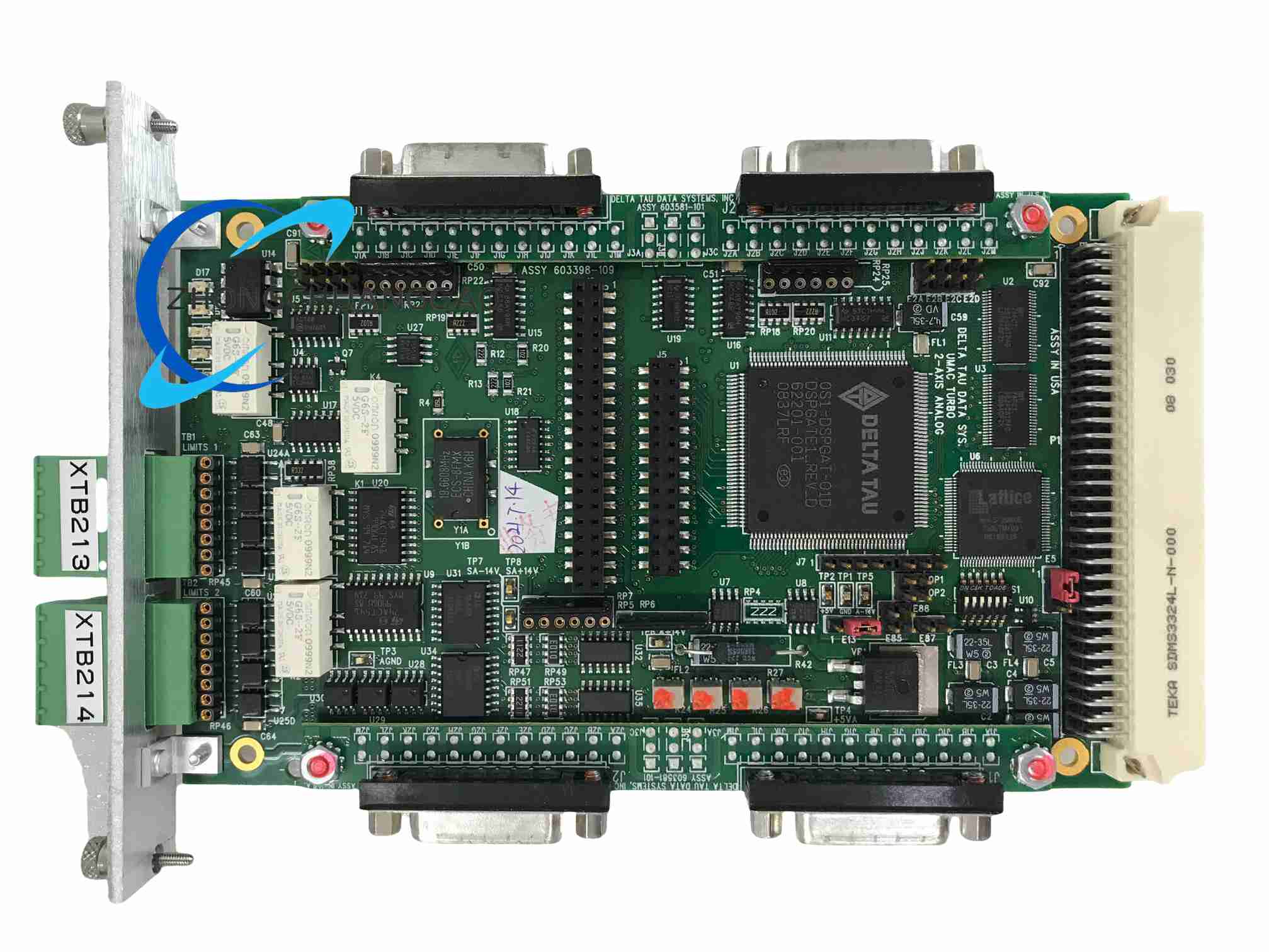
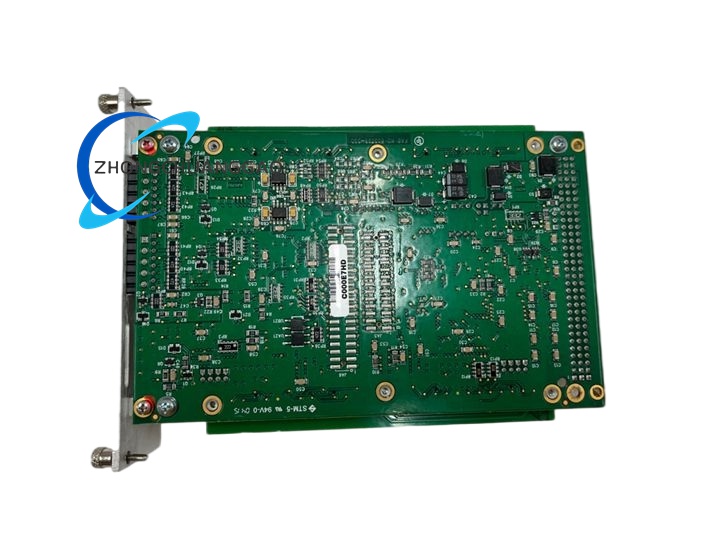
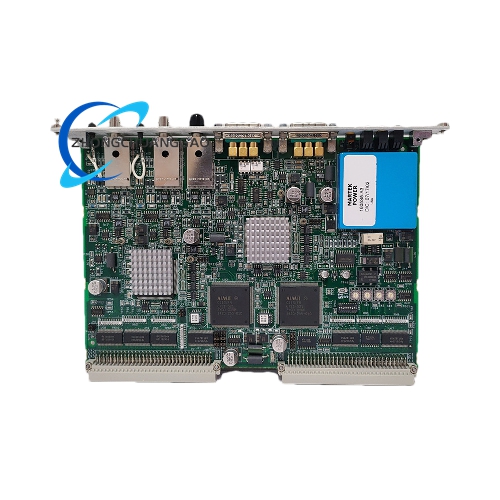
Product Overview: The ACC-24E2A is a high-performance analog servo interface module developed by Delta Tau Data Systems (now under OMRON). It plugs into the backplane of a PMAC2, Turbo PMAC2, PMAC Clipper or UMAC controller and provides two independent ±10 V analog command channels plus high-speed encoder feedback inputs, serving as the bridge between the motion controller and analog servo drives. The “DB” suffix denotes DB-style connectors for field wiring; the module is widely used in CNC machinery, laser processing, robotics, semiconductor equipment and precision inspection platforms where high dynamic response and nanometer-level positioning accuracy are required.
Description
Technical Specifications:
-
Number of Axes: 2 independent servo channels (expandable to 4 axes via daughter-board; up to 8 boards per UMAC frame for 32-axis synchronization)
-
Analog Output: ±10 V differential, 16-bit resolution (65,536 steps), settling time < 10 µs, output impedance < 1 Ω
-
Encoder Input: 2 channels of differential RS-422 (A/B/Z), supporting incremental or sine-cosine (1 Vpp) encoders; maximum count rate 40 MHz with 4× quadrature
-
Servo Update Rate: Programmable from 40 ns to 1 ms (typical 250 µs); servo loop clock shared at 25 MHz
-
Digital I/O: 8× DI + 2× DO per axis, 5 V TTL / 24 V selectable
-
Pulse Modes: PWM, Pulse/Direction, CW/CCW, Quadrature
-
Isolation: Photoelectric isolation > 1 kV between channels and ground
-
Backplane Interface: UMAC/Turbo PMAC2 backplane bus; diagnostic port RS-485 (Modbus-RTU)
-
Power Supply: +5 V / ±12 V to ±24 V DC from host backplane, typical 5 W
-
Dimensions & Weight: 100 × 60 × 25 mm, approx. 150 g (3U Eurocard form factor)
-
Operating Temperature: 0 °C to +60 °C (industrial grade)
-
Storage Temperature: –40 °C to +85 °C
-
Relative Humidity: 5 % to 95 % RH, non-condensing
-
Compliance: CE, RoHS
Key Features:
-
Hardware-level servo synchronization with dedicated 24-bit servo-loop ASIC; each axis runs feed-forward + PID + electronic gearing/cam algorithms independently
-
Differential analog output drives any ±10 V velocity/torque servo amplifier directly
-
25 MHz encoder counting with 4× decoding and 0.5 µs capture latency for high-speed closed-loop feedback
-
On-board configurable digital I/O eliminates external PLC wiring for limit, home and alarm signals
-
Modular expansion: 2-axis base board → 4-axis via sub-board → 32 axes per UMAC frame, all sharing the same Power PMAC script and clock
-
Supported by Power PMAC Suite, LabVIEW Motion and C/C++ API; gain tuning and program download achievable within 30 minutes
Application Scenarios: CNC lathes and machining centers, laser cutting and drilling machines, wafer handling robots, packaging machines with electronic cam indexing, nano-positioning stages and optical scanning systems.
Installation Requirements:
-
Insert the board firmly into the designated UMAC/Turbo PMAC2 backplane slot; confirm the ejector clips lock in place
-
Use shielded, twisted-pair cable for encoder and analog signal wiring; keep analog output cables away from high-power drive wiring
-
Ensure the host controller backplane supplies clean +5 V and ±12 V; verify voltage before power-up
-
For DB-connector versions, use the appropriate HD26 or DB15 breakout to the drive and encoder
Usage Notes:
-
Avoid hot-swapping while the controller is powered; always power down the UMAC frame before installing or removing the board
-
The standard version does not include channel-to-ground isolation; use external isolators in high-EMI environments
-
Periodically verify encoder cable shielding and grounding to prevent count errors caused by inverter noise
-
When expanding to 4 axes, confirm the daughter-board configuration matches the firmware license in the PMAC CPU
Reviews
There are no reviews yet.