
Product Short Description
Technical Specifications
- Input Channels:
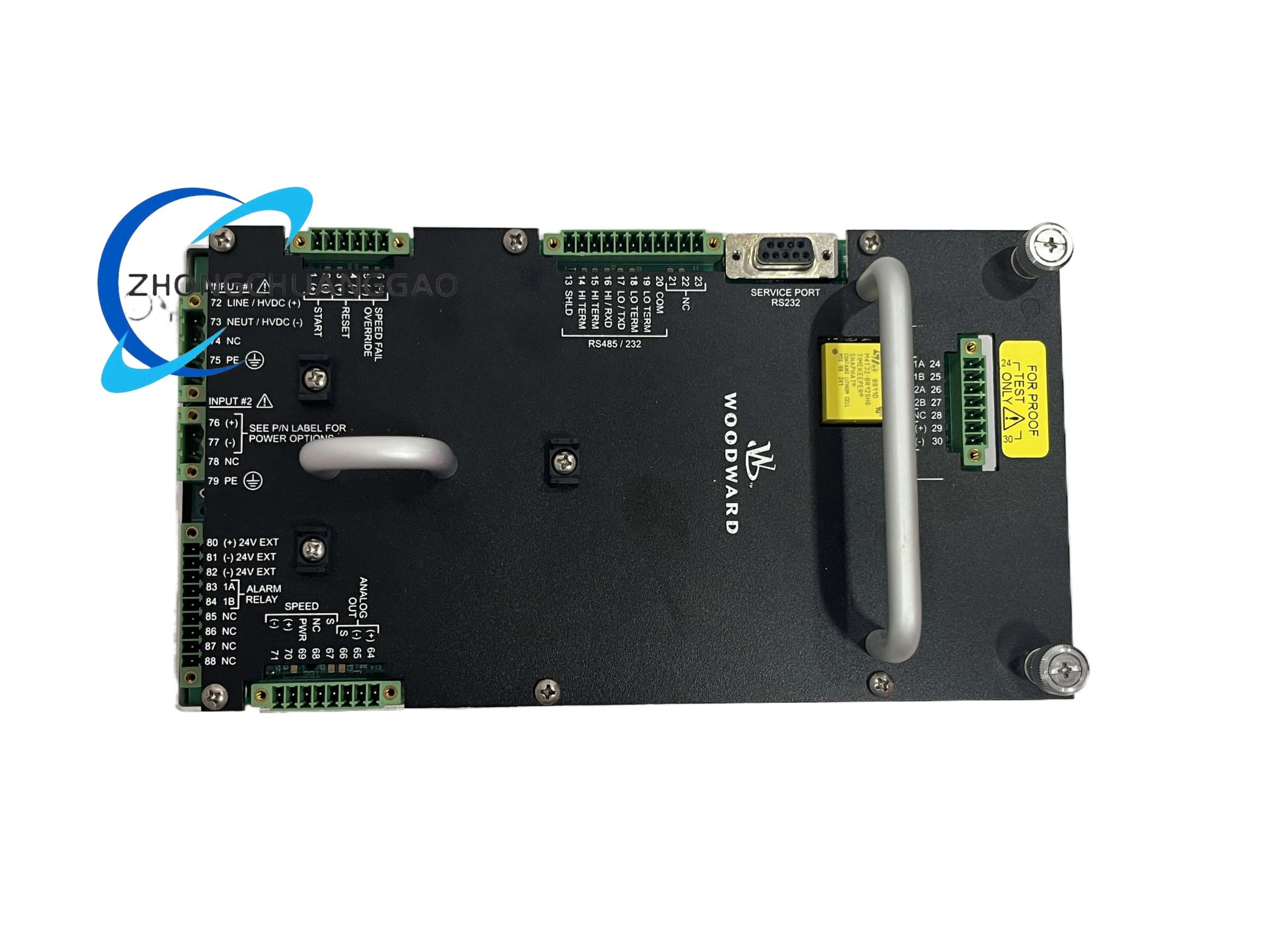
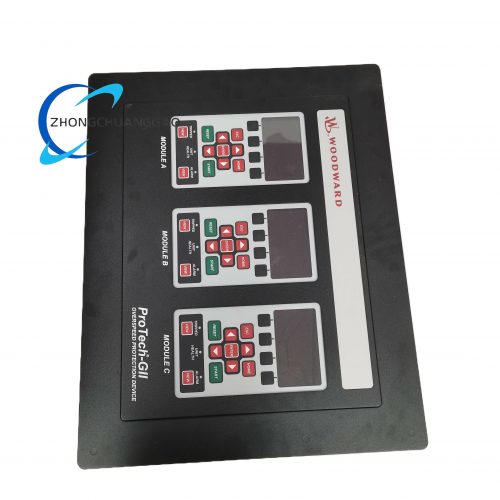
- Three independent speed-sensing inputs (A, B, C) with redundant power supplies.
- Supports magnetic pickups (MPUs) with configurable gear tooth counts (20–120 teeth).
- Speed Range: Adjustable from 250 rpm to 25,000 rpm.
- Fault Setpoint: Programmable from 100 rpm to 25,000 rpm.
- Fault Timeout: Adjustable from 1 second to 533 minutes and 20 seconds.
- Power Supply: 120 Vac/dc (compatible with both alternating and direct current sources).
- Output Signals:
- Three relay outputs for trip signals (Form-C contacts).
- One alarm relay output.
Description
- Operating Temperature: -4°F to +140°F (-20°C to +60°C).
- Storage Temperature: -4°F to +158°F (-20°C to +70°C).
- Enclosure: IP65-rated for dust and water resistance.
- Dimensions: 305 mm × 203 mm × 152 mm.
- Weight: Approximately 15 kg.
Key Features
- Triple-Modular Redundancy (TMR): Uses a “two-out-of-three” voting logic to minimize false trips. A fault is triggered only if two sensors agree on an anomaly.
- Hot Swapping: Modules can be replaced or tested without shutting down the connected machinery, reducing downtime.
- Programmable Parameters: Users can customize speed setpoints, fault thresholds, timeout durations, and MPU gear tooth counts via the local interface.
- Self-Diagnostics: Continuously monitors sensor health and alerts operators to potential issues.
- Data Logging: Records operational data and fault events for troubleshooting and performance analysis.
- Communication Protocols: Supports Modbus RTU/TCP for integration with distributed control systems (DCS).
Functional Highlights
- Overspeed Protection: Automatically trips the system if speed exceeds the predefined threshold, preventing catastrophic failures.
- Vibration Monitoring: Compatible with vibration sensors to detect mechanical imbalances or misalignments.
- Acceleration Monitoring: Tracks rate-of-change in speed to identify abnormal conditions early.
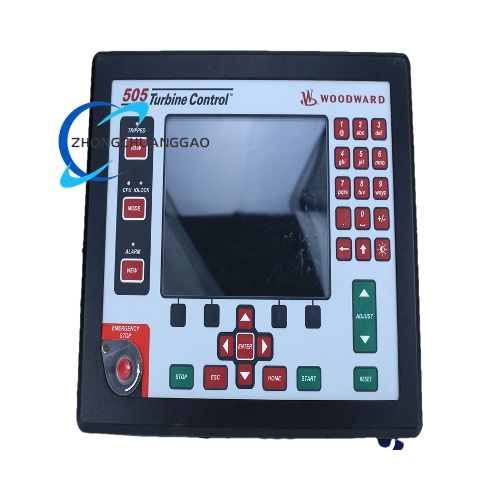
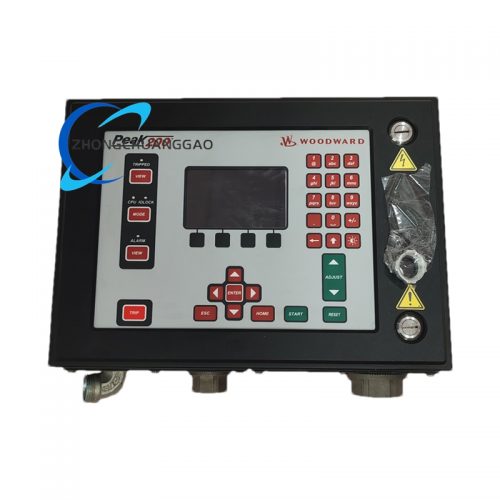
- Local Display/Keyboard: Each module features a 4.2-inch LCD screen and keypad for real-time configuration and monitoring.
- LED Indicators: Provides quick status checks for CPU health, I/O lock, alarms, and trips.
Application Scenarios
- Power Generation: Protects gas and steam turbines in thermal power plants, hydroelectric stations, and cogeneration systems.
- Oil & Gas: Safeguards compressor turbines in offshore platforms and pipeline stations.
- Aerospace: Regulates engine speed in aircraft and helicopters for safe propulsion.
- Industrial Automation: Monitors rotating equipment (e.g., pumps, fans) in chemical, metallurgical, and paper manufacturing plants.
- Marine Propulsion: Ensures safe operation of shipboard turbines and engines.
Advantages
- High Reliability: Redundant design and fault-tolerant logic ensure continuous operation even during single-component failures.
- Ease of Maintenance: Hot-swappable modules and local configuration interfaces simplify updates and repairs.
- Scalability: Adaptable to both small-scale engines and large industrial turbines through adjustable parameters.
- Compliance: Meets international standards for safety (e.g., ATEX) and electromagnetic compatibility (EMC).
Reviews
There are no reviews yet.