
Product Short Description
Technical Specifications
- Electrical Specifications
- The standard working voltage is 24VDC, and it also supports 12VDC working voltage, with reverse connection prevention and overload protection functions to avoid damage caused by incorrect wiring or power supply abnormalities.
- It has 2 – 6 analog output channels, and optional output signal ranges include 4 – 20mA, 0 – 20mA, 0 – 5V, 0 – 10V. The maximum output can reach 1.1 times the range, and the output ripple is ≤ 15mV (effective value under rated output load).
- The output load capacity is more than 10kΩ for voltage channels, ≤ 800Ω for current channels with 24V power supply, and ≤ 250Ω for current channels with 12V power supply.
- Physical Specifications
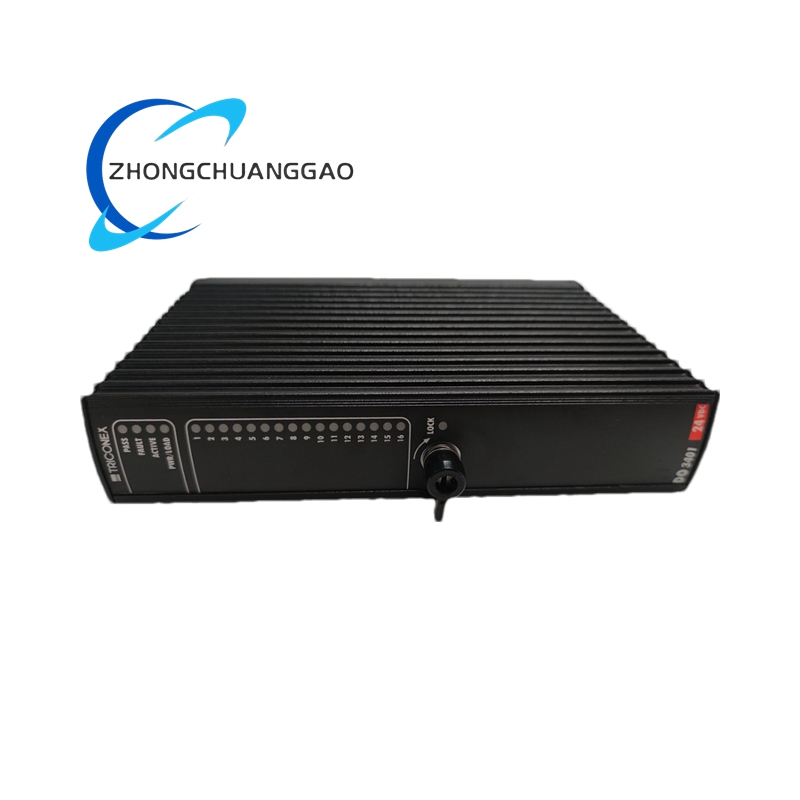
- Its overall dimensions are 7.5 inches × 4.5 inches × 2.5 inches, and it weighs 2.5 pounds, featuring a compact structure.
- It adopts 35mm standard DIN rail mounting and pluggable terminal wiring, which simplifies on – site installation and wiring operations.
Description
- Environmental Specifications
- The operating temperature range is – 40℃ to 70℃, and the storage temperature range is – 40℃ to 85℃, enabling it to adapt to extreme temperature conditions in outdoor and high – temperature workshops.
- It can operate stably in an environment with 5% – 95% relative humidity without condensation, which is applicable to humid industrial environments like chemical workshops and water treatment plants.
- Other Core Specifications
- It is equipped with a 32 – bit processor, 6MB user memory, 512KB non – volatile memory and 32MB flash memory, which can support the operation of complex control programs.
- The communication protocol adopts the standard Modbus – RTU mode, and it is equipped with an RS – 485 communication interface with an ESD protection circuit, ensuring stable data transmission.
- The response period of signal output is 100 – 200ms, which can meet the real – time control requirements of most industrial processes.
Functional Characteristics
- Flexible Analog Output Control
- With 2 – 6 selectable analog output channels and multiple optional signal ranges, it can accurately output corresponding signals according to different control requirements to drive various actuators, regulators and other equipment on the industrial site.
- The overload capacity of the output signal ensures that the module can still maintain stable signal output when the load fluctuates slightly, avoiding abnormal operation of on – site equipment due to signal instability.
- Strong Anti – interference and Reliability
- It uses industrial – grade chips and is equipped with a built – in watchdog. It also has complete lightning protection and anti – interference measures to resist electromagnetic interference and voltage fluctuations in complex industrial environments.
- The RS – 485 communication interface with an ESD protection circuit prevents communication failures caused by static electricity or surge, ensuring smooth data interaction between the module and the main control system.
- Easy Installation and Debugging
- It is installed on a standard DIN rail, and the pluggable terminal design allows maintenance personnel to complete wiring and disassembly without complicated tools, saving installation time.
- It is equipped with LED working status indicators that can clearly display the operating state of the module. Maintenance personnel can quickly judge whether the module is working normally on – site, which simplifies the debugging and troubleshooting process.
- Seamless System Integration
- It adopts the standard Modbus – RTU communication protocol, which has good compatibility and can easily realize data exchange and command transmission with most existing industrial control systems without large – scale modification of the original system.
- It can be perfectly integrated into the Triconex safety system architecture, and participates in the fault – tolerant management of the system. It can bypass faulty components and maintain continuous system operation when partial failures occur.
Application Scenarios
- Oil and Gas Industry
- In oil refineries, it connects with pressure and flow sensors in the oil refining process. It outputs analog signals to control the opening of regulating valves, maintaining stable pressure and flow in pipelines and ensuring the smooth progress of the oil refining process.
- In natural gas storage stations, it monitors the storage pressure of natural gas. When the pressure is abnormal, it outputs signals to start the pressure relief or pressurization device, preventing safety accidents such as leakage or explosion caused by excessive or insufficient pressure.
- Chemical Industry
- In chemical reaction kettle control systems, it controls the feeding speed and heating power by outputting analog signals according to the temperature and concentration data of the reaction materials, ensuring that the chemical reaction proceeds within the set parameters and improving the quality of chemical products.
- It is used in the hazardous chemical treatment process to control the operation of waste gas and waste liquid treatment equipment through stable signal output, reducing the discharge of harmful substances and complying with environmental protection standards.
- Power Industry
- In thermal power plants, it is integrated into the boiler control system. It outputs corresponding signals to adjust the fuel supply and air intake according to the boiler temperature and pressure signals, avoiding equipment damage caused by overheating or overpressure of the boiler.
- In nuclear power plant auxiliary systems, it is used to control the operation of cooling water circulation equipment. It adjusts the water flow rate through analog signals to ensure the stable operation of the cooling system and meet the strict safety requirements of nuclear power generation.
- Metallurgical Industry
- In steel plant blast furnace systems, it monitors the furnace temperature and molten iron level. It outputs signals to adjust the speed of the cooling water pump to ensure that the blast furnace is in a safe temperature range and prevent equipment deformation or damage due to overheating.
- In non – ferrous metal smelting workshops, it controls the operation of smelting equipment by outputting analog signals, precisely adjusting the smelting temperature and material addition amount, and ensuring the stability of the smelting process and the quality of finished products.
Be the first to review “Triconex FTA-44 Special Function DCS Module” Cancel reply
Reviews
There are no reviews yet.