
Product Short Description
Technical Specifications
- Physical Specifications
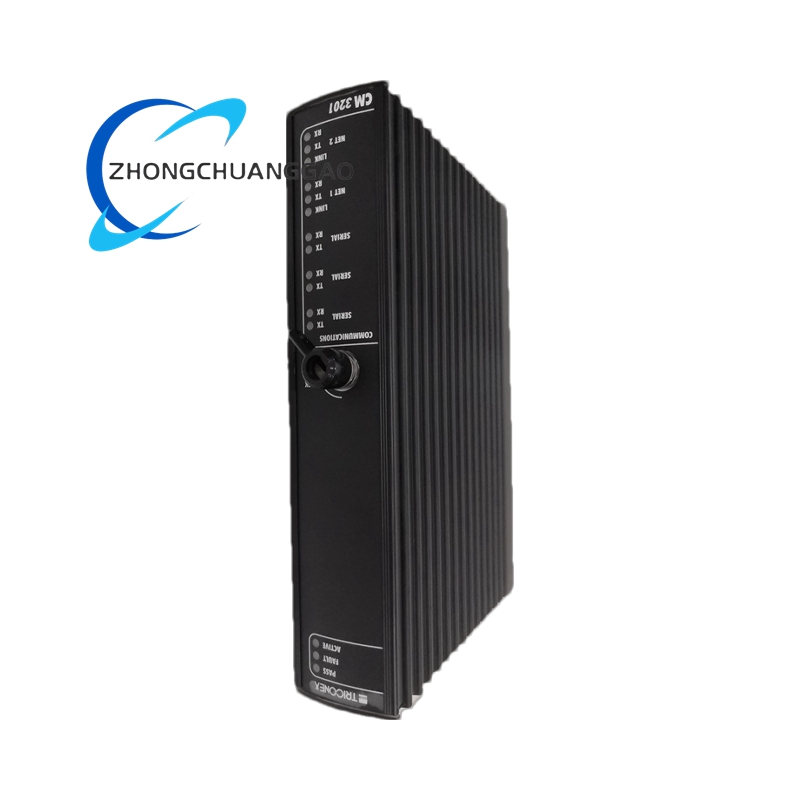
- The overall dimensions are 10.2 inches × 6.3 inches × 3.1 inches, which is compact and easy to install in standard industrial control cabinets.
- The weight of the module is 2.2 pounds, so it will not bring excessive load to the installation rack during assembly and disassembly.
- Electrical Specifications
- It adopts 24VDC working voltage, which is consistent with the power supply specifications of most industrial automation equipment and facilitates unified on-site power configuration.
- It has galvanic isolation performance of 500VDC between ports, which can effectively isolate external electrical interference and protect internal circuits from damage caused by voltage fluctuations.
- It supports multiple data transmission rates. The serial port transmission rate can reach up to 115.2 kbps, and it can adapt to 10/100 Mbps Ethernet transmission to meet the needs of different data transmission scenarios.
Description
- Environmental Specifications
- The operating temperature range covers -40°C to 70°C, enabling stable operation in both low-temperature outdoor equipment sites and high-temperature industrial workshops.
- It can work normally in an environment with a relative humidity of 5% to 95% without condensation, adapting to the humid working conditions of industries such as petrochemical and water treatment.
Functional Characteristics
- Multi-type Signal Processing
- The module can handle various analog and digital signals from industrial sites, including temperature, pressure and flow rate signals generated by various sensors and field devices.
- It achieves seamless conversion between different types of signals, ensuring that the collected field signals can be accurately transmitted to the controller and the control signals issued by the controller can be correctly recognized by the executive components.
- Complex Logic Operation Capability
- It can perform basic logic operations such as AND, OR and NOT. By combining these basic operations, it can realize complex safety logic control processes.
- This capability enables the module to independently complete simple safety control decisions, reducing the computing pressure of the main controller and improving the overall response speed of the system.
- Redundant Design and High Reliability
- It often works in pairs with other EM2292 modules. The redundant design ensures that when one module fails, the other can immediately take over its work.
- This redundant mechanism avoids system downtime caused by single-module failure and ensures the continuous and stable operation of the safety instrumented system.
- Real-time Self-diagnosis and Alarm
- It is equipped with a complete self-diagnostic function that can continuously monitor its own operating status. It can quickly detect abnormalities in internal circuits, signal transmission and other aspects.
- Once a fault is found, the module will immediately send an alarm signal to the upper controller. This allows maintenance personnel to quickly locate and handle the fault, minimizing the impact of the fault on the production process.
Application Scenarios
- Petrochemical Industry
- It is applied to high-pressure protection systems in refining plants. When the pressure of reaction equipment or transmission pipelines exceeds the set limit, the module triggers the alarm system and controls the emergency pressure relief device to act, avoiding equipment damage caused by overpressure.
- In chemical storage areas, it is used for hazardous gas detection systems. When the concentration of leaked hazardous gases reaches the alarm threshold, it quickly transmits signals to start exhaust equipment and issue audible and visual alarms to prevent explosion and poisoning accidents.
- Power Generation Industry
- In thermal power plants, it is integrated into the boiler safety control system. It monitors the temperature of the boiler furnace in real time. When the temperature exceeds the defined threshold, it sends signals to adjust the fuel supply and air intake, or triggers emergency shutdown measures to prevent boiler explosion.
- In nuclear power plant auxiliary systems, it is used in the safety monitoring of cooling systems. It processes the flow and temperature signals of the cooling medium and ensures the stable operation of the cooling system through timely signal transmission and logic control, meeting the strict safety requirements of nuclear power operations.
- Metallurgical Industry
- It is deployed in blast furnace control systems in steel plants. It monitors the molten iron level and furnace temperature signals. When the flow rate of the cooling water falls below the minimum limit, it issues an alarm and increases the water supply volume by controlling the water pump, protecting the blast furnace from damage due to overheating.
- In non-ferrous metal smelting workshops, it is used for high-temperature protection of smelting equipment. It cooperates with temperature sensors to trigger cooling measures or stop feeding operations when the smelting temperature is abnormal, ensuring the safety of the smelting process.
- Pharmaceutical Industry
- In pharmaceutical production lines that require strict process control, it is used to monitor parameters such as temperature and pressure in the drug synthesis reaction process. It ensures that the reaction process stays within the safe range by executing preset logic operations and triggering adjustment signals, which guarantees the quality and production safety of drugs.
Be the first to review “Triconex EM2292 Safety Instrumented System Module” Cancel reply
Reviews
There are no reviews yet.