
Product Short Description
- Technical Specifications
- Electrical Parameters
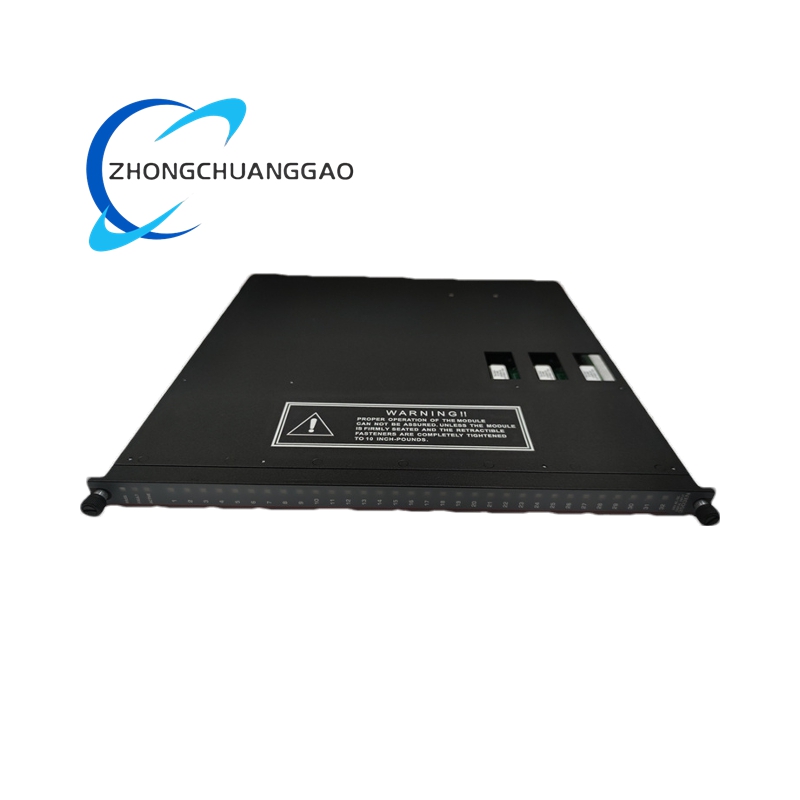
It has two main voltage specifications, with nominal voltages of 115VAC and 120VDC respectively. The 115VAC version has a voltage range of 80 – 155VAC and a frequency range of 47 – 63Hz, while the 120VDC version has a voltage range of 90 – 150VDC. The typical voltage drop of the 115VAC version is less than 3V, and that of the 120VDC version is less than 1.5V. The 115VAC version has a maximum current of 2A per point and a surge current of 12A per cycle; the 120VDC version has a maximum current of 0.8A per point and a surge current of 4A for 10ms. Each output point is equipped with an independent fuse, with 3A fast-acting fuses for the AC version and 1.0A fast-acting fuses for the DC version.
- Isolation and Leakage Parameters
The point isolation capacity reaches 1500VDC/2500VDC, which can effectively isolate electrical interference between different output points. The maximum load leakage current is 2mA, and the maximum chassis leakage current is 4mA at 60Hz, which can prevent leakage current from affecting the normal operation of the module and surrounding equipment.
- Physical and Environmental Parameters
The module weighs 5000 grams. It can operate stably in extreme temperature environments ranging from -40°C to +70°C, adapting to the harsh temperature conditions of most industrial sites. It adopts high-quality materials and a rugged structure to resist corrosion and mechanical damage, ensuring long-term reliable operation in complex industrial environments.
- Electrical Parameters
Description
- Functional Features
- TMR Architecture and Quadruplicated Voting Circuitry
It adopts triple modular redundancy technology and uses quadruplicated voting circuitry. It processes output signals through three independent channels and generates a single reliable output signal after voting. This structure ensures that the module can still maintain normal output capabilities even when one or two channels fail, maximizing the safety and availability of the system and avoiding accidents caused by signal errors.
- Comprehensive Diagnostic and Alarm Functions
It is equipped with comprehensive diagnostic indicators, including indicators for the on or off state of each output point, and module status indicators showing pass, fault and active states. It also has load and fuse alarm indicators for each point. The voltage loopback circuit realizes independent switch verification and hidden fault detection, and can promptly send out alarm signals when faults such as load abnormalities or fuse damage occur, facilitating staff to quickly locate and handle problems.
- Hot-Swap and Anti-Misinstallation Design
The module supports hot-swap capability. Maintenance personnel can replace the module without shutting down the entire control system, which greatly reduces system downtime and improves operational efficiency. It is also designed with mechanical keying, which can prevent incorrect installation during assembly and avoid system failures caused by wrong module installation.
- Strong Compatibility and Easy Integration
It requires an external termination panel for field connections and can be connected to the Tricon backplane through cables. It supports communication protocols such as Modbus, which allows seamless communication and data interaction with various industrial control devices and upper computer systems. It can be quickly integrated into existing Triconex safety control systems without complex rewiring, simplifying the integration process.
- TMR Architecture and Quadruplicated Voting Circuitry
- Application Scenarios
- Oil and Gas Industry
It is widely used in upstream oil drilling platforms, midstream natural gas transmission stations and downstream refineries. It is responsible for outputting control signals to on-site executive components such as emergency shutdown valves and pipeline cut-off valves. When dangerous situations such as oil and gas leakage occur, it can quickly send out reliable control signals to trigger emergency shutdown operations and avoid the expansion of dangerous situations.
- Chemical Industry
In chemical production plants, it is applied to the safety control systems of reaction kettles, storage tanks and material conveying pipelines. It controls the switches of pumps, valves and other equipment in chemical production processes. It ensures that each process link can be started or stopped accurately according to the control instructions, preventing safety accidents such as explosions and leaks caused by equipment misoperation in high-temperature, high-pressure and corrosive chemical environments.
- Power Generation Industry
It is installed in thermal power, nuclear power and other power plants and is integrated into the safety monitoring and control systems of boilers, turbines and other key equipment. It outputs control signals to protective devices such as trip switches and emergency stop mechanisms. When abnormal parameters of power generation equipment are detected, it can immediately issue shutdown or adjustment signals to protect the safety of power generation equipment and avoid large-scale power outages caused by equipment failures.
- Marine and Offshore Engineering
It is suitable for offshore oil and gas platforms and marine power systems. These environments are often accompanied by high humidity, salt spray corrosion and strong vibrations. The rugged structure of the module can resist these harsh environmental factors. It controls marine safety equipment such as fire-fighting systems and emergency separation devices, ensuring the safety of offshore operation personnel and equipment.
- Oil and Gas Industry
Reviews
There are no reviews yet.