Product Short Description
Technical Specifications
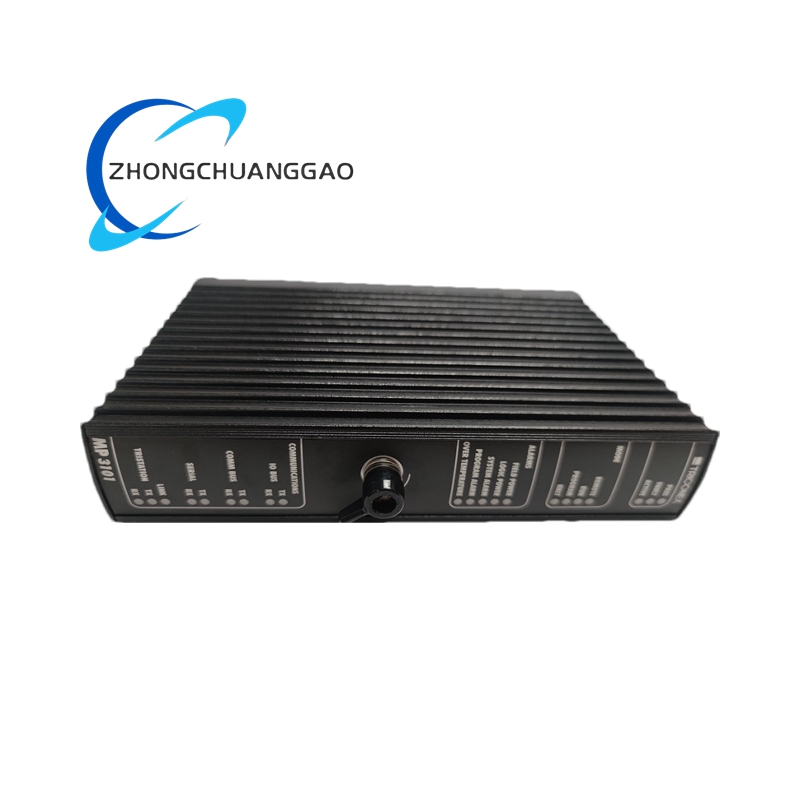
- Processor Architecture: Triple Modular Redundant (TMR) with three 32-bit processors (e.g., Motorola MPC860 or dual-core PowerPC).
- Memory:
- 6 MB Flash PROM for application storage.
- 16 MB DRAM for runtime control programs and event sequencing data.
- 8 KB NVRAM for variable storage.
- I/O Capacity: Supports up to 1,024 input/output points.
- Power Supply:
- Input Voltage: 24 V DC.
- Output Power: Approximately 12 W.
Description
- Communication Interfaces:
- Ethernet (10BaseT RJ-45).
- RS-232, RS-485.
- Modbus protocol support.
- Optional CANopen interface (version-dependent).
- Tribus backplane communication at 25 Mbps with 32-bit CRC protection.
- Environmental Tolerance:
- Operating Temperature: -40°C to +70°C.
- Humidity: 5%–95% (non-condensing).
- Physical Dimensions:
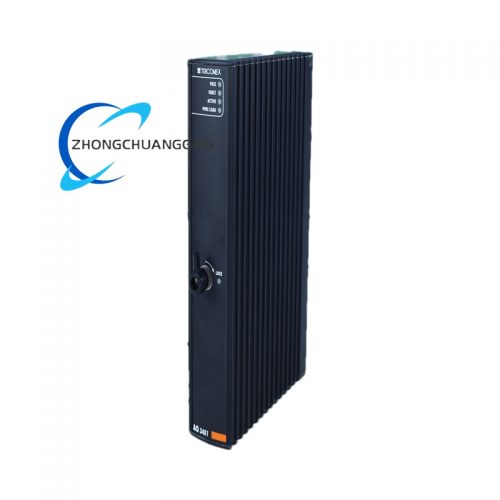
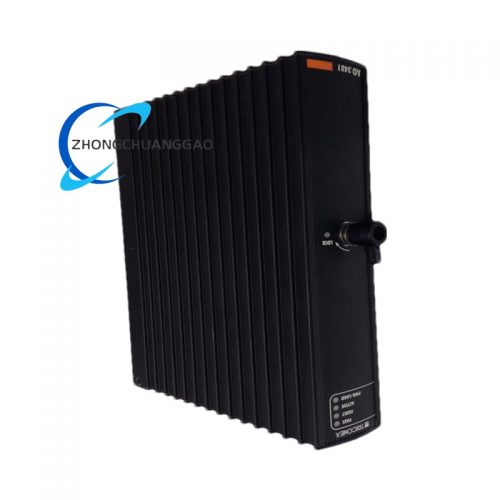
- Common variants: 22 cm × 16.9 cm × 4.4 cm or 15 cm × 15 cm × 5 cm.
- Weight: Ranges from 1 kg to 2.32 kg depending on version.
Functional Features
- High Reliability: TMR design eliminates single points of failure, ensuring continuous operation in critical control and safety applications.
- Real-Time Performance: High-speed processors and optimized algorithms enable rapid execution of control logic and data processing.
- Fault Tolerance: Automatic fault detection and isolation with hot-swappable modules for minimal downtime.
- Comprehensive Diagnostics: Built-in self-tests monitor system health, detect faults, and trigger alerts for maintenance.
- Scalability: Modular design supports expansion with additional I/O modules to meet evolving control needs.
- Data Integrity: NVRAM ensures non-volatile storage of critical variables.
- Event Sequencing (SOE): Captures time-stamped data for post-incident analysis and root-cause identification.
- Explosion-Proof Compatibility: Suitable for deployment in hazardous areas (e.g., oil and gas facilities).
Application Scenarios
- Oil & Gas: Used in refineries, offshore platforms, and LNG terminals for emergency shutdown systems (ESD), fire and gas detection (F&G), and pipeline monitoring.
- Chemical Industry: Manages hazardous processes in reactors and distillation columns to prevent accidents.
- Power Generation: Ensures safe operation in nuclear and thermal power plants with real-time monitoring of critical systems.
- Manufacturing: Secures production lines handling chemicals or dangerous materials.
- Marine & Offshore: Supports drilling rigs, production platforms, and FPSO vessels with fault-tolerant control.
- Distributed Control Systems (DCS): Provides efficient distributed control and management for critical equipment.
Advantages
- Safety Compliance: Meets IEC 61508 SIL 3 and other international standards for high-risk industries.
- Cost Efficiency: Reduces long-term maintenance costs through modular design and self-diagnostics.
- Versatility: Integrates seamlessly with diverse industrial networks via multiple communication protocols.
- Robustness: Withstands extreme temperatures, humidity, and vibrations for reliable performance in harsh environments.
Reviews
There are no reviews yet.