Product Short Description
Technical Specifications
-
- Electrical Parameters
- Operating Voltage: It is compatible with a 220V AC power supply, which is consistent with universal industrial power supply standards and can be stably integrated into the power supply systems of most automated production lines.
- Output Frequency: There are two mainstream output frequency specifications of 30kHz and 50kHz for different models, which can meet the signal transmission and control requirements of various high-speed and high-precision industrial operations.
- Communication Compatibility: It is compatible with multiple mainstream industrial communication protocols such as Profinet, EtherCAT and OPC UA. These protocols enable seamless data interaction with Siemens PLCs, other brand controllers and upper-level management systems.
- Physical Parameters
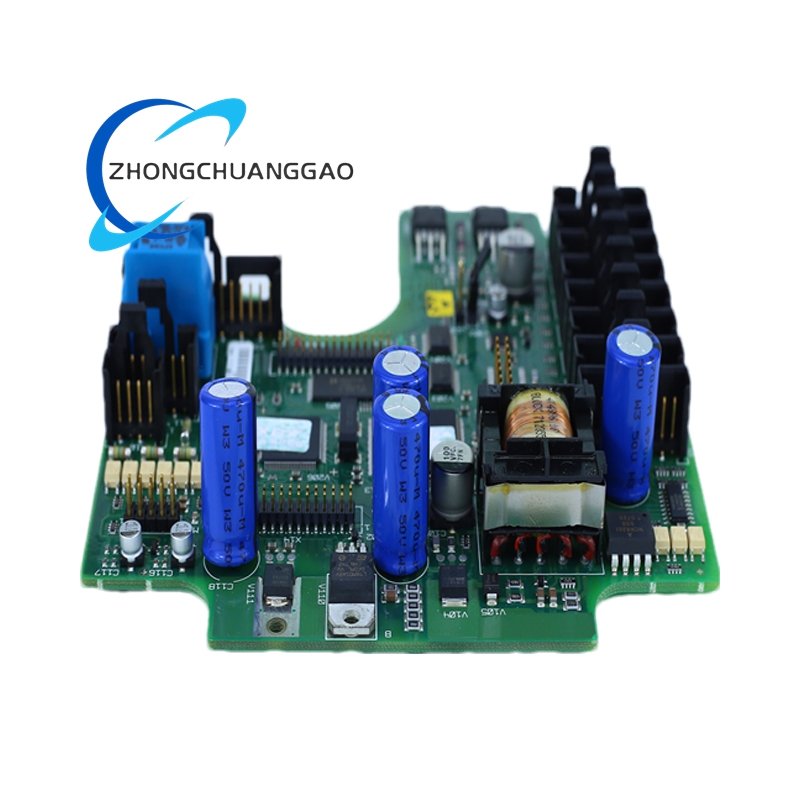
- Structural Design: It adopts a compact size and an aluminum housing. The aluminum material not only reduces the overall weight of the module but also achieves efficient heat dissipation, ensuring stable performance during long-term high-load operation.
- Certifications: It has obtained CE and UL certifications, complying with relevant safety and electromagnetic compatibility standards in the European and American markets, and meeting the access requirements of global major industrial regions.
- Electrical Parameters
Description
-
- Environmental Parameters
- Operating Temperature: It can maintain stable operation within the temperature range of 0°C to 55°C, adapting to the temperature changes of most indoor and outdoor industrial workshops.
- Anti-interference Capability: It is equipped with an integrated anti-electromagnetic interference structure, which can resist electromagnetic interference from surrounding industrial equipment and ensure the accuracy of control signals and data transmission in complex electrical environments.
- Environmental Parameters
-
Function Features
- High-precision Motion Control: It relies on advanced servo drive technology to accurately control the motion trajectory and positioning of industrial robots. This enables robots to complete precise operations such as assembly, grabbing and positioning, and effectively improves the qualification rate of product processing.
- Easy System Integration: Its compact design and compatibility with multiple communication protocols allow it to be quickly integrated into existing production lines without large-scale transformation of the original equipment and control systems. It also shortens the debugging cycle after installation.
- Convenient Operation and Maintenance: It is equipped with an intuitive user interface. Operators can easily adjust working parameters according to different production tasks. Meanwhile, its stable performance and high-quality components reduce the frequency of failures, and when minor problems occur, maintenance personnel can quickly locate and solve them.
- Durable and Reliable Performance: The internal structure uses high-grade materials and undergoes sophisticated manufacturing processes. It can withstand the test of long-term continuous operation in industrial environments and maintain consistent performance. The redundant power input design further ensures that the module will not stop working due to sudden power supply fluctuations.
- Visual Monitoring Support: Its built-in graphics engine can process SVG-based human-machine interface data with low latency. This allows the maintenance team to obtain real-time visual feedback on the operating status of the module and the connected robots, and quickly detect abnormal operation conditions.
-
Application Scenarios
- Automotive Component Assembly Lines: It is widely used in KUKA robot systems on automotive production lines. It connects robot arms with Siemens PLCs through open communication protocols to control robots in completing body welding, engine assembly and auto-parts transfer operations, ensuring the efficiency and accuracy of the automotive assembly process.
- Electronic Product Manufacturing: In electronic component production workshops, it controls small KUKA robots to carry out high-precision operations such as chip mounting, circuit board welding and electronic component sorting. Its high-precision control capability prevents damage to fragile electronic components during processing.
- Food Processing Automation: It is applied to conveyor system control in food processing plants. Through its graphical interface, it realizes real-time monitoring of the conveying speed and position of food materials. It cooperates with robots to complete automatic sorting and packaging of food, improving the hygiene and production efficiency of food processing.
- General Machinery Processing Workshops: It supports KUKA robots in matching with CNC machine tools to complete workpiece loading and unloading, stamping and forming operations. It adapts to the harsh working environment of machinery workshops with metal dust and vibration, and maintains stable control performance.
- New Energy Equipment Production: In new energy battery and photovoltaic component production lines, it controls robots to complete precise operations such as battery cell stacking and photovoltaic panel cutting. Its anti-interference ability and stability meet the high-quality production requirements of new energy equipment.
Be the first to review “KUKA RDW2 SBM2 High-Performance Industrial Robot Control Module” Cancel reply
-500x500.jpg)
Reviews
There are no reviews yet.