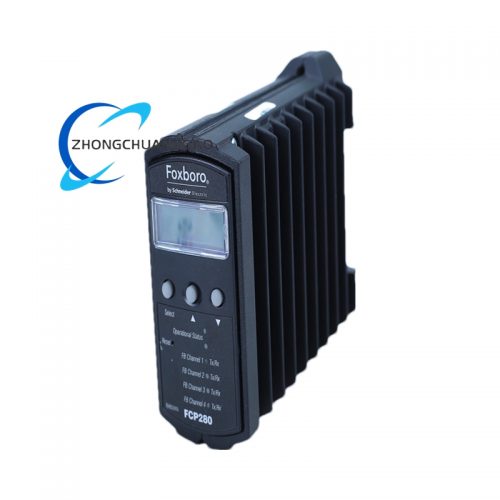
Product Short Description
Technical Specifications
- Input Parameters
- It is equipped with 32 group-isolated discrete input channels, supporting input voltages of 15 – 60V DC, 120V AC/125V DC and 240V AC.
- The on-state voltage ranges from 15 to 30V DC, and the off-state voltage ranges from 0 to 5V DC.
- The typical current is 2.2mA when the input is 30V DC. The maximum on-state source resistance is 1kΩ at 15V DC, and the minimum off-state source resistance is 100kΩ at 30V DC.
- The configurable input filter time has multiple options including no filtering, 4ms, 8ms, 16ms and 32ms, and the maximum pulse count rate reaches 250Hz.
- Electrical Specifications
- It adopts a 24V DC power supply, with a voltage tolerance of +5% and -10%.
- The maximum power consumption is 3W at 24V DC, and the maximum heat dissipation is 5W at the same voltage.
- In the redundant configuration, the contact sensing power of the two modules is combined through diodes in the redundancy adapter to verify the reliability of the redundant power supply.
Description
- Physical & Environmental Specifications
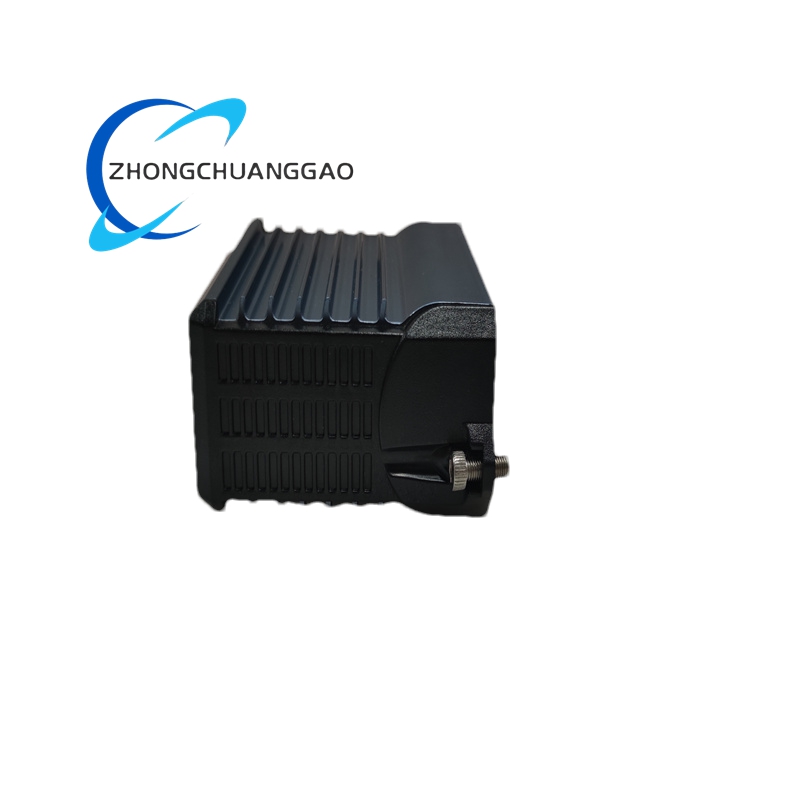
- The module dimensions are 6.2cm × 14.3cm × 11.6cm, and its weight is about 284g.
- The operating temperature ranges from -20°C to +70°C, and the storage temperature ranges from -40°C to +70°C.
- It adapts to 5% – 95% non-condensing humidity, and the operating altitude ranges from -300 meters to 3000 meters, while the storage altitude can reach up to 12000 meters.
- It can withstand vibration of 0.75m/s² within the frequency range of 5Hz – 500Hz, which is suitable for industrial sites with mechanical vibration.
Function Features
- Multi-Voltage Support and Wide Compatibility
The module supports three types of input voltage specifications, which can be flexibly matched with different discrete field devices such as limit switches, pressure switches and position sensors in industrial sites. This eliminates the need to replace modules for different voltage signal requirements, greatly improving the adaptability and versatility of the module in various automation systems.
- Redundant Configuration Ensures Uninterrupted Operation
It can be used in pairs as a redundant combination. Redundant modules need to be installed in adjacent odd-even positions on the base plate, and share the field input signal through the termination assembly. The DCS control software’s redundant digital input function block verifies each input signal and selects the highest-quality input for processing. This design completely avoids data collection interruptions caused by single-module failures, which is essential for critical industrial processes.
- Strong Anti-Interference and High Signal Stability
The matching termination assemblies are equipped with high-voltage attenuation circuits and optical isolation components. These components can effectively suppress high-voltage interference and electromagnetic interference from the industrial environment, prevent signal distortion, and protect the internal circuits of the module from damage caused by abnormal voltage. The group isolation design of the 32 channels also reduces signal crosstalk between channels and improves the accuracy of discrete signal collection.
- Flexible Configuration and Easy Installation
It offers configurable input filter time to meet the anti-jamming requirements of different field signals. The module can be installed horizontally or vertically on a DIN rail through the base plate, and can also be installed on a 19-inch rack with a mounting kit. It is compatible with the functions of multiple models in the 100-series FBM I/O subsystem when used with corresponding termination assemblies, facilitating system upgrading and expansion.
Application Scenarios
- Oil and Gas Industry
It is deployed in oil drilling platforms, natural gas processing plants and long-distance pipelines. It connects with discrete devices such as limit switches of valves, pressure switches of pipelines and position sensors of actuators. It collects real-time status signals of these devices, such as whether the valve is fully open or closed and whether the pipeline pressure exceeds the threshold. The redundant configuration ensures that the monitoring of key equipment will not be interrupted, avoiding safety accidents such as oil and gas leakage caused by equipment failure and unmonitored status.
- Power Industry
It is widely used in coal-fired, gas-fired and nuclear power plants, connecting with discrete components such as circuit breaker status sensors, transformer temperature switches and water level alarm switches in power generation systems. It monitors signals such as whether the circuit breaker is closed, whether the transformer is overheated and whether the water level of the cooling system is too low. The reliable signal collection helps the central control system respond to abnormal conditions in a timely manner, ensuring stable operation of the power generation process and preventing large-scale power outages.
- Water Treatment Industry
It is installed in urban sewage treatment plants and industrial wastewater treatment workshops, matching with liquid level switches of sedimentation tanks, pressure switches of filter equipment and status sensors of dosing pumps. It collects discrete signals such as whether the sedimentation tank is full, whether the filter is blocked and whether the dosing pump is running normally. The DCS adjusts the operation of the treatment process according to these signals to ensure that the treated water meets the discharge standards, and the redundant design ensures the continuity of the water treatment process.
- Pharmaceutical Industry
It is integrated into pharmaceutical production lines, connected with discrete devices such as door interlock switches of sterile workshops, position sensors of filling equipment and status switches of sterilization machines. It collects signals such as whether the workshop door is sealed, whether the filling nozzle is in place and whether the sterilization machine completes the preset process. These signals are crucial for complying with GMP standards, ensuring the sterility and quality stability of pharmaceutical products and realizing the traceability of the production process.
- Metallurgical Industry
It is applied in steelmaking and non-ferrous metal smelting workshops, connected with temperature switches of smelting furnaces, limit switches of material conveying equipment and status sensors of slag discharge valves. It collects discrete signals such as whether the smelting temperature reaches the set value, whether the conveying belt is in the correct position and whether the slag discharge valve is closed tightly. The module transmits these signals to the DCS, which adjusts the smelting process and equipment operation in time to ensure the stability of metal product quality and avoid production interruptions caused by equipment failure.
Reviews
There are no reviews yet.