
Product Short Description
- Product Name
- 4 – Channel Proximitor I/O Module with Internal Terminations for Bently Nevada 3500 Series Machinery Protection System
- Product Introduction
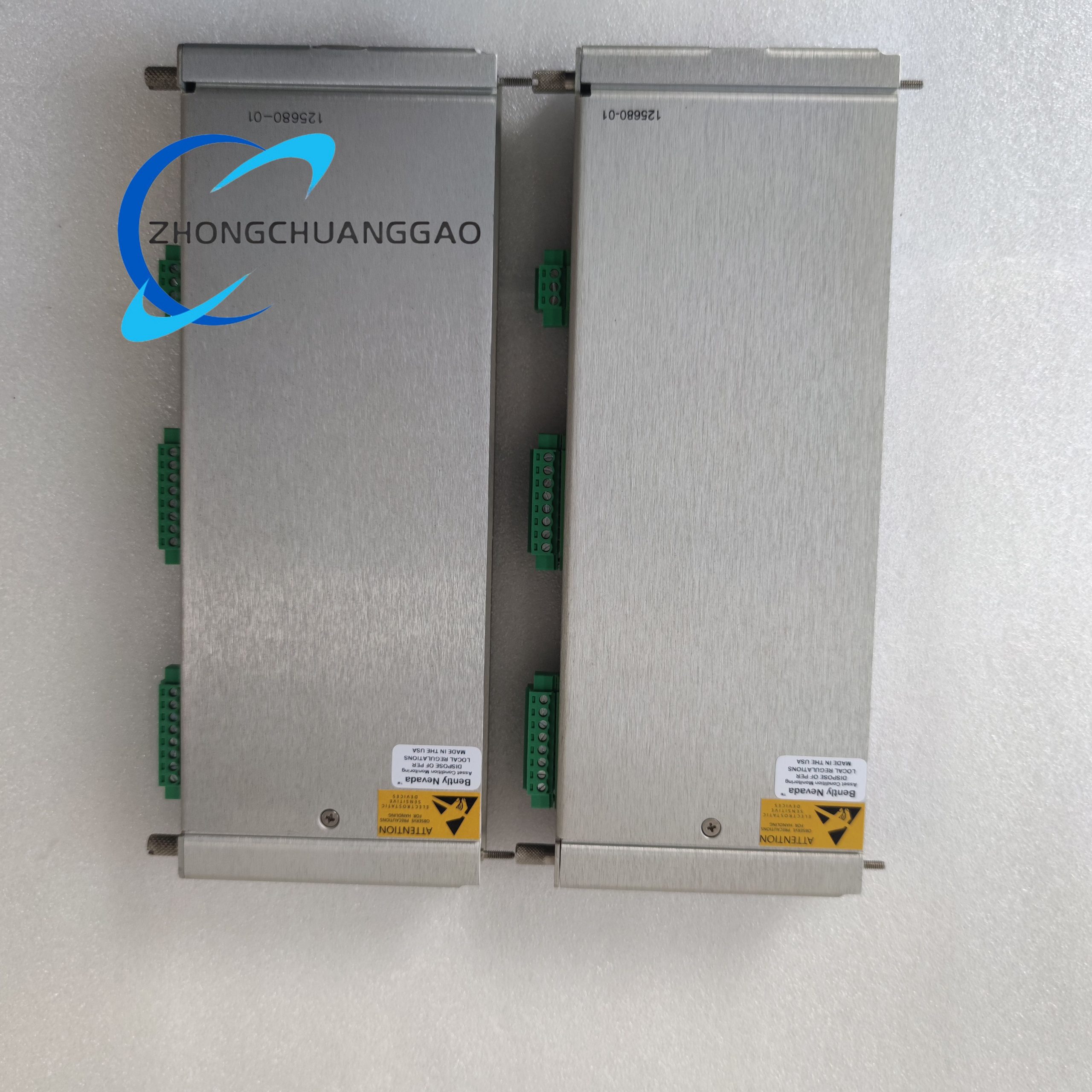
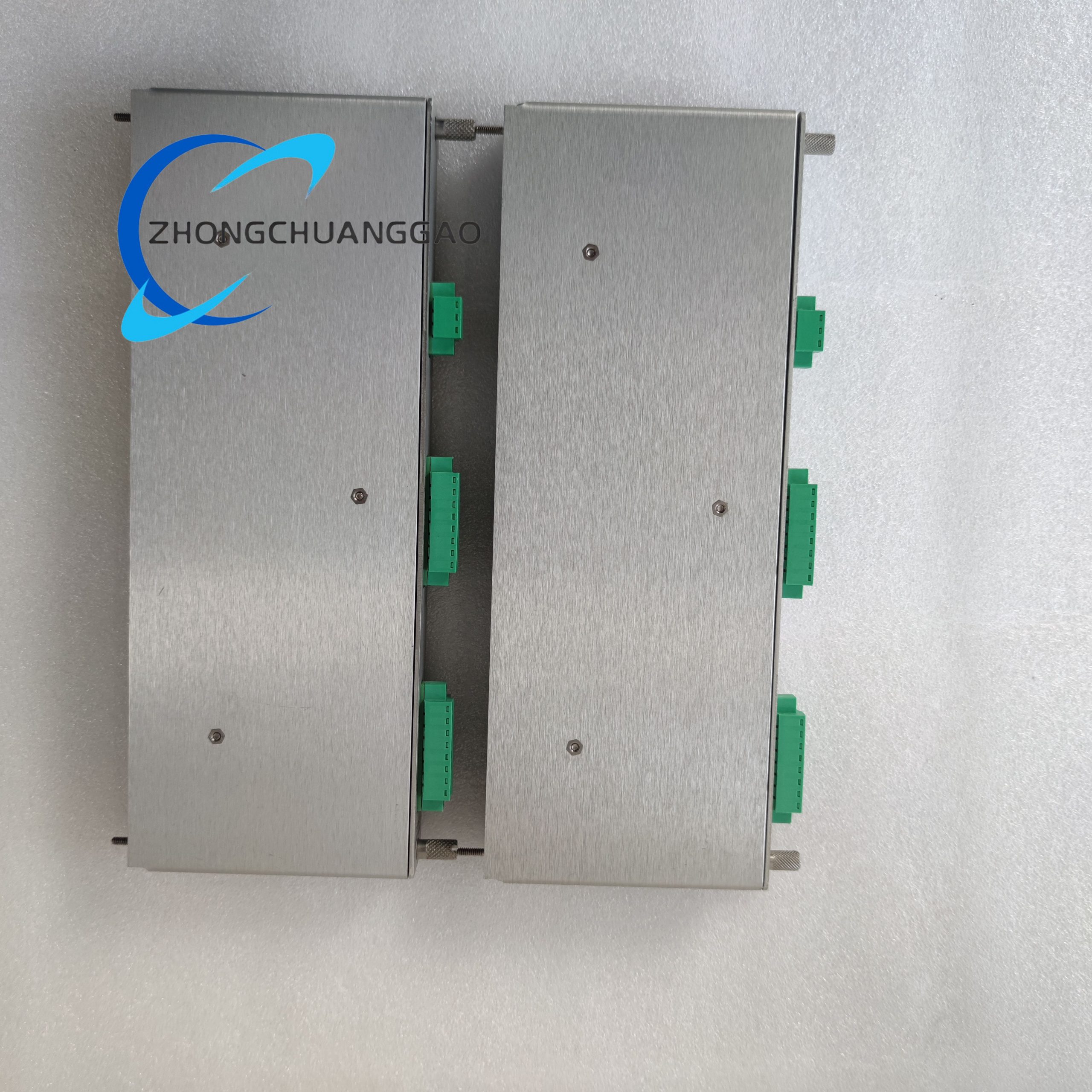
This module is a specialized four – channel proximitor I/O component belonging to the Bently Nevada 3500 series, specifically designed to work with Bently 3300XL eddy current sensors. It occupies one full – height front panel slot in the 3500 series rack and acts as a key interface between proximity transducers and the monitoring system. It receives input signals from proximity transducers, conditions and processes these signals to generate precise data on radial vibration, thrust position, differential expansion, shaft eccentricity and REBAM. It then compares the processed data with user – programmable alarm setpoints. It can be configured using the 3500 rack configuration software, and it provides essential machinery operation information for operators and maintenance personnel. The module achieves machinery protection by triggering alarm systems when abnormal parameters are detected, and it maintains stable performance in harsh industrial environments, serving as a core component for safeguarding the reliable operation of rotating machinery.
Description
- Technical Specifications
- Input and Sensor Compatibility: It accepts input from 1 to 4 proximity transducers. The sensitivity varies by measured parameters, with 3.94 mV/μm or 7.87 mV/μm for radial vibration, thrust position and eccentricity, 0.394 mV/μm or 0.787 mV/μm for differential expansion, and 40 mV/μm or 80 mV/μm for REBAM. The standard input impedance for I/O is 10 kΩ, and the effective impedance of three bussed TMR I/O channels wired in parallel to one transducer is 50 kΩ.
- Measurement Accuracy and Frequency Response: The measurement accuracy is typically within ±0.33% of full – scale and a maximum of ±1% without filtering. The direct filter has a -3 dB frequency at 1.2 Hz, and the gap filter has a -3 dB frequency at 0.41 Hz, ensuring accurate capture of both static and dynamic mechanical parameters.
- Power Supply: It provides a -24 VDC power supply for transducers and has a typical power consumption of 7.7 watts, which is fully compatible with the power distribution system of the 3500 series rack.
- Output Parameters: The module is equipped with buffered outputs with an output impedance of 550 Ω, which ensures stable signal transmission and is protected against short circuits to avoid damage caused by circuit faults.
- Physical Dimensions and Weight: Its dimensions are 2.5 cm × 11.2 cm × 24.2 cm, and it weighs 0.38 kg, making it compact and easy to install in the rack system.
- Software and Firmware Requirements: It requires specific firmware and software versions, such as 3500/01 software version 2.50 or higher, 3500/02 software version 2.20 or higher. For REBAM channel functionality, the module firmware version 2.1 or higher and 3500/01 software version 3.30 or higher are needed.
- Function Features
- Multi – function Channel Configuration: Each channel can be programmed via configuration software to perform different monitoring functions. The channels operate in pairs, allowing channels 1 and 2 to perform one function while channels 3 and 4 execute the same or another distinct function, adapting to diverse monitoring needs of different machinery parts.
- Programmable Alarm Settings: Users can set warning alarm setpoints for each active static value derived from signal conditioning. Additionally, danger setpoints can be configured for any two active static values. This multi – level alarm mechanism ensures timely alerts for different degrees of equipment abnormalities.
- Advanced Signal Conditioning: Every channel conditions the received sensor input signals into measurable static values. This signal conditioning process enhances measurement precision, reduces signal interference, and ensures that the generated mechanical parameter data is accurate and reliable for subsequent analysis and alarm judgment.
- Seamless Rack Integration: It integrates perfectly with the 3500 series rack system and communicates via the rack backplane. It supports hot – swapping, enabling users to plug or unplug the module when the rack is powered on, which minimizes system downtime during maintenance or replacement.
- Internal Termination Design: The module comes with internal terminations, and external terminal blocks cannot be used with it. This design simplifies the wiring process during installation, reduces the complexity of the overall system, and improves the stability of signal transmission.
- Application Scenarios
- Power Generation Industry: It is widely used in thermal, hydroelectric and nuclear power plants to monitor key rotating equipment such as steam turbines, generators and feedwater pumps. It tracks parameters like rotor radial vibration and thrust position, promptly detecting faults such as rotor imbalance and bearing wear to avoid unplanned power outages.
- Oil and Gas Industry: Deployed on offshore drilling rigs, pipeline compressors and gas turbines. It monitors the operating status of rotating components under harsh conditions such as high pressure and corrosion, preventing equipment damage caused by pipeline blockages, rotor misalignment and other issues, thus ensuring the smooth progress of oil and gas extraction and transportation.
- Petrochemical Industry: Applied to reciprocating compressors, gearboxes and reaction tower auxiliary pumps in chemical plants. It monitors parameters including differential expansion and shaft eccentricity of rotating shafts, helping to identify early faults such as seal leakage and valve wear, and ensuring the safety and stability of chemical production processes.
- General Manufacturing Industry: Installed on large – scale rotating machinery like industrial pumps, fans and centrifuges in manufacturing workshops. It provides real – time monitoring of the equipment’s vibration and displacement parameters. This guides maintenance personnel to carry out targeted maintenance work, reducing production downtime caused by sudden equipment failures and improving production efficiency.
- Marine Industry: Used to monitor the propulsion systems and auxiliary rotating equipment of ships, such as marine turbines and shipboard pumps. It adapts to the marine environment with large temperature changes and high humidity, ensuring the reliable operation of ship equipment and safeguarding navigation safety.
Reviews
There are no reviews yet.