
Product Short Description
Product Description
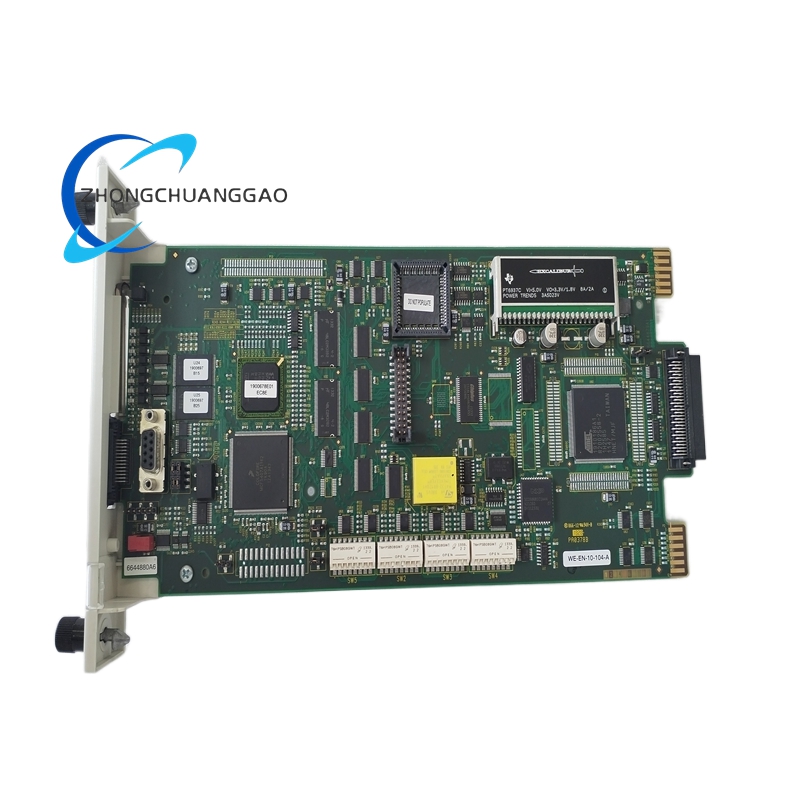
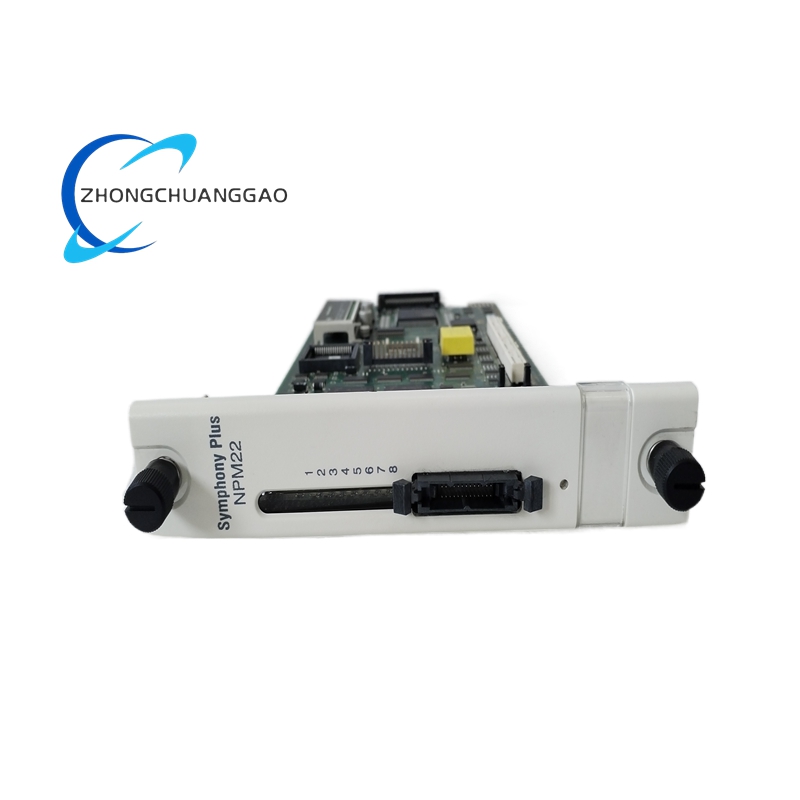
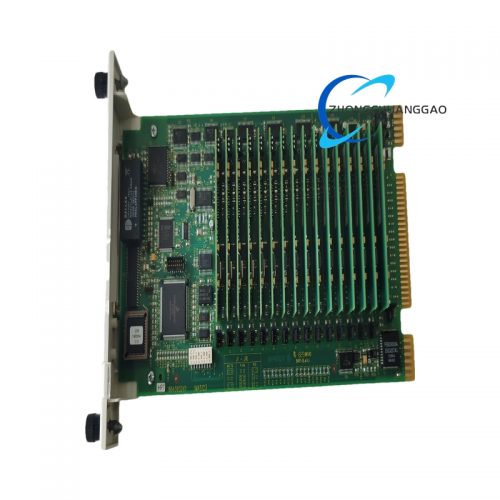
The ABB SPNPM22 is a high-performance, microprocessor-based network processing module serving as the master communication controller for ABB’s Bailey Symphony Plus and legacy INFI 90 Distributed Control Systems (DCS). It functions as the central hub for managing, routing, and processing all real-time data across the Cnet control network, coordinating communication between slave modules (e.g., SPNIS21), HCUs (Harmony Control Units), I/O subsystems, and supervisory systems. As the successor to the INNPM22, it delivers enhanced processing power, expanded network capacity, and robust industrial-grade reliability, enabling seamless integration, high-speed data exchange, and centralized network management for mission-critical process automation applications.
Description
Technical Specifications
Core Processing & Communication Parameters
| Parameter | Specification |
|---|---|
| Processor | Dual PowerPC 440 RISC processors; high-speed parallel processing architecture |
| Memory | 256 MB SDRAM (volatile); 2 MB non-volatile flash memory (configuration storage) |
| Network Type | ABB Cnet proprietary high-speed industrial control network |
| Data Transfer Rate | 10 Mbaud (primary); 2 Mbaud (fallback/secondary) |
| Network Topology | Dual redundant loop architecture; supports up to 250 nodes per Cnet loop |
| System Capacity | Manages up to 62,500 total system nodes across multiple Cnet loops |
| Communication Modes | Master-slave, peer-to-peer, Cnet-to-HCU, Cnet-to-computer, Cnet-to-I/O |
| Latency | Sub-millisecond data routing for real-time process control |
| Protocol Support | Native Cnet protocol; Modbus RTU/TCP, EtherNet/IP via gateway integration |
Electrical & Power Specifications
| Parameter | Specification |
|---|---|
| Supply Voltage | +5 V DC (regulated system bus power) |
| Power Consumption | 10 W (nominal); 12 W (maximum) |
| Input Current | 2.0 A (nominal); 2.4 A (peak) |
| Isolation | 2500 V RMS galvanic isolation between network and system electronics |
| EMC Compliance | IEC 61000-6-2/4; industrial-grade electromagnetic interference immunity |
Physical & Environmental Specifications
| Parameter | Specification |
|---|---|
| Form Factor | Single-slot PCB for MMU (Multifunction Module Unit) chassis |
| Dimensions | 73.66 mm (D) × 360.68 mm (H) × 175.26 mm (W) |
| Weight | 0.3 kg (0.66 lbs) |
| Mounting | Standard 19-inch rack mount in ABB Bailey control system chassis |
| Operating Temperature | 0 °C to +60 °C (32 °F to 140 °F) |
| Storage Temperature | -40 °C to +85 °C (-40 °F to 185 °F) |
| Humidity | 5–95 % RH (non-condensing) |
| Protection Class | IP20 (indoor control panel/rack installation) |
| Connectors | Card-edge connectors (P1, P2, P3) for power, I/O bus, and Cnet interface |
Certifications
- CE Marking
- IEC 61000-4 (EMC standards)
- cULus Listed for industrial control equipment
- RoHS compliant
Core Functions & Features
1. High-Performance Network Processing
- Dual Processor Architecture: Dual PowerPC 440 processors deliver parallel processing, enabling simultaneous data routing, protocol conversion, and system diagnostics without performance degradation.
- Intelligent Packet Routing: Embedded routing logic manages data packet prioritization, error checking, and delivery, ensuring critical control data receives highest priority for sub-millisecond latency.
- Redundant Network Management: Monitors dual Cnet loops, automatically detecting faults and initiating seamless failover to the backup path, eliminating single points of failure.
- Large-Scale System Coordination: Centralizes management of up to 62,500 system nodes, supporting geographically distributed DCS installations with unified control.
2. Master-Slave Communication Coordination
- Slave Module Management: Acts as the master controller for slave interface modules (e.g., SPNIS21), assigning network addresses, managing data traffic, and synchronizing communication across the entire network.
- I/O Subsystem Integration: Directly interfaces with I/O expander buses, enabling high-speed data transfer between field devices, I/O modules, and the control network.
- HCU Synchronization: Coordinates real-time data exchange with Harmony Control Units (HCUs), ensuring synchronized process control across distributed control nodes.
- Peer-to-Peer Communication: Facilitates direct data exchange between control nodes without host controller intervention, reducing latency and improving system responsiveness.
3. Advanced Diagnostics & Reliability
- Real-Time System Monitoring: Continuously monitors network health, processor status, memory usage, and communication links, with immediate fault detection and alarm generation.
- Error Detection & Correction: Implements CRC, parity checking, and data retransmission protocols to ensure 100% data integrity during transmission.
- Non-Volatile Configuration Storage: Saves network parameters, node addresses, and routing tables in non-volatile flash memory, preserving settings during power cycles and eliminating reconfiguration requirements.
- Hot-Swappable Design: Allows module replacement or maintenance without shutting down the entire control system, minimizing process downtime.
- Front-Panel Status Indicators: Multi-color LEDs provide visual feedback on power, network activity, fault conditions, and redundancy status for quick on-site troubleshooting.
4. Seamless System Integration
- Legacy & Modern Compatibility: Native plug-and-play integration with both ABB’s legacy INFI 90 and modern Symphony Plus DCS platforms, enabling phased system upgrades.
- Third-Party System Connectivity: Supports integration with PLCs, SCADA systems, and HMIs via standard industrial Ethernet protocols, enabling unified control and monitoring.
- Configurable Network Parameters: All network settings (baud rate, node addresses, routing rules) are configurable via DCS software tools, allowing system optimization for specific applications.
- Scalable Architecture: Supports expansion of Cnet loops and node count as system requirements grow, providing long-term scalability for industrial facilities.
5. Rugged Industrial Design
- Vibration Resistance: Industrial-grade PCB construction with reinforced components withstands high-vibration environments common in power plants and manufacturing facilities.
- Temperature Stability: Operates reliably across a 0 °C to +60 °C temperature range, suitable for controlled industrial environments.
- Electrical Isolation: 2500 V RMS galvanic isolation protects the control system from ground loops, electrical surges, and noise, ensuring stable communication.
- Compact Chassis Mount: Single-slot design maximizes rack space utilization, allowing high-density module deployment in control cabinets.
Application Scenarios
- Power Generation: Central communication hub for thermal, gas, nuclear, and renewable power plants, coordinating control of turbines, boilers, generators, and balance-of-plant systems.
- Oil & Gas Processing: Manages communication in refineries, pipelines, and offshore platforms, ensuring safe and efficient operation of critical process equipment.
- Chemical & Petrochemical: Provides reliable data exchange for continuous and batch process control, including reactor control, distillation, and material handling systems.
- Water & Wastewater: Integrates control systems for water treatment plants, pumping stations, and distribution networks, enabling remote monitoring and control.
- Metals & Mining: Supports communication in steel mills, aluminum smelters, and mining operations, controlling heavy machinery and safety interlock systems.
- Pharmaceutical & Food & Beverage: Ensures secure, reliable communication for process automation, batch tracking, and quality control in regulated industries.
- Manufacturing & Automotive: Enables high-speed communication in automated assembly lines, robotic cells, and material handling systems.
Unique Advantages
- Centralized Network Control: Acts as the single point of management for the entire Cnet network, simplifying system configuration and maintenance.
- Unmatched Scalability: Supports up to 62,500 nodes, making it ideal for large-scale, enterprise-wide DCS implementations.
- Redundancy for Critical Operations: Dual-loop Cnet architecture ensures uninterrupted operation for safety-critical processes.
- Legacy-to-Modern Bridge: Seamlessly connects legacy INFI 90 systems with modern Symphony Plus platforms, preserving existing investments.
- High Reliability: Industrial-grade design, advanced diagnostics, and hot-swappable capability ensure maximum system uptime and minimal maintenance.
Reviews
There are no reviews yet.