
Product Short Description
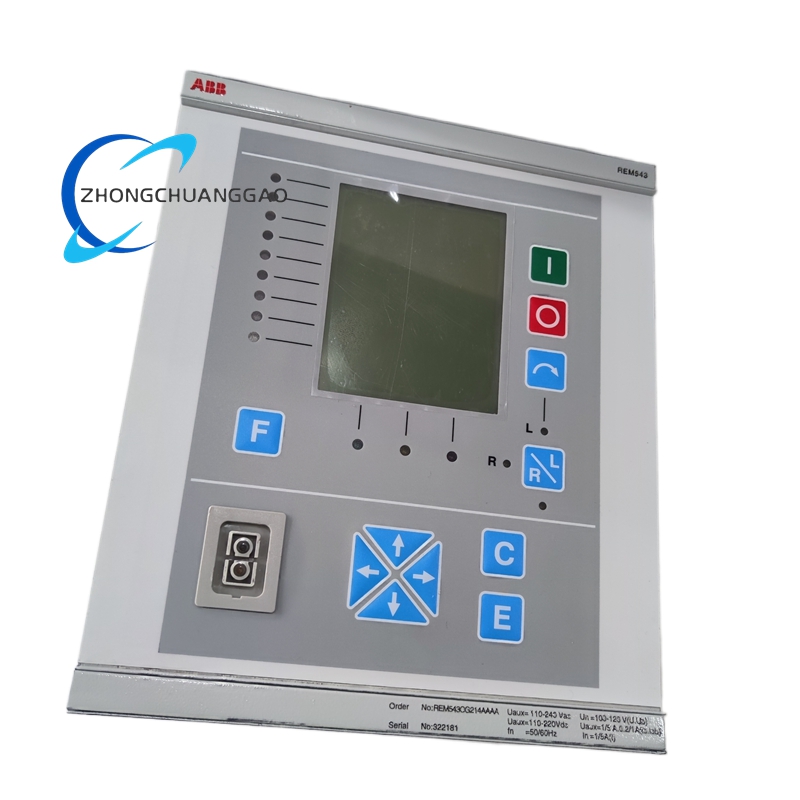
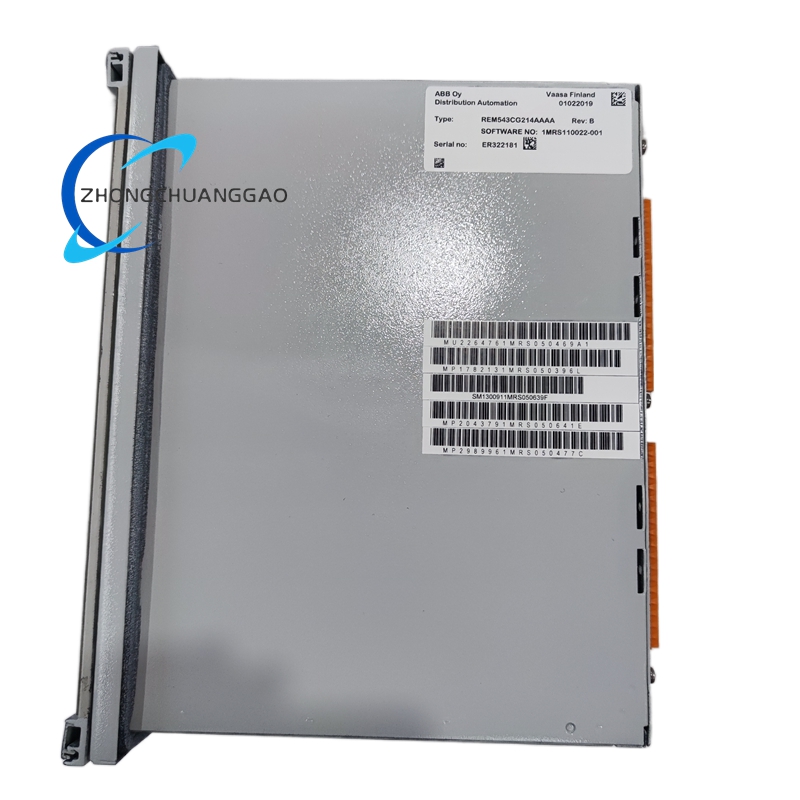
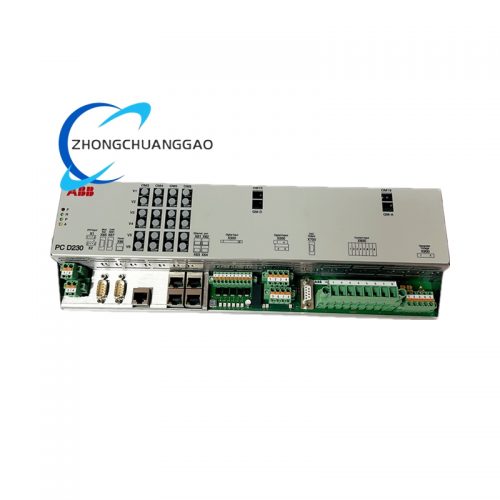
The ABB REM543 is a microprocessor‑based, multifunction intelligent electronic device (IED) dedicated to the comprehensive protection, control, measurement, and condition monitoring of rotating electrical machineryABB. It serves as the primary protection system for small‑to‑medium power generators (diesel, hydro, steam) and generator‑transformer units, and provides robust protection for large medium‑voltage (MV) synchronous and asynchronous motors in industrial applicationsABB. The device integrates advanced numerical protection algorithms, programmable logic control (PLC), and multi‑protocol communication, delivering reliable operation across start‑up, running, and transient conditionsABB. It supports both conventional CT/VT inputs and modern sensor technologies, with optional RTD modules for direct temperature monitoringeero. Certified for marine and offshore use, the REM543 offers high durability and adaptability for harsh environmentsABB.
Description
Technical Specifications
Core System & Performance
- Processing Platform: High‑performance microprocessor with digital signal processing (DSP) for real‑time protection and measurement
- Sampling Rate: 16–32 samples per power cycle for precise fault detection
- Operating Frequency: 45–65 Hz (supports 50/60 Hz systems)
- Measurement Accuracy: Current ±0.5%; Voltage ±0.5%; Power ±1.0%
- Setting Groups: 4 independent setting groups for operational mode switching
- Fault Recording: Disturbance recorder with analog waveform capture and 100+ event storage
- Typical Trip Time: Differential protection ≤ 20 ms; Overcurrent protection ≤ 30 ms
- Event Logging: 10,000+ time‑stamped events with 1 ms resolution
- Programmable Logic: Built‑in PLC with logic gates, timers, and counters for custom automation
Power Supply
- Nominal Voltage: 90–264 V AC / 24–250 V DC (universal wide‑range input)
- Power Consumption: < 15 W (quiescent); < 20 W (operating)
- Isolation: Full galvanic isolation between power, I/O, and communication circuits
- Voltage Ride‑Through: < 50 ms power interruption without relay reset
Analog Inputs
- Phase Current: 3 channels, programmable for 1 A or 5 A nominal (CT secondary)
- Residual Current: 1 channel (5 A/1 A) for earth‑fault detection
- Voltage Inputs: 3 phase voltage + 1 neutral voltage (60–210 V AC nominal)
- Optional RTD Inputs: 8 galvanically isolated channels (Pt100, Pt1000, Cu10) for stator, bearing, and ambient temperature monitoring
- Thermal Withstand: Continuous 20 A; 1 s 500 A (current inputs)
- Dynamic Withstand: Half‑wave 1250 A (current inputs)
- Sensor Compatibility: Conventional CT/VT, Rogowski coils, and voltage dividerseero
Digital I/O
- Binary Inputs: 15 galvanically isolated 24–250 V DC inputs (configurable for pulse counting, 0–100 Hz)eero
- Power Outputs (PO/HSPO): 4 high‑speed power outputs (HSPO) for tripping; 8 general power outputs (PO) for control; double‑pole contacts rated 250 V AC / 30 V DC, 5 Aeero
- Signal Outputs (SO): Configurable NO/NC contacts for alarms and status indicationeero
- HMI: Large graphical LCD display with backlight; 16 dedicated LEDs for status indication
- Local Controls: Pushbuttons for local/remote toggle, reset, and manual operation
Communication Interfaces
- Front Port: Optical RS‑232 for local PC configuration (CAP501 software)
- Rear Ports:
- RS‑485: Modbus RTU, SPA, LON, IEC 60870‑5‑103
- Optional: IEC 61850 via SPA‑ZC 400 adapterABB
- Time Synchronization: IRIG‑B input for high‑accuracy time stamping
- Client Capacity: Simultaneous connection to multiple SCADA/control systems
Physical & Environmental
- Dimensions: 266 mm (H) × 144 mm (W) × 280 mm (D)
- Weight: Approx. 3.5 kg
- Mounting: Flush‑mount or rack‑mount (19” rack compatible)
- Protection Rating: IP54 (front); IP20 (rear terminals)
- Operating Temperature: -25 °C to +70 °C
- Storage Temperature: -40 °C to +85 °C
- Humidity: 5%–95% RH (non‑condensing)
- EMC Compliance: IEC 61000 series, EN 50081‑2, CISPR 11
- Certifications: CE, IEC 60255, IEEE C37.90, Marine/Offshore certificationsABB
Functional Features
Comprehensive Protection Functions
Generator Protection
- Differential Protection (87G): Flux‑balance differential for stator winding short‑circuits; high sensitivity for interturn faults
- 100% Stator Earth‑Fault: Sensitive detection for ground faults across the entire stator winding
- Rotor Earth‑Fault (64R): Injection‑based detection for rotor insulation faults
- Overcurrent (50/51): 4‑stage non‑directional overcurrent with definite/inverse time characteristics
- Earth‑Fault (50N/51N): Sensitive residual overcurrent for ground fault detection
- Negative Sequence Overcurrent (46): Protects against unbalanced loads and open‑phase conditions
- Thermal Overload (49): Dual‑time‑constant thermal model for stator/rotor overheating protection
- Over/Undervoltage (27/59): Two‑stage protection against voltage anomalies
- Over/Underexcitation (40): Protects against loss of excitation and overexcitation
- Reverse Power (32): Prevents generator motoring and turbine damage
- Frequency Protection (81): Over/underfrequency and rate‑of‑change‑of‑frequency protection
- Breaker Failure (50BF): Backup tripping for failed circuit breakers
Motor Protection
- Locked Rotor (51/66): Protection during start‑up with start‑per‑hour limiting
- Stall Protection: Detects mechanical jams during operation
- Thermal Modelling: Real‑time rotor/stator temperature estimation
- Starting Supervision: Monitors start‑up duration and prevents excessive starts
- Phase Unbalance (46): Protects against voltage/current unbalance
- Short‑Circuit (50): Instantaneous overcurrent for phase‑to‑phase faults
- Earth‑Fault (50N): Sensitive ground fault detection
- Underload Protection: Detects loss of load or broken coupling
Advanced Control & Automation
- Circuit Breaker Control: Local/remote close/trip with synchrocheck (25) for safe parallelingeero
- Interlocking Logic: Configurable PLC logic to prevent unsafe operations
- Sequence Control: Timed and logic‑based switching sequences
- Trip Circuit Supervision (TCS): Monitors breaker trip‑circuit integrity
- Condition Monitoring: RTD‑based temperature tracking; start‑up counter; wear monitoring
Measurement & Diagnostics
- Real‑Time Measurements: Phase/residual current/voltage, power (P/Q/S), energy, power factor, frequency, and harmonicseero
- Disturbance Recording: Pre/post‑fault waveform capture in standard formats for analysis
- Self‑Diagnostics: Continuous hardware/software monitoring with fault alarms
- Event Logging: Detailed records of all operations, faults, and alarms
- Graphical HMI: Customizable single‑line diagrams and real‑time trends
Flexibility & Integration
- Modular Design: Expandable I/O and optional RTD/mA modules
- Multi‑Protocol Support: Seamless integration with legacy and modern SCADA systems
- Sensor Compatibility: Works with conventional and modern sensing technologies
- Marine Certification: Suitable for offshore and marine power systems
- Legacy Compatibility: Easy retrofit into existing power plant and industrial systems
Application Scenarios
Power Generation Plants
- Small‑to‑Medium Generators: Primary protection for diesel, hydro, and steam turbine generators
- Generator‑Transformer Units: Integrated protection for generator and step‑up transformer blocks
- Cogeneration Plants: CHP unit protection with grid interconnection control
- Backup Power Systems: Standby generator protection for critical facilities
Industrial Motor Applications
- Pumps & Compressors: Large MV motor protection in water treatment, oil & gas, and manufacturing
- Mills & Crushers: Heavy‑duty motor protection in mining and cement production
- Fans & Blowers: Industrial ventilation and process fan motor protection
- Conveyors & Drives: Material handling motor protection in manufacturing plants
Marine & Offshore
- Shipboard Power Systems: Generator and propulsion motor protection
- Offshore Platforms: Power generation and large motor protection in harsh environments
- Subsea Systems: Remote power system protection for subsea installations
Specialized Applications
- Retrofit Projects: Upgrade of legacy protection systems with modern IED technology
- Isolated Power Systems: Standalone generator/motor protection in remote locations
- Industrial Complexes: Integrated protection for multiple rotating machines in a single facility
Reviews
There are no reviews yet.