
Product Short Description
Product Description
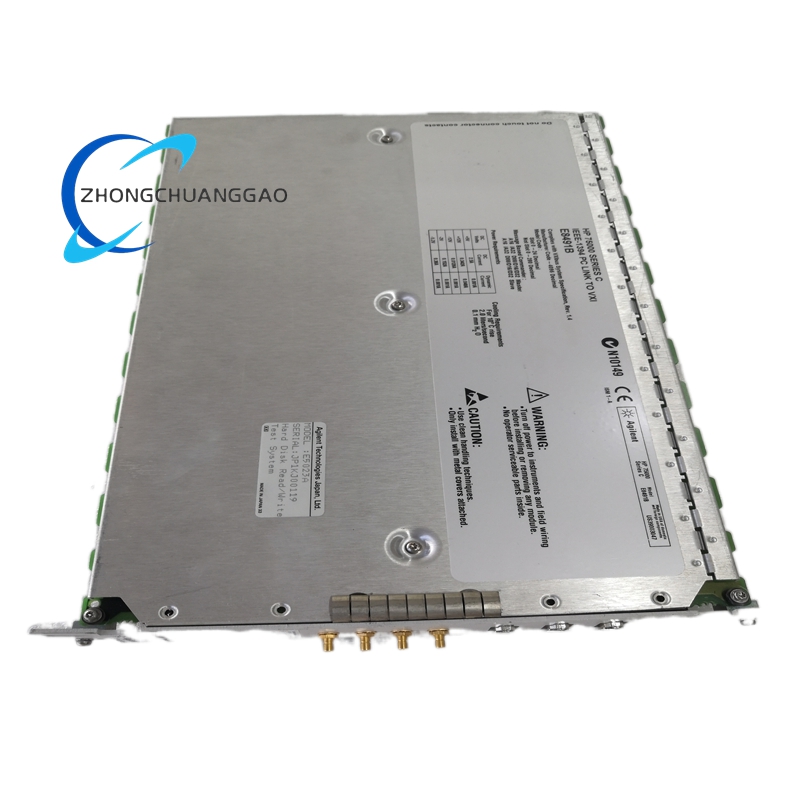
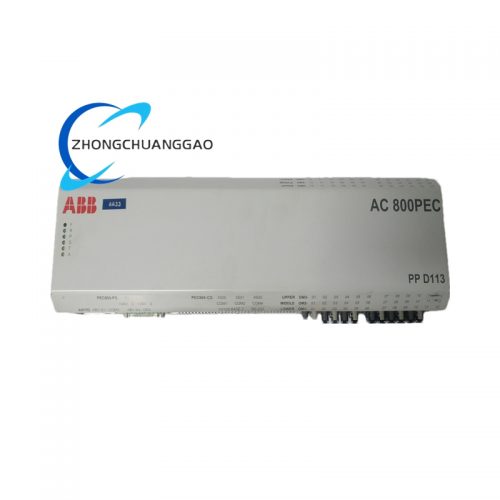
The ABB E8491B is a high-performance communication and control interface module designed for integration within ABB’s advanced distributed control systems (DCS). It functions as a critical communication hub, facilitating high-speed data exchange, signal routing, and system coordination between different DCS subsystems, controller modules, I/O networks, and peripheral devices.
Engineered for deployment in demanding industrial process environments, the E8491B ensures stable, real-time data transmission, precise control signal distribution, and seamless interoperability across complex automation architectures.
Description
Technical Specification
| Parameter | Specification |
|---|---|
| Product Type | Communication / Control Interface Module |
| Compatible Systems | ABB Advant OCS, Advant Master, 800xA DCS Platforms |
| Form Factor | PCB Module, Rack-Mountable |
| Communication Interface | Proprietary DCS Bus, Multi-Channel Parallel/Synchronous Communication |
| Data Transfer Rate | High-Speed Parallel Bus (Up to 10 Mbps Typical) |
| Isolation | Galvanic Isolation Between Bus Segments & System Backplane |
| Operating Voltage | 5 V DC / 24 V DC (System Backplane Powered) |
| Power Consumption | ≤ 8 W (Maximum) |
| Operating Temperature | -25 °C to +70 °C |
| Storage Temperature | -40 °C to +85 °C |
| Relative Humidity | 5 – 95% (Non-Condensing) |
| Vibration Resistance | IEC 60068-2-6 (10 – 2000 Hz, 1g) |
| Shock Resistance | IEC 60068-2-27 (15g, 11ms) |
| Protection Rating | IP20 (Enclosed Rack Mount) |
| Dimensions | Standard DCS Card Rack Size (Approx. 300 mm x 200 mm x 25 mm) |
| Weight | Approx. 0.45 kg |
| Certifications | CE, IEC 61000 (EMC), ATEX (Category III), RoHS |
| Country of Origin | Sweden |
Functional Features
-
High-Speed System Communication
- Multi-Channel Data Bus: Supports parallel, high-speed communication paths for synchronous data transfer between controllers, I/O modules, and operator stations, ensuring minimal latency.
- Bus Arbitration & Management: Integrates intelligent bus arbitration logic to manage data traffic, prevent collisions, and prioritize critical control signals for real-time process responsiveness.
- Subsystem Bridging: Acts as a bridge between independent DCS subsystems, enabling data sharing and coordinated control across distributed network segments.
- Synchronization Capability: Provides precise clock synchronization for distributed system components, ensuring consistent time-stamping and coordinated operation of all control loops.
-
Enhanced System Reliability & Redundancy
- Redundant Bus Support: Fully compatible with dual redundant communication bus configurations, enabling automatic failover to a backup channel in case of primary bus faults.
- Hot-Swappable Design: Supports installation and removal under system power (hot-swapping), allowing replacement without shutting down the entire control system.
- Fault Detection & Isolation: Built-in self-diagnostics continuously monitor communication integrity, signal quality, and module health, with automatic fault isolation to prevent system-wide disruptions.
- Overvoltage & ESD Protection: Integrates multi-stage surge protection and electrostatic discharge (ESD) suppression to safeguard against electrical transients and industrial electromagnetic interference.
-
Flexible System Integration
- Multi-Protocol Compatibility: Supports native ABB proprietary bus protocols and industry-standard fieldbus interfaces for seamless integration with third-party devices and legacy systems.
- Distributed I/O Connectivity: Provides direct interface ports for remote I/O racks, enabling expansion of control systems over large industrial sites with long-distance signal transmission.
- Controller Interfacing: Establishes high-bandwidth links between main control processors and local I/O subsystems, supporting complex multi-loop control strategies.
- Plug-and-Play Configuration: Automatically recognizes connected devices and configures communication parameters, simplifying system commissioning and expansion.
-
Advanced Diagnostic & Monitoring
- Real-Time Status Monitoring: Features LED indicators for power status, bus activity, communication quality, and fault conditions for quick visual inspection.
- Comprehensive Fault Reporting: Transmits detailed diagnostic data to the system controller, including error codes, signal degradation alerts, and component health status.
- Predictive Maintenance Support: Provides performance trend data and early warning signals for potential communication issues, enabling proactive maintenance.
- Remote Diagnostics: Allows access to module status and fault information via the system network, supporting remote troubleshooting without physical access.
-
Industrial-Grade Durability
- Extended Temperature Range: Operates reliably in extreme temperature environments (-25 °C to +70 °C), suitable for installation in non-conditioned industrial spaces.
- High Noise Immunity: Multi-layered PCB design and shielding effectively reject electromagnetic interference (EMI) and radio-frequency interference (RFI).
- Vibration & Shock Tolerance: Rugged construction with reinforced components withstands mechanical vibration and shock common in heavy industrial facilities.
- Long Operational Life: High-quality components and robust design ensure continuous operation with high mean time between failures (MTBF).
Application Scenarios
The ABB E8491B is deployed across critical process industries requiring robust, high-speed DCS communication:
-
Power Generation & Transmission
- Communication backbone for boiler control, turbine control, and auxiliary systems in thermal, hydro, and combined-cycle power plants.
- Coordination between distributed control units in smart grid substations and power distribution management systems.
- Real-time data exchange between control rooms and field equipment in large-scale power generation facilities.
-
Oil & Gas Processing
- Inter-module communication in refinery distributed control systems for distillation, cracking, and reforming processes.
- Data routing between remote wellhead controls and central monitoring systems in onshore/offshore production facilities.
- Communication interface for pipeline monitoring, compressor stations, and terminal automation systems.
-
Chemical & Petrochemical Industry
- High-speed signal routing for continuous process control in chemical synthesis, polymerization, and batch processing plants.
- Subsystem integration for hazardous area control systems with intrinsic safety requirements.
- Coordination between process controllers, safety instrumented systems (SIS), and inventory management systems.
-
Water & Wastewater Treatment
- Communication link between SCADA systems and distributed process controllers in water treatment plants.
- Data exchange for pump station control, filtration processes, and chemical dosing systems.
- Network integration for regional wastewater management systems with multiple treatment facilities.
-
Metals & Mining
- Control system communication for smelting operations, rolling mills, and material handling processes.
- Interface between process automation and equipment monitoring systems in mining operations.
- Real-time data transmission for furnace temperature control and production line coordination.
-
Pharmaceutical & Food Processing
- Precision communication for regulated batch processes with strict quality control requirements.
- System integration for clean room automation and environmental control systems.
- Coordination between manufacturing execution systems (MES) and process control layers.
Key Advantages
- High-Speed Communication: Delivers ultra-fast data transfer with minimal latency for demanding real-time control applications.
- Maximum System Uptime: Redundant design and hot-swappable operation ensure uninterrupted system performance.
- Flexible Architecture: Supports scalable system design with seamless integration of new components and subsystems.
- Industrial Robustness: Operates reliably in extreme environmental conditions with superior noise immunity.
- Simplified Maintenance: Comprehensive diagnostics and remote monitoring reduce downtime and service costs.
- Future-Proof Integration: Compatible with legacy and latest ABB DCS platforms, protecting long-term automation investments.
- Certified Performance: Meets international industrial standards for safety, EMC, and environmental compliance.
Reviews
There are no reviews yet.