
Product Short Description
Product Description
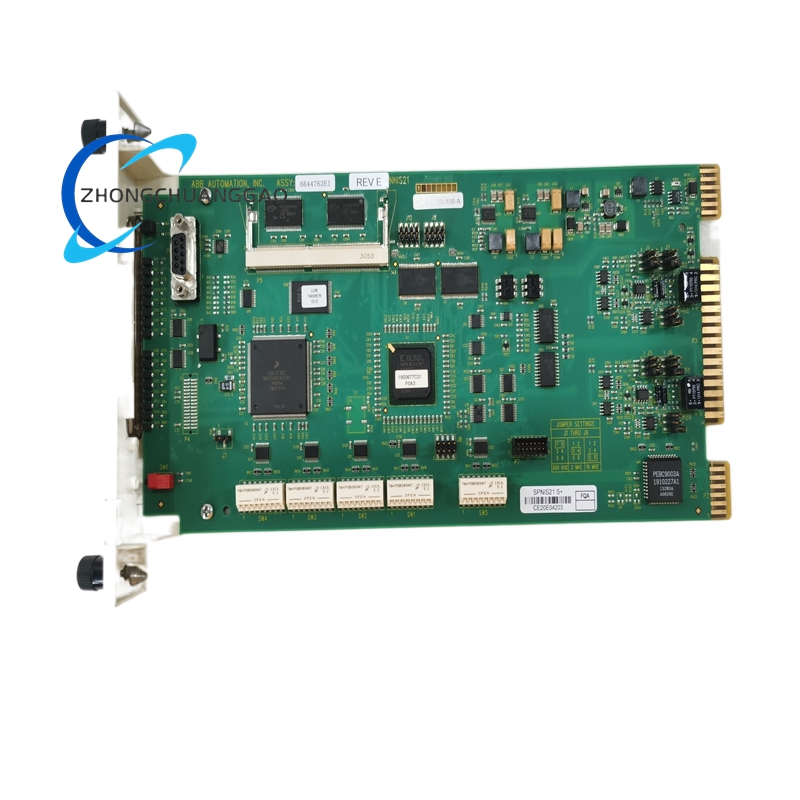
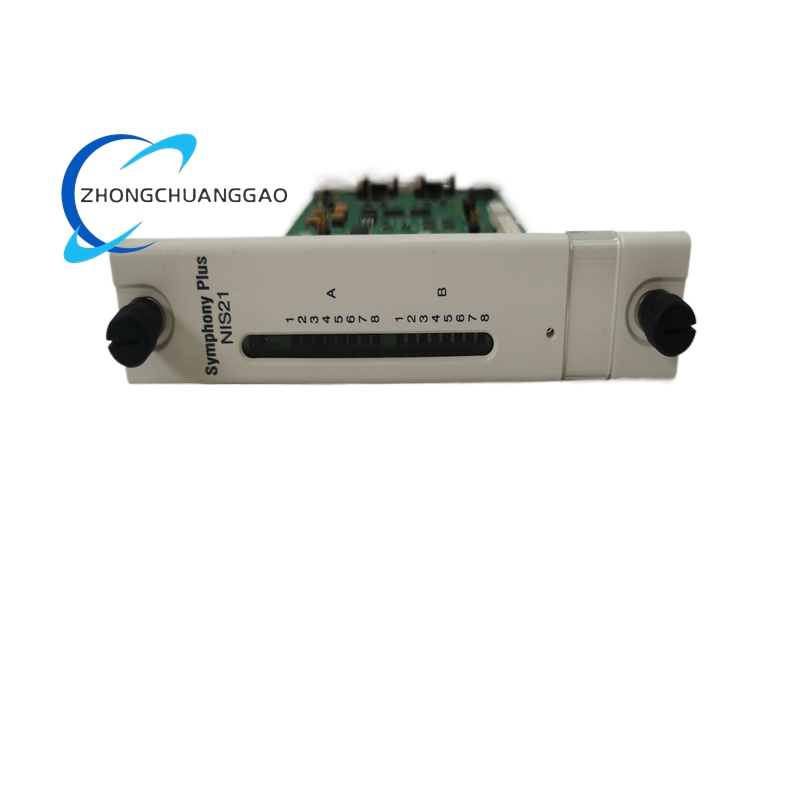
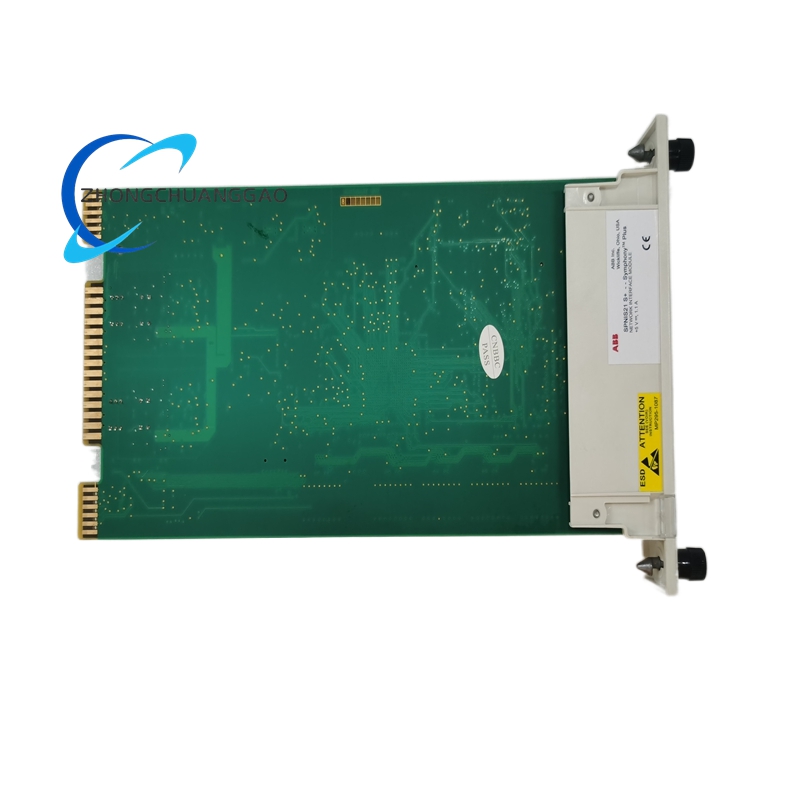
The ABB SPNIS21 is a high-performance, microprocessor-based network interface module designed as a core communication component for ABB’s Bailey Symphony Plus and legacy INFI 90 Distributed Control Systems (DCS). It functions as an intelligent gateway, establishing reliable, real-time data exchange between control nodes, field I/O subsystems, HCUs (Harmony Control Units), and supervisory computers across the Cnet control network. As a slave module operating in conjunction with master modules like the SPNPM22, it enables seamless peer-to-peer communication, system-wide data sharing, and integration of distributed control assets. This module is the modernized successor to the INNIS21, delivering enhanced performance, expanded node capacity, and robust industrial-grade reliability for mission-critical process automation applications.
Description
Technical Specifications
Core Communication Parameters
| Parameter | Specification |
|---|---|
| Network Type | ABB Cnet Control Network (proprietary high-speed industrial bus) |
| Communication Modes | Cnet-to-Cnet, Cnet-to-HCU, Cnet-to-Computer, Peer-to-Peer |
| Data Transfer Rate | 10 Mbaud (primary); 2 Mbaud (fallback/secondary) |
| System Capacity | Supports up to 62,500 total system nodes; 250 nodes per Cnet loop |
| Bus Topology | Loop-based redundant topology; supports dual redundant communication paths |
| Protocol Support | Native Cnet protocol; integrates with Modbus TCP/EtherNet/IP via gateway modules |
| Latency | Sub-millisecond data transfer for real-time process control |
Electrical & Power Specifications
| Parameter | Specification |
|---|---|
| Supply Voltage | +5 V DC (regulated system bus power) |
| Power Consumption | 4.1 W (typical); 5.5 W (maximum) |
| Input Current | 825 mA (nominal); 1.1 A (peak) |
| Isolation | 2500 V RMS galvanic isolation between communication bus and system electronics |
| EMC Compliance | IEC 61000-6-2/4; industrial-grade immunity to electromagnetic interference |
Physical & Environmental Specifications
| Parameter | Specification |
|---|---|
| Form Factor | Single-slot printed circuit board (PCB) for MMU (Multifunction Module Unit) chassis |
| Dimensions | 73.66 mm (D) × 358.1 mm (H) × 175.26 mm (W) |
| Weight | 0.24–0.3 kg (0.53–0.66 lbs) |
| Mounting | Rack-mounted in standard ABB Bailey control system chassis |
| Operating Temperature | -25 °C to +60 °C (-13 °F to +140 °F) |
| Storage Temperature | -40 °C to +85 °C (-40 °F to +185 °F) |
| Humidity | 5–95 % RH (non-condensing) |
| Protection Class | IP20 (indoor control panel/rack installation) |
| Connectors | Three card-edge connectors (P1, P2, P3) for power, I/O expander bus, and Cnet interface |
Certifications
- CE Marking
- IEC 61000-4 (EMC standards)
- cULus Listed for industrial control equipment
Core Functions & Features
1. High-Speed Cnet Communication
- Dual Baud Rate Operation: Automatically switches between 10 Mbaud (high-speed) and 2 Mbaud (reliable) modes to optimize performance based on network load and distance.
- Redundant Network Paths: Supports dual-loop Cnet architecture, enabling automatic failover to the backup path in case of a cable break or node failure, ensuring 99.99% system uptime.
- Intelligent Data Routing: Embedded microprocessor manages packet routing, error checking, and data buffering, reducing host controller overhead and ensuring efficient data flow across the network.
- Large Node Support: Accommodates up to 62,500 nodes in a single system, making it suitable for large-scale, geographically distributed DCS installations.
2. Seamless System Integration
- Symphony Plus / INFI 90 Compatibility: Native plug-and-play integration with ABB’s modern Symphony Plus and legacy INFI 90 DCS platforms, preserving investment in existing control infrastructure.
- I/O Expander Bus Interface: Connects directly to I/O subsystems (e.g., IET800 modules) via a dedicated high-speed parallel bus, enabling fast, direct data transfer between field devices and the control network.
- Master-Slave Architecture: Operates as a slave module under the control of a master module (e.g., SPNPM22), facilitating coordinated communication across the entire control system.
- Cross-Platform Connectivity: Integrates with third-party PLCs, SCADA systems, and HMIs via standard industrial Ethernet gateways, enabling unified control and monitoring.
3. Advanced Diagnostics & Reliability
- Real-Time Self-Monitoring: Continuously monitors communication link status, power supply, and module health, with immediate fault detection and alarm generation.
- Error Detection & Correction: Implements cyclic redundancy check (CRC) and parity checking for all data packets, ensuring data integrity and preventing corruption during transmission.
- Status Indicators: Front-panel LEDs provide visual feedback on power, communication activity, fault conditions, and network redundancy status for quick on-site troubleshooting.
- Hot-Swappable Design: Allows module replacement or maintenance without shutting down the entire control system, minimizing process downtime and disruption.
- Non-Volatile Memory: Stores configuration parameters and network settings in non-volatile memory, preserving settings during power cycles and eliminating the need for reconfiguration after restart.
4. Robust Industrial Design
- Vibration Resistance: Industrial-grade PCB construction with reinforced components withstands high-vibration environments common in power plants, manufacturing facilities, and process industries.
- Wide Temperature Tolerance: Operates reliably across a -25 °C to +60 °C temperature range, suitable for both controlled indoor environments and challenging industrial locations.
- Galvanic Isolation: 2500 V RMS isolation protects the control system from ground loops, electrical surges, and noise, ensuring stable communication in electrically noisy industrial settings.
- Compact Chassis Mount: Single-slot design maximizes rack space utilization, allowing for high-density I/O and communication module deployment in control cabinets.
Application Scenarios
- Power Generation: Core communication module for thermal, gas, nuclear, and renewable power plants, enabling real-time control of turbines, boilers, generators, and balance-of-plant systems.
- Oil & Gas Processing: Facilitates communication between distributed control nodes in refineries, pipelines, and offshore platforms, ensuring safe and efficient operation of critical process equipment.
- Chemical & Petrochemical: Provides reliable data exchange for continuous and batch process control, including reactor control, distillation, and material handling systems.
- Water & Wastewater: Integrates control systems for water treatment plants, pumping stations, and distribution networks, enabling remote monitoring and control of valves, pumps, and sensors.
- Metals & Mining: Supports communication in steel mills, aluminum smelters, and mining operations, controlling heavy machinery, material processing, and safety interlock systems.
- Pharmaceutical & Food & Beverage: Ensures compliance with strict regulatory standards by providing secure, reliable communication for process automation, batch tracking, and quality control.
- Manufacturing & Automotive: Enables high-speed communication in automated assembly lines, robotic cells, and material handling systems, supporting just-in-time production and quality assurance.
Unique Advantages
- Legacy-to-Modern Bridge: Seamlessly connects legacy INFI 90 systems with modern Symphony Plus platforms, enabling phased system upgrades without full replacement.
- Unmatched Scalability: Supports up to 62,500 nodes, making it ideal for large-scale, enterprise-wide DCS implementations.
- Redundancy for Critical Operations: Dual-loop Cnet architecture eliminates single points of failure, ensuring uninterrupted operation for safety-critical processes.
- Low Latency Performance: Sub-millisecond data transfer meets the stringent real-time requirements of high-speed process control applications.
- Simplified Maintenance: Hot-swappable design, advanced diagnostics, and visual status indicators reduce maintenance time and improve overall system availability.
Reviews
There are no reviews yet.