
Product Short Description
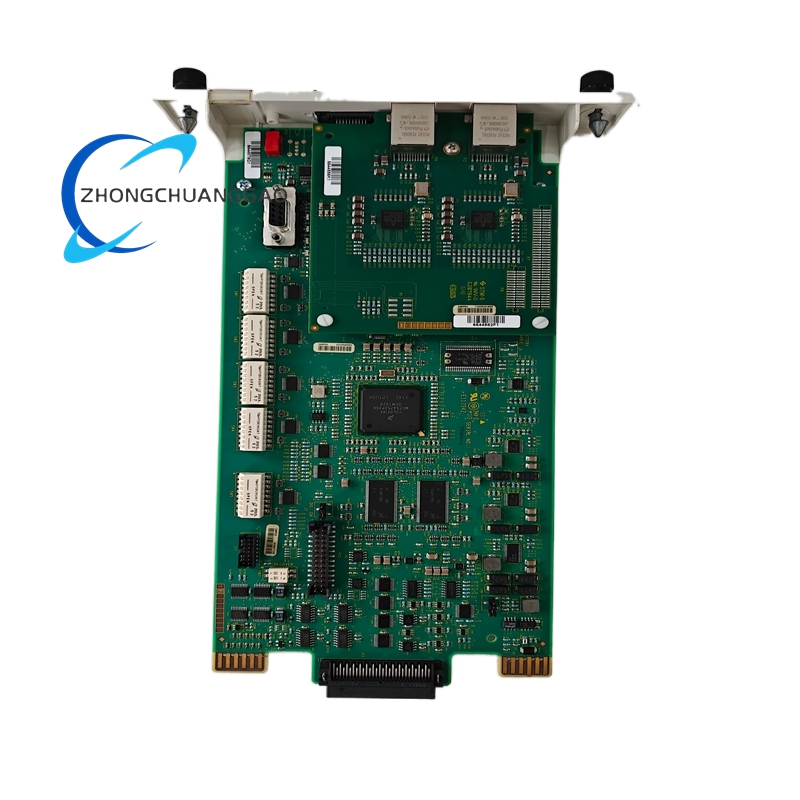
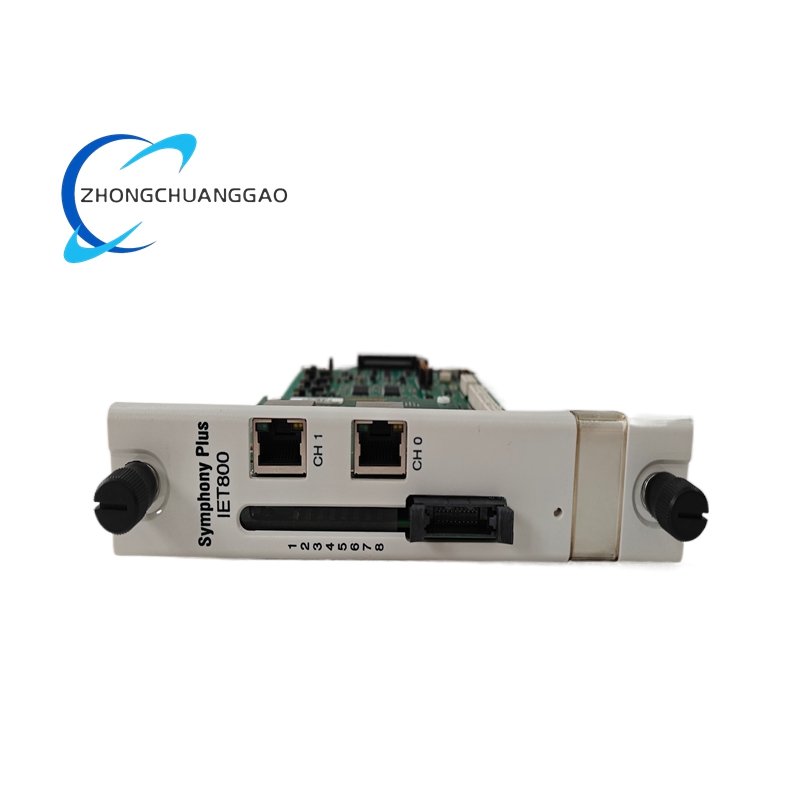
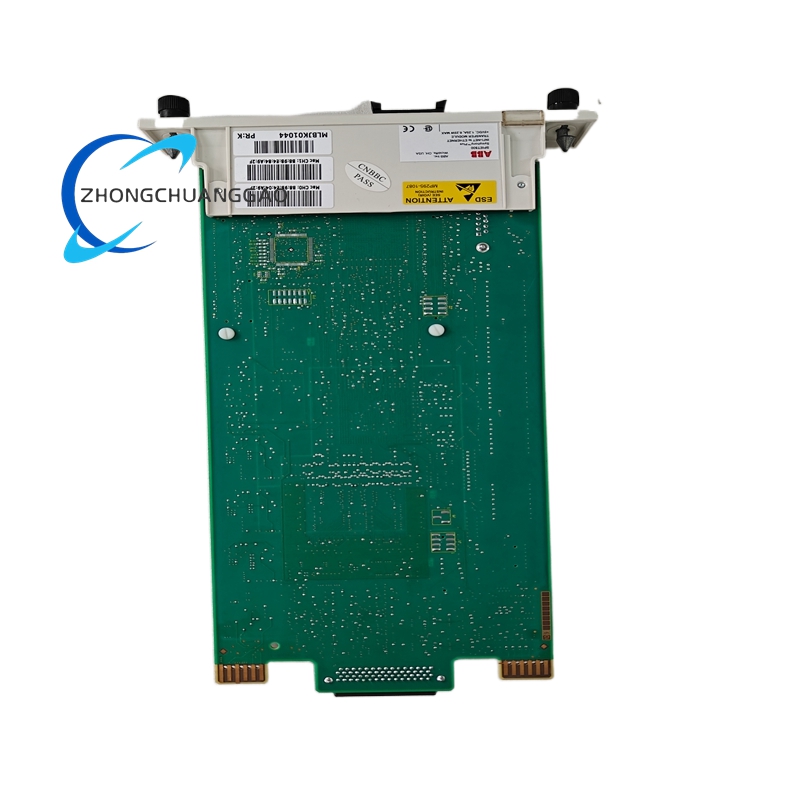
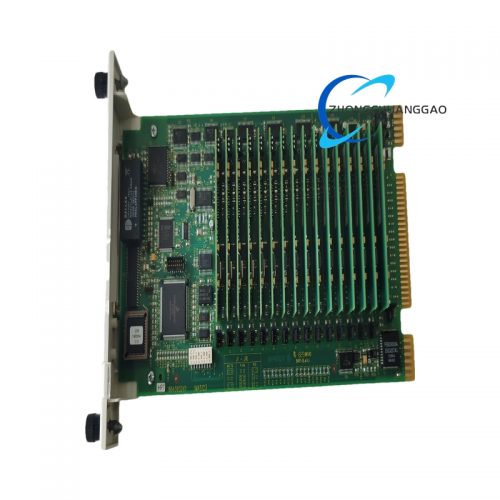
The ABB INIET800 is a high‑performance communication gateway module designed exclusively for the ABB Symphony Harmony INFI 90 Distributed Control System (DCS). It serves as a critical bridge between the proprietary INFI‑Net industrial control network and standard Ethernet TCP/IP networks, enabling seamless data exchange between the INFI 90 DCS and external systems such as HMIs, OPC servers, engineering workstations, SCADA systems, and enterprise IT networks. Built with a powerful 32‑bit microprocessor and robust industrial design, the module facilitates real‑time data sharing, remote monitoring, and system integration while maintaining the high reliability and security required for industrial process control environments. It is an essential component for modernizing legacy INFI 90 systems and connecting them to contemporary digital infrastructure.
Description
Technical Specifications
Core Identification
- Model: INIET800 (also referenced as IET800)
- Product Type: INFI‑Net to Ethernet Communication Gateway Module
- Compatible Systems: ABB Symphony Harmony INFI 90 DCS, ABB Bailey Control Systems
- Manufacturer: ABB (Bailey Controls)
- Form Factor: Standard INFI 90 rack‑mount module
- Processor: 32‑bit MCF5475 ColdFire® microprocessor, operating at 256 MHz
- Memory: 4 MB ROM, 64 MB RAM, 2 MB non‑volatile RAM (NVRAM)
Communication Interfaces
- INFI‑Net Port: Dedicated INFI‑Net network interface for connection to INFI 90 control network
- Ethernet Port: 1 × 10/100 Mbps auto‑sensing Ethernet port (RJ45), supporting TCP/IP protocol
- Serial Ports: 2 × RS‑232 serial ports, configurable for baud rates up to 115.2 Kbps
- Max Cable Lengths: Ethernet (CAT5e or better): 100 meters; Serial: 30 meters (100 ft)
Data Handling & Capacity
- Tag Database Support: Up to 30,000 process tags for HMI/OPC server integration
- Engineering Client Support: Up to 10 concurrent engineering tool client connections
- Data Transfer: Real‑time, low‑latency data exchange between INFI‑Net and Ethernet networks
- Protocol Support: TCP/IP, UDP, Modbus TCP/IP, OPC DA, and proprietary INFI‑Net protocols
Power Requirements
- System Power: +5 VDC (nominal), ±5% tolerance
- Power Consumption: Typical: 5.25 W (1.05 A @ +5 VDC); Maximum: 6.25 W (1.25 A @ +5 VDC)
Mechanical & Environmental
- Dimensions: 88.9 mm (Depth) × 215.9 mm (Height) × 139.7 mm (Width)
- Weight: Approximately 0.2 kg
- Mounting: Standard 19‑inch INFI 90 rack mounting
- Operating Temperature: -20 °C to +70 °C
- Storage Temperature: -40 °C to +85 °C
- Humidity: 5–95% RH, non‑condensing
- Vibration/Shock: Complies with IEC 60068‑2‑6 (vibration) and IEC 60068‑2‑27 (shock)
- Protection Rating: IP20 (module housing)
- LED Indicators: Status LEDs for power, INFI‑Net communication, Ethernet link/activity, and fault conditions
Security & Certifications
- Data Encryption: Default TwoFish 128‑bit encryption; Optional SSL3/TLS1 256‑bit encryption
- Certifications: CE Marking, UL Listed, EMC compliance per IEC 61000‑6‑2 / IEC 61000‑6‑4, IEC 61010‑1 safety standards
Key Features
High‑Speed Bi‑Directional Communication
- Enables real‑time data transfer between INFI‑Net control network and Ethernet‑based systems with minimal latency.
- Supports high‑speed parallel communication on INFI‑Net and 10/100 Mbps Ethernet for efficient data throughput.
- Facilitates seamless integration of INFI 90 DCS with modern IT infrastructure and industrial IoT platforms.
Robust Data Security
- Implements strong encryption standards (TwoFish 128‑bit default, SSL/TLS 256‑bit optional) to protect critical process data during transmission.
- Provides secure access control mechanisms to prevent unauthorized system access and data tampering.
- Ensures compliance with industrial cybersecurity standards for process control networks.
Powerful Onboard Processing
- Equipped with a 256 MHz 32‑bit ColdFire processor for efficient data routing, protocol conversion, and network management.
- Performs local data buffering and protocol translation, reducing the workload on INFI 90 main controllers.
- Maintains non‑volatile memory for configuration storage and critical data retention during power interruptions.
Flexible System Integration
- Supports multiple communication protocols including TCP/IP, Modbus TCP/IP, and OPC DA for broad compatibility with external systems.
- Enables connection to up to 30,000 process tags, supporting large‑scale HMI and SCADA integration.
- Accommodates up to 10 concurrent engineering workstation connections for simultaneous system configuration and monitoring.
Industrial‑Grade Reliability
- Designed for continuous operation in harsh industrial environments with wide temperature and humidity tolerance.
- Features galvanic isolation between INFI‑Net, Ethernet, and serial interfaces to protect against electrical noise and ground loops.
- Built‑in self‑diagnostics continuously monitor module health, communication status, and fault conditions.
- Hot‑swap capability allows module replacement without shutting down the entire INFI 90 system, minimizing downtime.
Simplified Configuration & Management
- Fully configurable via ABB Control Builder software for intuitive setup of network parameters, security settings, and data mapping.
- Provides web‑based management interface for remote monitoring and configuration adjustments.
- LED status indicators offer at‑a‑glance visibility into module operation and network health.
Application Scenarios
Power Generation
- Thermal Power Plants: Connect INFI 90 DCS to plant‑wide SCADA systems, enterprise data historians, and remote monitoring centers for real‑time performance analysis and reporting.
- Combined Cycle Plants: Integrate gas and steam turbine control systems with central HMIs and performance optimization software.
- Renewable Energy Facilities: Link wind and solar farm control systems to grid management platforms and energy management systems (EMS).
- Nuclear Power Plants: Provide secure data communication between non‑safety DCS systems and plant information management systems (PIMS).
Oil & Gas Industry
- Upstream Operations: Connect wellhead and production platform INFI 90 systems to corporate SCADA networks for remote monitoring and control of oil and gas extraction processes.
- Pipelines: Enable data exchange between pipeline compressor stations and central control centers for leak detection, pressure management, and flow optimization.
- Refineries: Integrate process control systems with advanced process control (APC) software, energy management systems, and enterprise resource planning (ERP) platforms.
- LNG Facilities: Facilitate communication between liquefaction/regasification control systems and terminal management software.
Chemical & Petrochemical Processing
- Continuous Process Plants: Bridge INFI 90 DCS with manufacturing execution systems (MES) and quality control databases for real‑time production monitoring and optimization.
- Batch Processing: Connect batch reactor control systems to recipe management software and production tracking systems.
- Hazardous Area Monitoring: Provide secure, isolated data communication for process variables in classified hazardous locations.
Water & Wastewater Treatment
- Municipal Water Systems: Integrate water treatment plant control systems with regional water management networks and consumer billing systems.
- Wastewater Facilities: Link aeration, filtration, and sludge processing control systems to central monitoring centers for efficient resource management.
- Desalination Plants: Connect reverse osmosis and energy recovery systems to performance monitoring and maintenance management software.
Manufacturing & Industrial Automation
- Automotive Production: Connect assembly line control systems to factory automation networks and production planning systems.
- Food & Beverage: Integrate processing and packaging line control with quality assurance systems and supply chain management software.
- Metal Processing: Link rolling mill and smelting furnace control systems to process optimization and energy management platforms.
Mining & Minerals Processing
- Mine Operations: Connect underground and surface mining control systems to central production management centers for equipment monitoring and production tracking.
- Mineral Processing Plants: Integrate grinding, flotation, and material handling control systems with process optimization software.
- Port Facilities: Enable communication between mineral export terminal control systems and logistics management networks.
Pulp & Paper Industry
- Pulp Mills: Connect digester and bleaching process control systems to mill‑wide information management systems.
- Paper Machines: Link paper production line control with quality monitoring systems and maintenance management software.
Reviews
There are no reviews yet.