
Product Short Description
The string HBFFAEAGNBA1BAA11G is an ABB product configuration code. Its meaning is context-dependent, with two primary interpretations found in technical literature:
-
Interpretation 1 (Most Likely – DCS Communication Module): A redundant fiber-optic communication interface module for the ABB AC 800M controller within the System 800xA distributed control system (DCS) .
-
Interpretation 2 (Alternative – Molded Case Circuit Breaker): A specific configuration of an ABB Tmax XT molded case circuit breaker (MCCB) .
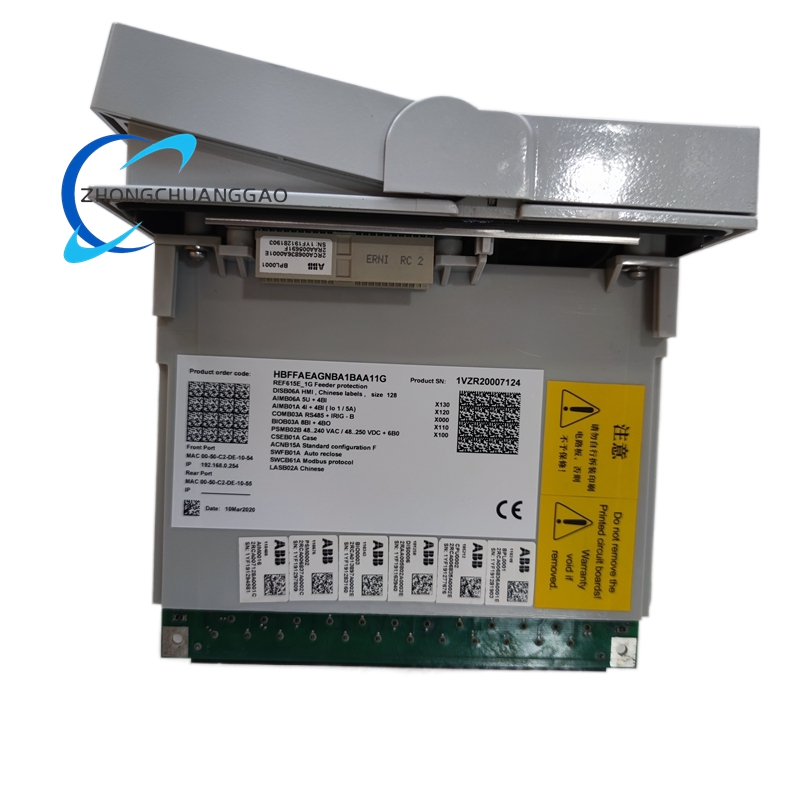
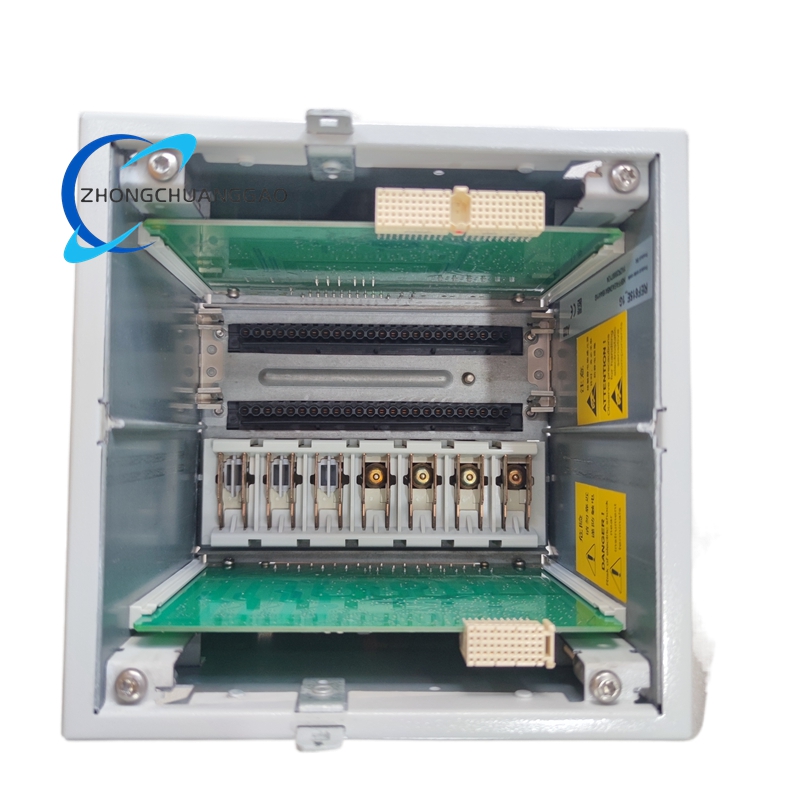
Description
Technical Specifications (as a Communication Module)
The following specifications are compiled from detailed technical listings for the module when used in an AC 800M / System 800xA context .
| Parameter | Specification |
|---|---|
| Product Type | Redundant Fiber-Optic Communication Interface Module |
| Manufacturer | ABB |
| Applicable Platform | AC 800M Controllers (e.g., PM86x, BRC410) / System 800xA DCS |
| Power Supply | 24 V DC (via S800 I/O backplane through dedicated communication base) |
| Communication Interface | 2 × LC duplex ports for 100BASE-FX multi-mode fiber |
| Supported Protocols | ABB proprietary Control Network (CN), IEC 61850-8-1 (GOOSE, MMS) |
| Wavelength | 1310 nm (typical for multi-mode fiber) |
| Maximum Transmission Distance | Up to 2 km (using OM2/OM3 multi-mode fiber) |
| Data Rate | 100 Mbps, full-duplex |
| Redundancy | Native support for dual-ring or parallel redundancy with millisecond-level failover |
| Installation Base | TB805A or TB806A (dedicated high-speed communication base) |
| Operating Temperature | 0°C to +60°C |
| Protection Rating | IP20 (open-type device for use in controlled cabinets) |
| Certifications | CE, UL 61010-2-201, IEC 61000-6-2/4, IEEE C37.90 |
Key Features and Advantages (as a Communication Module)
Dual-Channel Redundancy and High Availability
The module features two physically independent fiber-optic interfaces designed for redundant network architectures. In the event of a primary link failure (e.g., broken fiber, port failure), the system automatically switches to the backup link in milliseconds, ensuring that critical control data and status information are never lost. This hardware-level redundancy is essential for applications like turbine control or emergency shutdown systems .
Electrical Isolation and Immunity to Interference
By using fiber-optic cables instead of copper, the module provides complete galvanic isolation between the control system and the field network. This eliminates issues caused by ground potential differences and provides inherent immunity to the high levels of electromagnetic interference (EMI) and radio frequency interference (RFI) common in heavy industrial environments like substations, steel mills, and large manufacturing plants .
Seamless Integration with IEC 61850
The module acts as a bridge between the AC 800M controller and IEC 61850-based substation automation systems. It supports Generic Object-Oriented Substation Events (GOOSE) for high-speed peer-to-peer communication and Manufacturing Message Specification (MMS) for vertical data exchange. This allows the DCS to communicate directly with intelligent electronic devices (IEDs) like protection relays (e.g., REF615) without needing external protocol converters .
Long-Distance Communication
The 100BASE-FX interface supports reliable, high-speed communication over distances up to 2 kilometers without repeaters. This capability is critical for geographically distributed facilities such as long conveyors, pipeline pumping stations, or large petrochemical complexes, enabling centralized control over widely dispersed equipment .
Hot-Swap Capability and Integrated Diagnostics
The module supports hot-swapping, allowing it to be replaced without powering down the controller, thus maintaining system availability during maintenance. Comprehensive diagnostic information, including optical signal strength and link status, is continuously monitored and reported through the Control Builder M engineering tool. This enables predictive maintenance by allowing engineers to identify degrading fiber connections before they fail .
Reviews
There are no reviews yet.