Kit Contents and Components
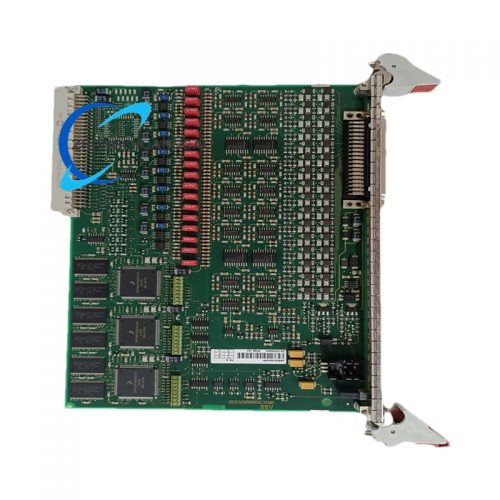
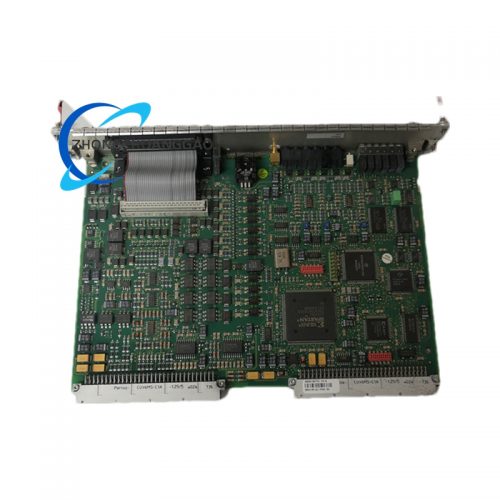
The HPC800K02 redundant controller kit includes the following components:
Redundant Controller Pair: 2x HC800 CPU modules (primary and redundant controllers)
Redundant Communication Modules: 2x CP800 communication modules
Redundant Mounting Bases: 2x MB810 mounting bases for controller installation
Termination Units: 1x CTB810 and 1x CTB811 termination units for I/O connections
I/O Termination Modules: 4x TER8x0 series termination modules for field wiring
Battery Backup: 4x lithium button cell batteries for memory retention
Technical Specifications
Processor Architecture:
Memory Specifications:
Power Requirements:
-
Input Voltage: 24 V DC (±5%) with dual redundant power inputs
-
Power Consumption: Maximum 3.5W to 4W, supporting installation in sealed enclosures without forced cooling
-
Voltage Isolation: DC 1500 V isolation with reverse polarity protection
Physical Dimensions (individual components):
-
Product Net Depth / Length: 32.26 mm
-
Product Net Height: 129.03 mm
-
Product Net Width: 129.03 mm
-
Product Net Weight: 0.88 kg (complete kit weight varies from 0.88 kg to 5.5 kg depending on included components and packaging)
Environmental Specifications:
-
Operating Temperature: -20°C to +60°C
-
Operating Humidity: 5% to 95% non-condensing
-
Protection Rating: IP20 for cabinet installation
-
RoHS Status: RoHS compliant
Key Features & Functions
True Hardware Redundancy: Provides 1:1 redundant controller configuration with automatic failover capability. When the primary controller experiences a fault, the secondary controller assumes control within milliseconds, ensuring uninterrupted process operation .
High-Performance Processing: Delivers exceptional computational power for complex control algorithms, executing closed-loop control of more than 5,000 I/O points in less than 250 milliseconds. The advanced 32-bit processor architecture handles data-intensive and program-intensive process control applications with ease .
Passive Cooling Design: Features ultra-low power consumption below 4W, allowing installation in sealed enclosures without requiring fans, louvers, air filters, or other forced cooling techniques. This eliminates a common failure point and reduces maintenance requirements .
Comprehensive Communication Support: Integrates multiple communication interfaces and protocols including:
-
Ethernet: 2x RJ45 ports supporting 100Base-TX with integrated Ethernet switch for daisy-chain and ring topologies
-
Profinet: Supports Profinet v2.31 protocol with real-time (RT) communication functionality
-
Fieldbus Protocols: PROFIBUS DP and HART communication protocols for field device integration
-
Serial Communication: RS-232, RS-422, RS-485 interfaces
-
USB: USB ports for local programming and data transfer
Extensive I/O Subsystem Support: Compatible with multiple I/O platforms including SD series I/O, Harmony rack I/O, and S800 I/O subsystems, providing flexibility for various application scales and requirements .
Rich Function Block Library: Configured through S+ Engineering tools with access to over 150 pre-defined control algorithms and function codes. In addition to standard function blocks, supports C programming, batch processing, and user-defined function codes for customized control strategies .
Advanced Network Architecture: Based on a network-centric architecture that allows simple, scalable, seamless, and secure integration of field devices, process systems, electrical system areas, and enterprise-level systems .
Integrated Turbine Control Functions: Includes specialized algorithms for turbine control applications, supporting precise speed, torque, and position adjustments for turbomachinery .
Comprehensive Diagnostics and Fault Management: Features real-time self-monitoring capabilities with LED indicators for power, run, error, and bus status. Detected faults trigger automatic redundancy switching and provide detailed diagnostic information through communication interfaces .
Application Scenarios
Power Generation Plants: Deployed in thermal, nuclear, and combined-cycle power plants for turbine control, boiler management, and generator synchronization. The redundant architecture ensures continuous operation critical for power generation .
Oil and Gas Processing Facilities: Installed in refineries, petrochemical complexes, and natural gas processing plants to control distillation columns, cracking units, and pipeline systems where process interruptions cannot be tolerated .
Chemical Manufacturing: Applied in chemical production facilities for reactor control, batch processing, and continuous process management, leveraging the extensive function block library for complex chemical reactions .
Water and Wastewater Treatment: Utilized in municipal and industrial water treatment facilities for pump control, filtration management, and chemical dosing systems requiring high reliability and precise control .
Metallurgical and Mining Operations: Implemented in steel mills, aluminum processing plants, and mining operations for conveyor control, crusher management, and material handling systems operating in harsh environments .
Transportation Infrastructure: Deployed in tunnel ventilation systems, railway electrification, and traffic control systems where fail-safe operation is essential for public safety .
Large-Scale Manufacturing: Applied in automotive plants, electronics manufacturing, and industrial production lines requiring coordinated multi-axis motion control, energy optimization, and centralized supervision .
Data Center Infrastructure: Used for critical facility management including cooling systems, backup power control, and environmental monitoring in data centers requiring maximum uptime .
Renewable Energy Systems: Implemented in wind farms and solar power plants for power conversion control, grid synchronization, and remote monitoring applications .

.jpg)
Reviews
There are no reviews yet.