Product Short Description
Technical Specifications
- Electrical Parameters
- Input Configuration: It provides 32 differential DC – coupled input points, and supports selectable input voltage ranges of 0 to 5 VDC or -5 to +5 VDC configured via Tristation software. It can also handle 0 – 20 mA current signals when used with a 250 Ω shunt resistor.
- Resolution and Accuracy: It has programmable resolution of 12 bits or 14 bits. Its measurement accuracy is less than 0.15% of full scale within the temperature range of 0°C to 60°C, which can meet different precision requirements of industrial scenarios.
- Signal Rejection and Protection: It has a common mode rejection ratio of -85 dB from DC to 100 Hz and a common mode voltage range of -12 V to +12 V peak. It is equipped with continuous input over – range protection of 150 VDC or 115 VAC to avoid damage caused by voltage surges. The minimum DC input resistance is 10 MΩ, and the typical power – off resistance is 140 kΩ.
- Update Rate: The input update rate reaches 10 ms, which ensures the real – time performance of signal acquisition and transmission for the control system.
Description
-
- Physical and Environmental Parameters
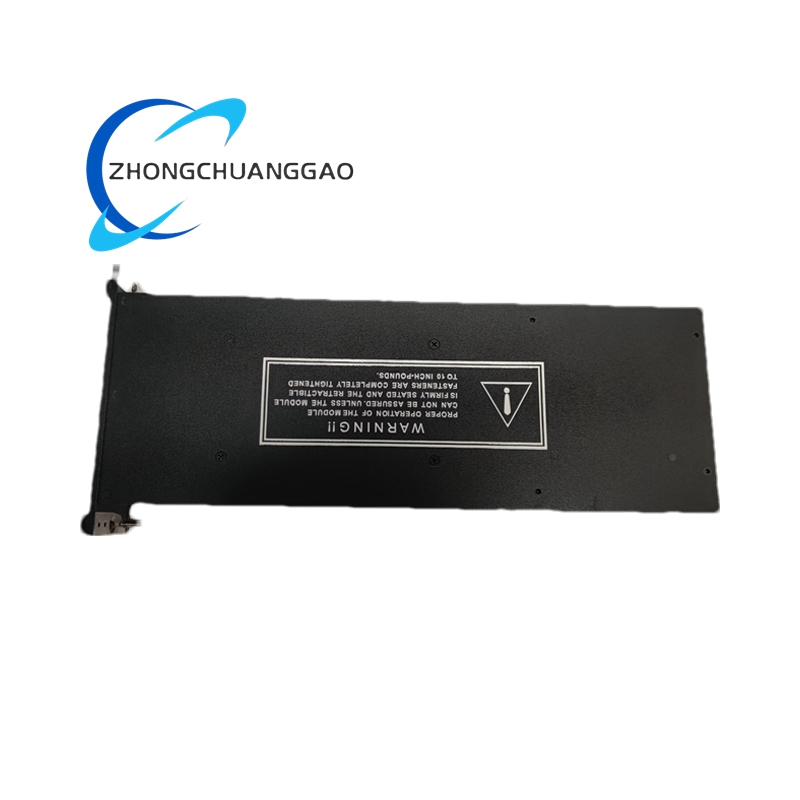
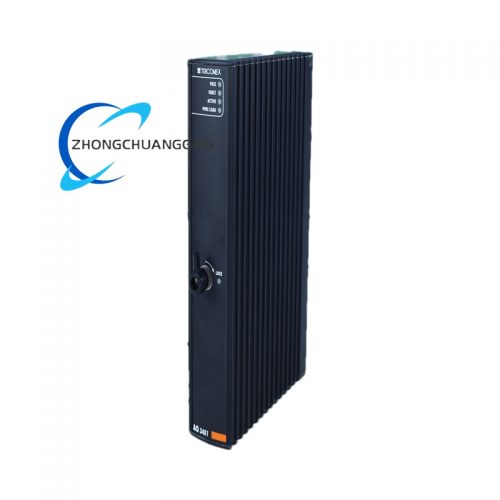
- Weight: The module weighs 1.36 kg, and its shipping weight is 4 kg, which is easy to carry and install without excessive load on the installation structure.
- Operating Temperature: It can operate stably within the ambient temperature range of -20°C to +60°C, adapting to the temperature changes of most industrial sites.
- Installation Standard: It complies with IEC standards and supports DIN rail installation, which facilitates quick assembly in industrial control cabinets.
- Physical and Environmental Parameters
- Functional Features
- Triple Modular Redundant Fault Tolerance: It operates in TMR mode with three independent input channels. A median selection algorithm is used to determine the valid data for each scan cycle. A single channel failure will not affect the operation of other channels, and the module can still work normally even with up to two faulty channels, which fundamentally improves the reliability of the system.
- Continuous Self – Diagnostic Capability: Each channel of the module undergoes continuous self – diagnostic tests. When a fault is detected on any channel, the module’s fault indicator lights up and triggers a chassis alarm signal. The fault indicator only reports channel faults instead of marking the entire module as faulty, which helps maintenance personnel quickly locate problems.
- Hot – Spare and Online Maintenance: It supports hot – spare functionality. Faulty modules can be replaced online without interrupting the overall operation of the Triconex system. This feature minimizes production downtime caused by equipment maintenance and enhances the continuous operation capability of the industrial production line.
- Flexible Parameter Configuration: Through dedicated software, users can flexibly configure multiple key parameters of the module, including input voltage range, resolution and sampling – related parameters. This flexibility allows the module to adapt to different signal acquisition needs of various industrial scenarios.
- Strong Anti – Interference Performance: With a high common mode rejection ratio and reasonable circuit design, the module can effectively filter out electrical noise and electromagnetic interference in industrial environments. It ensures the purity and stability of collected signals even in complex electromagnetic environments, avoiding control errors caused by distorted signals.
- Application Scenarios
- Oil and Gas Industry: It is widely used in offshore drilling platforms and on – shore oil fields. It collects analog signals such as temperature, pressure and gas concentration from fire and gas detection systems. When abnormal signals are detected, it quickly transmits data to the emergency shutdown system to trigger safety measures such as emergency shutdown and fire sprinkler activation, preventing catastrophic accidents such as gas explosions.
- Chemical Industry: It is deployed in chemical reactor and pipeline control systems. It collects analog data such as reaction temperature, pressure and material flow in the production process. It cooperates with the safety instrumented system to realize safety interlocking. When process parameters exceed the safe range, it can promptly send signals to stop the reaction or adjust parameters, avoiding dangerous accidents such as material leakage and violent reactions.
- Power Generation Industry: It is applied in thermal power, hydropower and nuclear power plants. In thermal power plants, it monitors analog signals such as temperature and pressure of boilers and turbines. In nuclear power plants, it is used to collect operating parameters of nuclear reactors. It ensures the control system can timely grasp the operating status of key equipment and take measures to avoid equipment failure, thus ensuring stable power supply.
- Water Treatment Industry: It is integrated into large – scale water treatment plants. It collects analog signals such as water level, flow rate and pollutant concentration in each treatment process. It provides accurate data for the automatic adjustment of water treatment equipment, ensures that the treated water quality meets the discharge or reuse standards, and guarantees the stable operation of the water treatment process.
Be the first to review “Triconex AI3721 Triple Modular Redundant Differential Analog Input Module” Cancel reply
Reviews
There are no reviews yet.