
Product Short Description
- Technical Specifications
- Core and Memory
It is equipped with a Motorola 68040 CPU, and some versions adopt an Intel 80386 SX microprocessor, both of which can ensure efficient operation of control programs. It is configured with 2MB SRAM, which provides sufficient storage space for the temporary storage of control logic data and real-time operation data, and realizes quick access to data during system operation.
- Electrical Parameters
The input voltage is 24VDC, and it can provide a standard 5VDC output voltage for matching the power supply requirements of related supporting modules. The bus speed of the module reaches 33MHz, which guarantees the rapid transmission of data between the module and other components in the system.
- Physical and Environmental Parameters
It has dimensions of 15 x 11 x 4 cm and a weight of 4 kilograms. The operating temperature ranges from 0°C to 60°C, and the storage temperature ranges from -40°C to 85°C. The stable structural design and wide temperature adaptation range enable it to be installed and used in various common industrial environments.
- Communication and I/O Configuration
It is equipped with 2 serial ports and 1 Ethernet port, and also supports Ethernet and RS – 232 communication interfaces. It can realize MODBUS master/slave protocol communication, and also supports point – to – point communication protocol and OPC protocol. It can connect up to 32 digital I/O points to meet the data interaction needs between the system and multiple on-site devices.
- Core and Memory
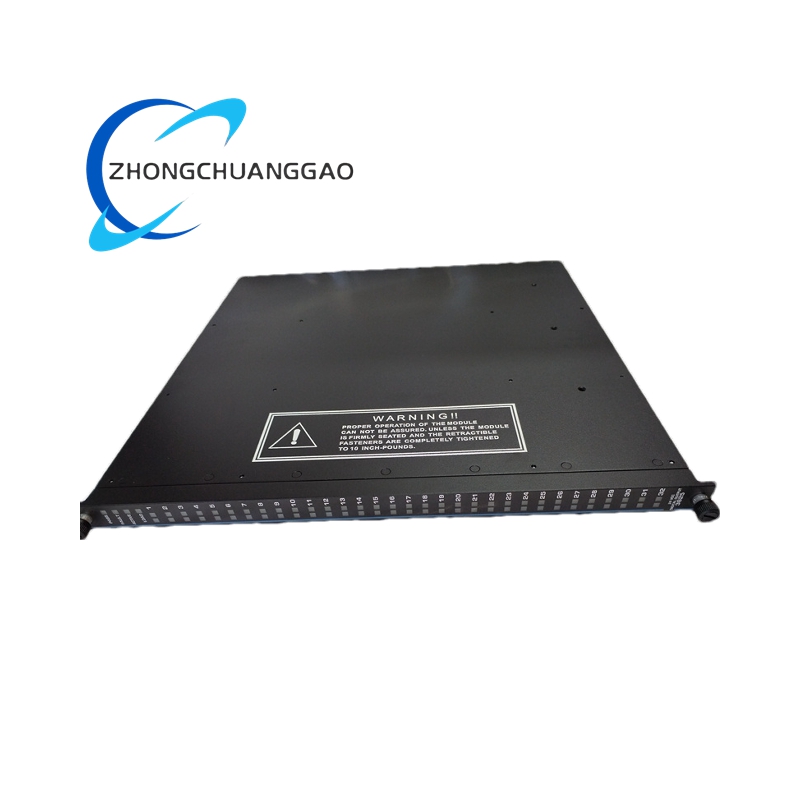
Description
- Functional Features
- Triple Modular Redundancy Architecture
It adopts a triple modular redundancy architecture with three independent processor channels. Each channel runs the same control logic and cross – compares the operation results with each other. When a channel fails and leads to inconsistent results, the system can automatically isolate the faulty channel, ensuring the continuous and stable operation of the system and avoiding safety accidents caused by single – point faults.
- Comprehensive Self – diagnostic Capabilities
The module is equipped with extensive diagnostic functions, including self – diagnostic tests, error code output and status indicator lights. It is also equipped with optically isolated RS – 232 interfaces for diagnostic analysis. These functions can proactively detect faults during system operation, display fault information through error codes and indicators, and help technicians quickly locate and solve problems.
- Hot – swappable and Easy Maintenance
It adopts a modular design that supports hot – swapping of the module. Maintenance personnel can replace or maintain the module without shutting down the entire system, which avoids production downtime caused by system shutdown for maintenance. Meanwhile, the module can be installed and adjusted on-site when the controller is online, and the on-site terminal wiring can be configured and debugged online.
- Strong Communication Expandability
It supports redundant high – speed Ethernet communication and redundant MODBUS communication. Users can expand multiple sets of Triconex safety control systems according to actual production needs. The adoption of HDLC and AISC technologies improves the processing speed of the controller and shortens the I/O response time, so that the system can quickly respond to various on-site control commands.
- Triple Modular Redundancy Architecture
- Application Scenarios
- Oil and Gas Industry
It is applied to safety instrumented systems in oil drilling platforms, natural gas processing plants and long – distance oil and gas pipelines. It connects with pressure sensors and gas leakage detectors on-site. When abnormal parameters such as pipeline pressure and gas concentration are detected, it can quickly execute emergency shutdown logic to prevent fires and explosions caused by oil and gas leakage.
- Petrochemical and Chemical Industry
It is integrated into the control systems of key equipment such as reactors and distillation towers in petrochemical and chemical plants. It runs the safety interlock logic of chemical reactions, connects with the burner management system, and responds to dangerous situations such as abnormal reaction temperature and pressure in a timely manner. It executes actions such as cutting off raw material supply and activating emergency cooling to ensure the safety of the production process.
- Nuclear Power and Thermal Power Industry
In nuclear power plants, it is used in the control system of key nuclear power equipment to monitor the operation parameters of nuclear reactors in real time and ensure the safe and stable operation of nuclear power units through strict safety logic control. In thermal power plants, it coordinates with boiler and steam turbine control systems, processes data from coal feeding equipment and steam pressure detectors, and realizes stable adjustment of power generation parameters and rapid response to equipment faults.
- Pharmaceutical and Metallurgical Industry
In the pharmaceutical industry, it is used in the automated production control system of pharmaceutical factories, especially in the processes requiring strict temperature and pressure control. It ensures that the production process meets pharmaceutical safety standards and avoids product unqualifiedness caused by process fluctuations. In the metallurgical industry, it is applied to the control system of smelting equipment, monitors the temperature and material ratio in the smelting furnace, and ensures the stability of the smelting process and the quality of metal products.
- Oil and Gas Industry
Reviews
There are no reviews yet.