
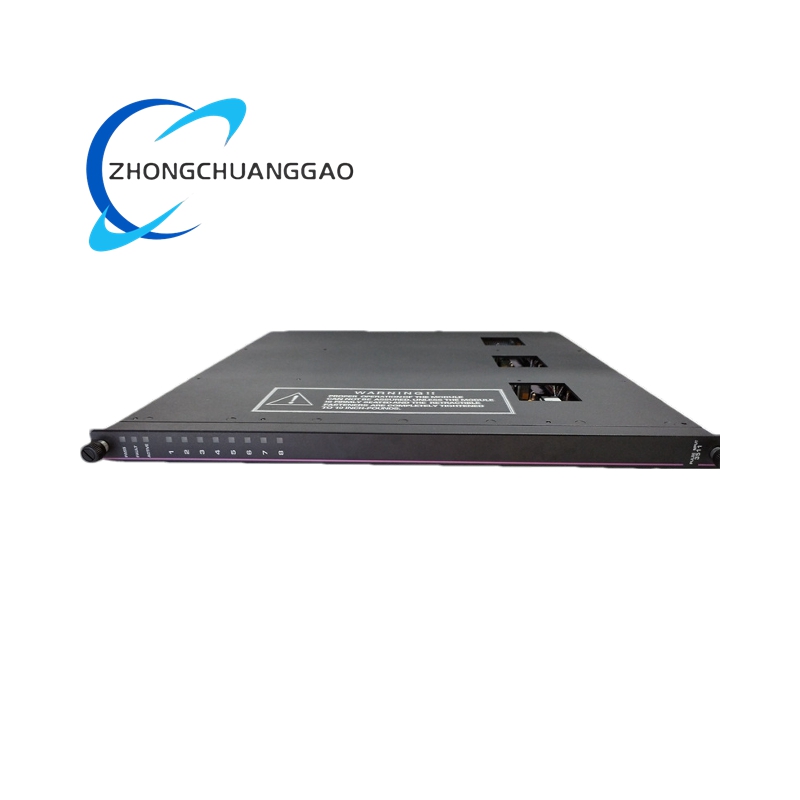
Product Short Description
Technical Specifications
- Input Channels: 8 non-isolated channels
- Input Signal Type: Compatible with non-amplified magnetic speed sensors
- Pulse Width Resolution: 100 μs
- Pulse Frequency Range: 1 Hz to 10 kHz
- Filter Types: Low-pass, high-pass, band-pass
- Output Signals: 4–20 mA and 0–5 V (configurable)
- Operating Voltage: 24 VDC
- Operating Temperature: -40°C to +85°C (extended range)
- Protection Class: IP67
- Communication Protocols: Supports Modbus, CAN, Profibus, and other industrial protocols
- Redundancy: Triple Modular Redundant (TMR) design with hardware voting mechanism
- Data Transmission Rate: 375 kbps via triple IO buses
- Certifications: IEC 61508 SIL 3, ISA S84.01, TÜV SIL 3
Description
Functional Features
- Triple Modular Redundancy (TMR): Each input signal is processed by three independent channels, ensuring fault tolerance through a 2-out-of-3 voting mechanism. This eliminates single points of failure and guarantees continuous operation even if one or two channels fail.
- High-Precision Data Acquisition: Supports pulse width resolution down to 100 μs and frequency ranges up to 10 kHz, enabling accurate monitoring of rotational speeds and vibrations.
- Comprehensive Diagnostics: Each channel features continuous self-diagnostics to detect faults (e.g., stuck-on/stuck-off conditions, wire breakage, short circuits). Any failure activates a fault indicator and triggers system alarms.
- Flexible Signal Processing: Offers low-pass, high-pass, and band-pass filters to suppress noise and ensure signal integrity in electrically noisy environments.
- High Reliability: Built with industrial-grade components to withstand extreme temperatures, vibrations, and electromagnetic interference (EMI).
- Hot Swapping: Modules can be replaced without powering down the system, minimizing downtime and maintenance costs.
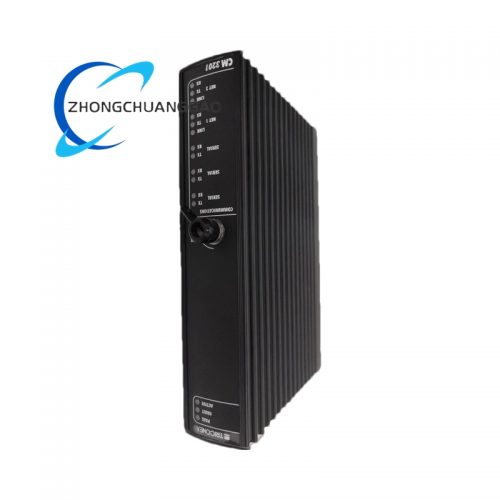
- Scalability: Supports up to 118 I/O modules (including analog and digital) and optional communication modules for large-scale deployments.
- Programmable Logic Control: Allows users to write and execute custom control logic tailored to specific application requirements.
Application Scenarios
- Oil and Gas Industry: Emergency shutdown systems (ESD), fire and gas detection (F&G), and wellhead pressure monitoring.
- Petrochemical Plants: Safety instrumented systems (SIS) for monitoring reactors, distillation columns, and storage tanks.
- Power Generation: Turbine control, generator monitoring, and auxiliary system protection in thermal and nuclear power plants.
- Mining and Metallurgy: Conveyor control, ventilation systems, and gas detection in underground mines.
- Manufacturing: Precision control and monitoring of rotating equipment (e.g., motors, pumps, fans).
- Transportation: Vehicle control systems for rail and marine applications.
- Water Treatment: Pump and valve control in municipal and industrial water treatment facilities.
Advantages
- Unmatched Reliability: TMR architecture ensures continuous operation even under fault conditions, providing the highest system availability.
- High Precision: Sub-millisecond signal processing enables timely detection of input changes, critical for safety-critical applications.
- Cost Efficiency: Reduces long-term maintenance costs through modular design, online diagnostics, and hot-swappable capabilities.
- Versatility: Integrates seamlessly with various industrial equipment and systems via multiple communication protocols.
- Robustness: Withstands extreme temperatures, humidity, and vibrations, ensuring reliable performance in harsh industrial environments.
- Scalability: Easily expands to accommodate increasing control demands without system overhaul, making it suitable for evolving industrial needs.
Reviews
There are no reviews yet.