
Product Short Description
Technical Specifications
- Processor and Memory
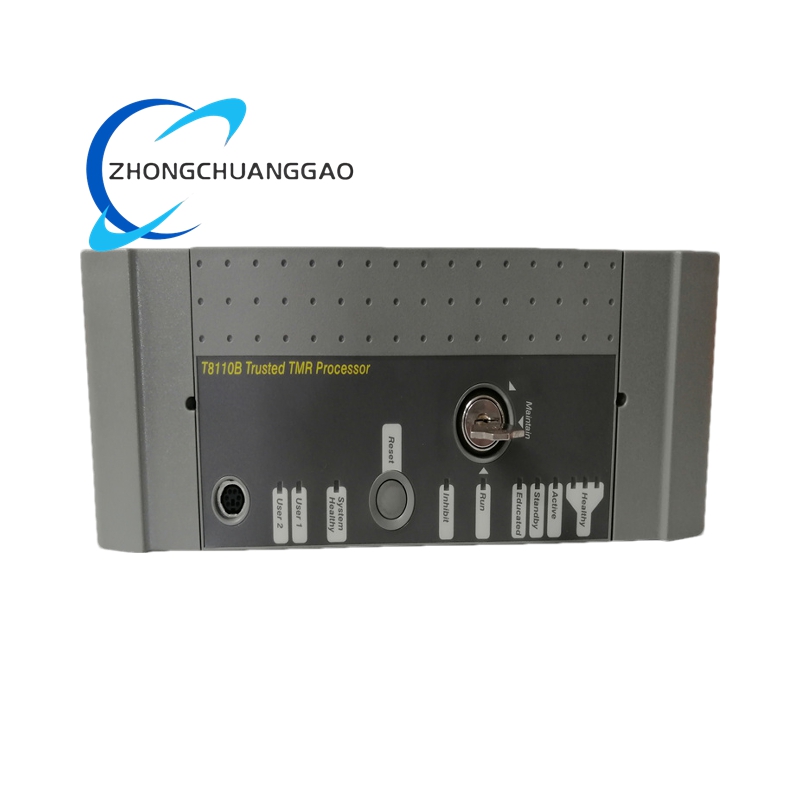
- Processor Performance: It is equipped with three 32-bit RISC processor cores each running at 100MHz. Each core has a computing capacity of 500 MIPS, and the three cores achieve a parallel processing capacity of 1500 MIPS, supporting safety logic operations and PID control algorithms.
- Memory Configuration: Each processor core is equipped with 256MB DDR3 SDRAM with ECC error correction, and the module is configured with 1GB Flash memory for storing safety programs and configuration parameters.
- Electrical Parameters
- Power Supply: The working voltage range is 20 – 32V DC, with a typical power consumption of 30W for a single module and a total power consumption of no more than 65W when in a redundant configuration. The heat dissipation capacity of the module reaches 80W.
- Isolation Performance: There is electrical isolation between each processor core with an isolation voltage of 2500V AC. The communication interface and power supply achieve 3000V AC isolation that can last for 1 minute, effectively preventing interference between different components.
- Communication and I/O Capabilities
- Communication Interfaces: It is equipped with 3 redundant safety Ethernet ports supporting the TRINet protocol with a transmission rate of 100Mbps, 2 Gigabit Ethernet ports compatible with Modbus TCP/IP and OPC UA protocols, and 1 RS-485 interface supporting Modbus RTU protocol. It also has a front-panel RS232 serial diagnostic port. Additionally, it is configured with two configurable RS422/485 2-wire or 4-wire connections and one RS485 2-wire connection.
- I/O Expansion: It can connect to a maximum of 32 matching I/O modules, supporting 1024 digital I/O points and 256 analog I/O points, with an I/O data refresh cycle of no more than 50ms. It adopts a triple redundant inter-module bus as the I/O interface.
Description
-
- Physical and Environmental Parameters
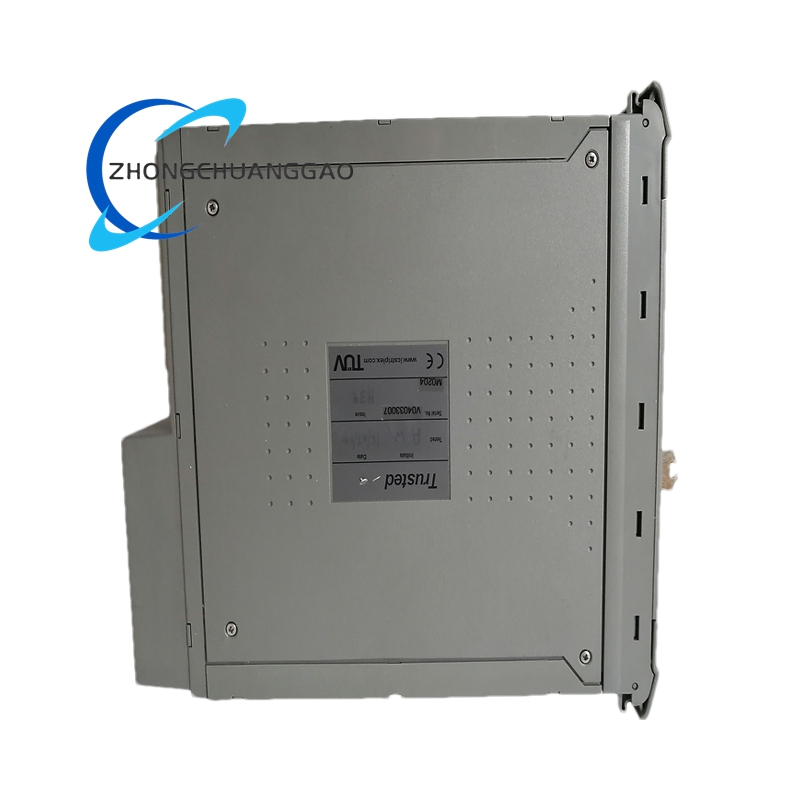
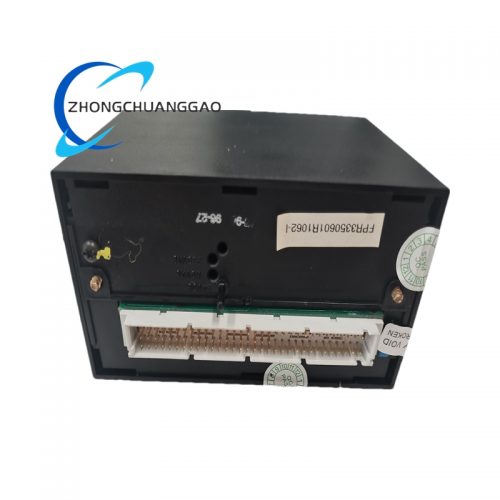
- Dimensions and Weight: The overall dimensions are 30.3cm × 9.3cm × 26.6cm, weighing 2.94kg and having a shipping weight of 4kg. It uses an aluminum alloy shell integrated with heat sinks and an electromagnetic shielding layer.
- Temperature Adaptability: The operating temperature range is 0°C to 60°C, and the storage temperature range is -25°C to 70°C.
- Anti – Interference Performance: It can withstand a 10g acceleration vibration in the frequency range of 10 – 2000Hz and a 50g acceleration impact lasting 11ms, in line with relevant industrial anti-vibration and anti-impact standards.
- Physical and Environmental Parameters
-
Function Features
- Triple Modular Redundancy for Fault Tolerance: The triple modular redundancy architecture and hardware-implemented fault-tolerant architecture enable the module to perform 3-2-0 fault-tolerant operations. When a single core fails, the system can switch without interference within 10ms, ensuring uninterrupted operation of the control system and avoiding production accidents caused by module failures.
- Fast Fault Handling and Recording: It is equipped with dedicated hardware and software testing mechanisms that achieve rapid fault identification and response. It can automatically handle faults without false alarms and is equipped with a time-stamped fault recorder. The sequence of events buffer can store 1000 events, which can be transferred to a central interface buffer that can hold 4000 events for later fault analysis.
- Flexible Programming and Configuration: It is compatible with TRISTATION 1131 programming software and supports a full set of IEC 61131-3 programming languages including function block diagrams, ladder diagrams, and structured text, facilitating engineers to carry out programming work according to actual needs.
- Convenient Maintenance and Replacement: The module supports hot replacement, so there is no need to reload programs when replacing the module. This function greatly shortens maintenance downtime and improves the operational efficiency of the entire industrial system.
- Precise Time Synchronization: It supports IRIG – B 002 and 122 time synchronization signals and external GPS clock synchronization with a synchronization accuracy of ±50ns. The time synchronization error between modules is no more than 1 microsecond, ensuring the consistency of data time stamps in the system.
-
Application Scenarios
- Petrochemical Industry: It is deployed in emergency shutdown systems of large refineries and LNG storage areas. It can monitor key process parameters in real time and trigger emergency shutdown instructions within 100ms when parameters exceed safety thresholds, closing feed valves and heating systems to avoid dangerous accidents such as overpressure explosions and leakage.
- Nuclear Power Industry: It is integrated into nuclear power plant reactor protection systems. It receives signals such as neutron flux and coolant flow, judges the operating state of the reactor through safety logic operations, and initiates corresponding protection measures in a timely manner when abnormalities occur to ensure the safe and stable operation of nuclear power equipment.
- Thermal Power Industry: It is applied to the unit protection systems of thermal power plants. It monitors the operating status of boilers, steam turbines and other key equipment. It collects signals of various safety-related sensors and executes protection interlocking actions such as quickly cutting off fuel supply when equipment malfunctions, preventing equipment damage and large-scale power outages.
- Natural Gas Processing Industry: It is used in natural gas processing plants and long-distance gas transmission pipeline control systems. It cooperates with fire and gas detection systems to monitor gas leakage and fire signals on site. It triggers emergency cut-off measures for pipelines and storage equipment when dangerous situations are detected to avoid the spread of risks.
Be the first to review “Ics Triplex T8110B Trusted Triple Modular Redundancy Processor Module” Cancel reply
Reviews
There are no reviews yet.