
Product Short Description
Technical Specifications
-
- CT and VT Core Parameters
- It is equipped with three phase CTs and one ground CT, both of which support 1A or 5A output configurations to adapt to different power system current measurement standards.
- It is configured with four voltage transformers that are dedicated to accurately measuring and scaling the voltage signals of power systems.
- The secondary windings of the internal transformers are grounded, which enhances operational safety for operators during equipment maintenance and operation.
- Power and Communication Parameters
- The control power supply supports a range of 100 – 240 VAC with a frequency of 48 – 62 Hz and 100 – 240 VDC, matching the power supply conditions of most industrial sites.
- It supports multiple industrial communication protocols including Modbus RTU/TCP, DNP 3, IEC 61850 – 7 – 3/8 and IEC 60870 – 5 – 104 to achieve smooth data interaction with SCADA systems and DCS platforms.
- It is equipped with RS – 485 and 10/100 Mbps Ethernet interfaces, and also supports dual fiber redundancy to ensure stable communication without interruption.
- CT and VT Core Parameters
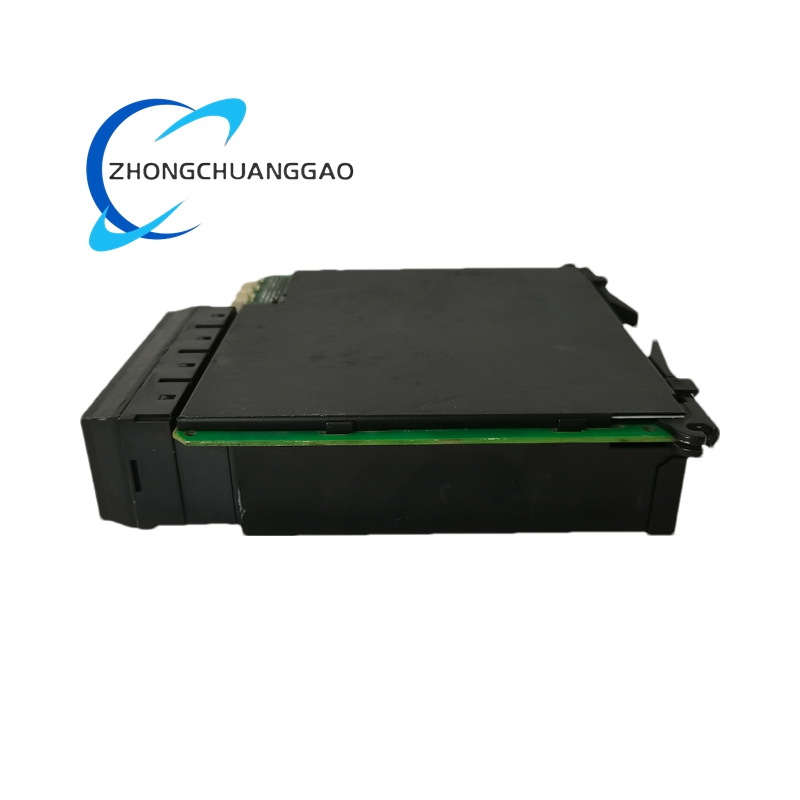
Description
- Physical and Environmental Parameters
- The module weighs 1.15 kg, and its dimensions are 15 cm in length, 18 cm in width and 4 cm in height, facilitating installation in compact control cabinets.
- It operates stably within a temperature range of -40°C to +85°C, and its front panel has an IP54 protection rating while the rear panel has an IP20 rating.
- It adopts DIN rail or panel mounting methods, complying with common industrial installation standards for convenient on – site assembly.
- It has obtained certifications such as UL 508A, CSA C22.2 No.14 – M1995 and IEEE C37.118, meeting strict industrial safety and performance standards.
- Data and Performance Parameters
- The module supports high – speed Boolean operations with a response time of less than 1 ms, ensuring rapid response to power system faults.
- It can record up to 1024 time – stamped events and perform data sampling through 16 channels, which is convenient for subsequent fault analysis.
- Its typical power consumption is less than 15 W, realizing energy – efficient operation without increasing the overall power load of the control system.
Function Features
- Precise CT/VT Signal Conditioning
The module is specialized in scaling down high – amplitude current and voltage signals in power systems to values that universal relays can process accurately. The configurable 1A/5A CTs and four dedicated VTs guarantee that the converted signals maintain high precision, which ensures that the connected relays can reliably detect faults such as ground imbalances and phase loss.
- Flexible Configuration and Easy Management
Users can adjust the CT and VT settings through GE’s Enervista UR software according to specific application requirements. The software also supports data trending and exporting functions, allowing users to analyze system operating conditions and optimize maintenance plans. This configurable design enables the module to adapt to diverse power system configurations without hardware modifications.
- Strong Compatibility and System Integration
It has excellent compatibility with older UR series CPU modules, which allows for the upgrade of existing relay systems without replacing the entire control framework. Meanwhile, its support for multiple mainstream communication protocols enables seamless integration into SCADA, DCS and IoT networks, eliminating communication bottlenecks between different system components.
- Enhanced Safety and Reliability
The grounded secondary windings of the internal transformers prevent potential electric shock hazards, protecting operators and equipment. It also adopts a solid – state output module and dual power redundancy design, combined with built – in overcurrent, overvoltage and short – circuit protection mechanisms, which effectively avoids module damage due to power fluctuations and ensures long – term stable operation even in complex power environments.
- Comprehensive Fault Recording and Analysis
The module can record a large number of time – stamped events and conduct multi – channel data sampling. When a fault occurs in the power system, it can provide detailed fault data and event sequence records. These data support fault location and analysis, helping maintenance personnel quickly identify the root cause of the fault and shorten downtime.
Application Scenarios
- Power Generation and Substation Systems
It is widely used in power plants and substations for the protection of generators, transformers and feeders. It monitors key electrical parameters such as voltage, current, frequency and harmonics of the power grid in real time, and cooperates with relays to trigger protective actions when faults like short circuits or overloads occur. It also supports fault recording and fault location, which is essential for the stable operation of the power grid.
- Industrial Power Control Systems
In industries such as petrochemicals, metallurgy and machinery manufacturing, the module is integrated into the industrial power distribution system. It is responsible for monitoring the current and voltage of motors, pumps and other key equipment, detecting faults such as phase loss and thermal overload in a timely manner, and protecting expensive production equipment from damage. It can also be integrated with PLC systems such as GE Fanuc 90 – 30/70 series to realize process automation and safety interlocking.
- Building and Infrastructure Automation
In large commercial buildings, data centers and transportation hubs, the module is applied to the building power management system. It monitors the operation status of the internal power supply lines and electrical equipment, controls lighting and air – conditioning power circuits, and optimizes energy allocation. It ensures the stability of the power supply for critical infrastructure such as elevators and fire – fighting equipment.
- Legacy Power System Upgrades
For old power control systems equipped with UR – 9A, UR – 9C or UR – 9D CPU modules, this module serves as an ideal upgrade component. It improves the signal measurement accuracy and protection reliability of the original system without replacing the entire CPU framework, which extends the service life of the legacy system and reduces the cost of overall system replacement.
- Distributed Industrial Control Networks
In distributed control systems of industries such as aerospace and chemicals, the module connects multiple on – site power monitoring points with the central control system. Through its multi – protocol communication capability, it realizes unified monitoring and centralized management of distributed power equipment, ensuring the coordinated operation of each part of the production line and improving the overall efficiency of the industrial control network.
Reviews
There are no reviews yet.