Product Short Description
Technical Specifications
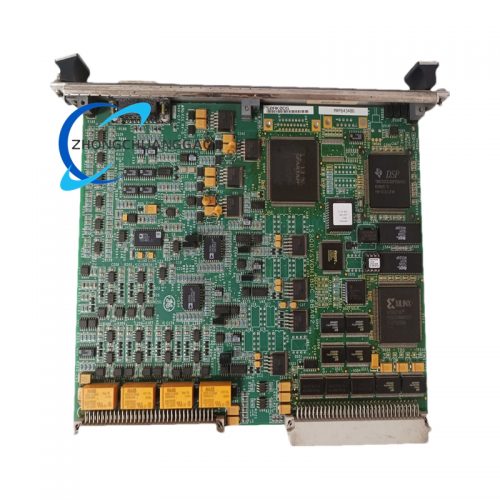
- Processor and Storage Parameters
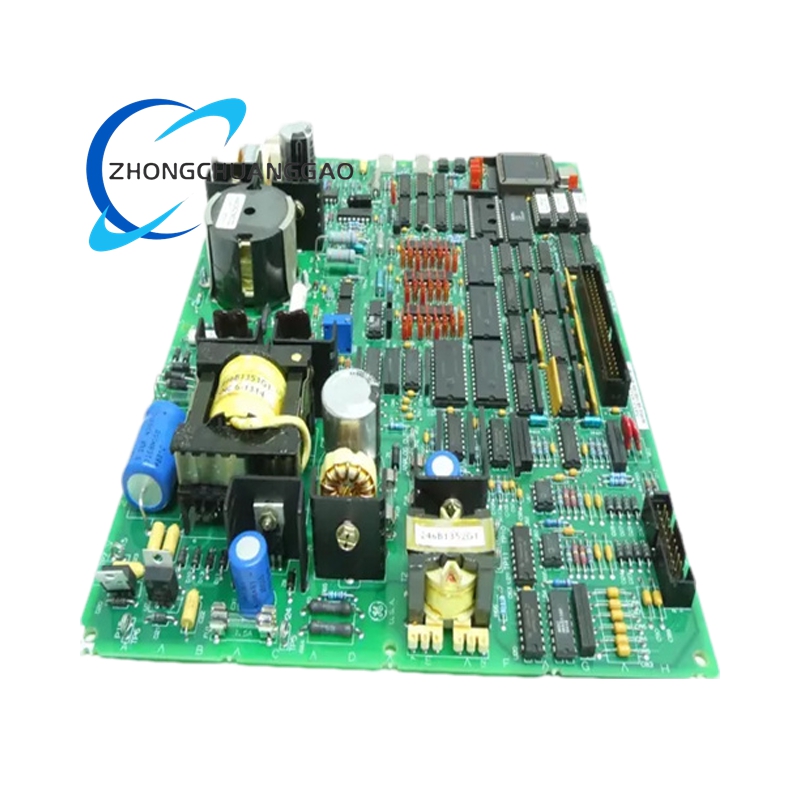
- It is equipped with a dedicated microprocessor that efficiently manages core tasks including turbine speed signal collection, overspeed judgment and analog signal processing, ensuring rapid response to abnormal speed conditions.
- It is configured with multiple erasable programmable read – only memory sockets. These modules store the firmware and control logic required for the board’s emergency overspeed protection function, supporting targeted programming to adapt to different turbine models.
- Electrical and Connection Parameters
- It is equipped with three fuses marked with the prefix FU and numbered sequentially. These fuses protect the board’s components from damage caused by voltage spikes or abnormal voltage fluctuations, and must be replaced with the same type and rating when they burn out.
- It has 30 hardware jumpers; some jumpers are used to select milliamp output circuits, and others configure the milliamp output current range between 20mA and 200mA, while a specific jumper enables card testing via the RS232 port.
- It is fitted with multiple specialized connectors such as J7, JK, JL and JW. The J7 connector is for power supply, the JK connector transmits signals with the TCEB board, and the JL connector is responsible for sending trip signals to the TCTG board. It also uses the 3PL data bus connector to connect with STCA and other boards, and the JE connector to transmit generator and line signals with the TCQC board.
Description
- Physical and Power Parameters
- It adopts a standard Mark V series module size, which is compatible with the installation slots of R1, R2 and R3 I/O cores of the Mark V system, facilitating direct assembly and replacement.
- It complies with the universal 110 – 240V AC power supply standard for related GE modules, with an no – load power consumption of 13W and an input frequency range of 47 – 63Hz, which adapts to the power supply conditions of most industrial sites.
Function Features
- Reliable Emergency Overspeed Protection
The core function of the board is to monitor the turbine speed in real time. When the turbine speed exceeds the preset safe threshold, the board will immediately trigger the emergency overspeed protection logic. It sends trip signals to the relevant control boards through dedicated connectors, quickly cutting off the fuel supply or activating the braking mechanism to prevent serious accidents caused by excessive turbine speed.
- Comprehensive Analog Signal Conditioning
It can perform scaling, filtering and amplification processing on various analog signals collected from the field. It accurately adjusts signals such as compressor stall detection signals and fuel flow pressure signals, and converts them into standard signals that can be recognized and processed by the system’s main controller, laying a foundation for the precise control of the turbine.
- Effective Component Protection Mechanism
The three dedicated fuses on the board form a multi – point protection system. Each fuse corresponds to protecting specific components or circuit areas. When encountering voltage anomalies, the fuses will blow in time to isolate the faulty circuit, avoiding the spread of damage to the entire board and even the entire control system, which greatly improves the reliability of the board.
- Flexible Configuration via Hardware Jumpers
The 30 hardware jumpers provide flexible configuration options for the board. Technicians can adjust the jumper settings according to the actual operation requirements of the turbine and the signal transmission needs of the system. This avoids the need to modify the hardware structure of the board and enables the board to adapt to different working conditions and system matching requirements through simple operations.
Application Scenarios
- Gas Turbine Emergency Protection in Thermal Power Plants
It is widely used in the Mark V control systems of gas turbines in thermal power plants. It continuously monitors the operating speed of the turbine during power generation. When faults such as load loss cause the turbine to overspeed, the board quickly triggers the emergency shutdown procedure. It also processes analog signals such as turbine exhaust temperature and fuel pressure, ensuring the safe and stable operation of the turbine and safeguarding the power generation efficiency of the power plant.
- Steam Turbine Safety Control in Petrochemical Plants
In petrochemical refineries and chemical processing plants, this board is integrated into the control systems of steam turbines that drive compressors and pumps. It monitors the speed of the turbines in real time during the oil and gas compression and transportation process. When the speed is abnormal, it immediately initiates protection measures to prevent equipment damage due to overspeed. At the same time, it conditions the pressure and flow signals of the transmission pipeline to coordinate the operation of the turbine and the process system.
- Industrial Turbine Maintenance in Metallurgical Industry
Metallurgical plants often rely on turbines to provide power for high – power equipment such as blast furnaces and air compressors. The DS200TCEAG1BTF board is used in the Mark V control systems of these turbines. It not only realizes emergency overspeed protection but also maintains the stability of the turbine’s operating parameters by processing vibration and position signals. As a key spare part, it can quickly replace faulty boards, reducing downtime caused by equipment failures and ensuring the continuity of metallurgical production.
- Marine Turbine Safety System Support
For marine turbines used in large ships and offshore platforms, this board serves as a core component of the speed protection system. It adapts to the harsh marine working environment and monitors the turbine speed stably under conditions such as vibration and voltage fluctuations. Once overspeed occurs, it triggers emergency measures immediately to avoid marine accidents caused by turbine failures and ensures the safe navigation of ships and the normal operation of offshore equipment.
Reviews
There are no reviews yet.