Product Short Description
Technical Specifications
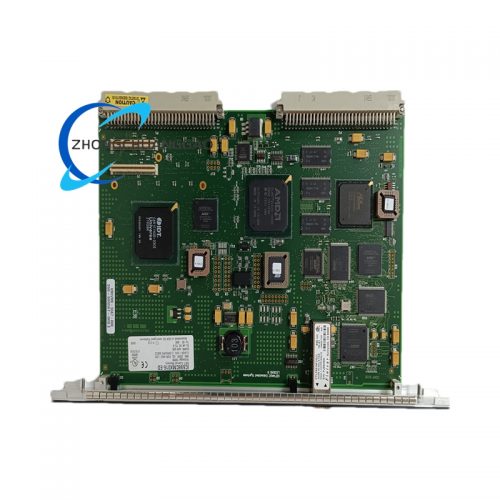
- Processor and Memory Parameters
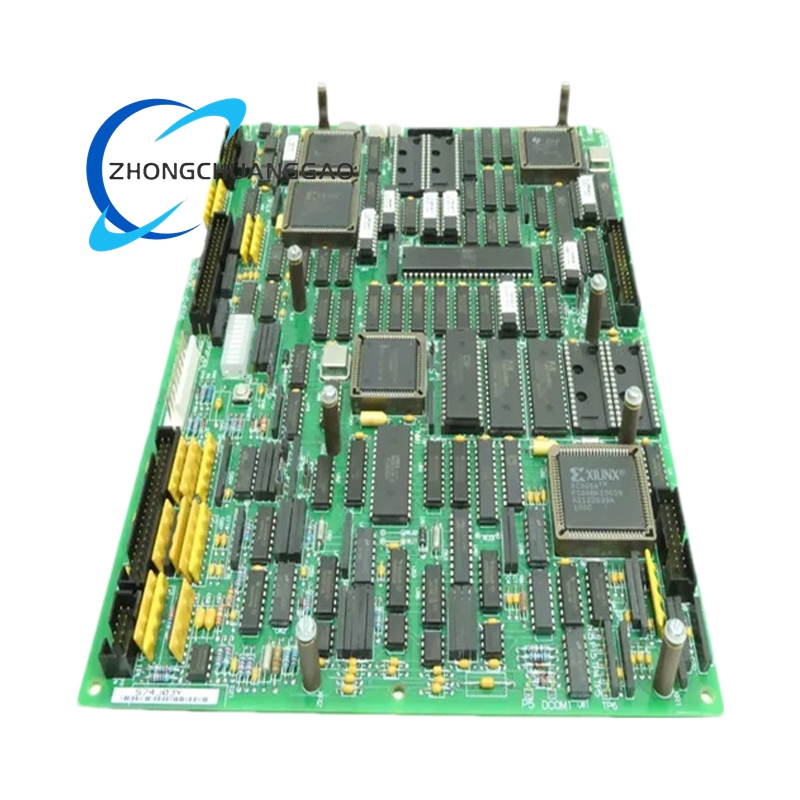
- It is equipped with three microprocessors namely DCP, MCP, and CMP, which work together to achieve efficient and parallel processing of drive control signals and data.
- It is configured with five EPROM slots to store factory default configurations and site-specific custom settings, facilitating quick configuration migration during board replacement.
- It integrates RAM that supports simultaneous access by multiple microprocessors, ensuring smooth data sharing and coordination among different processing units during drive control operations.
- Physical and Coating Parameters
- It has a weight of 530 grams, and alternative specifications weigh around 500 grams, with compact dimensions that fit the installation space of the Mark V system cabinet without requiring extra mounting modifications.
- It adopts a normal PCB coating, with functional revisions A and H, and an artwork revision D, which enhances the board’s resistance to environmental interference and ensures stable electrical performance in industrial settings.
- Interface and Configuration Parameters
- It supports configuration via a laptop connected through a serial cable, allowing technicians to edit and adjust drive parameters according to specific application requirements.
- It is designed with standardized connectors that enable easy cable reconnection during installation and replacement, matching the connection specifications of other modules in the Mark V system.
Description
Function Features
- Efficient Multi-Processor Collaborative Control
The three integrated microprocessors each undertake specialized processing tasks and work in coordination to handle speed, torque, and other key turbine drive parameters. This multi-processor architecture eliminates processing bottlenecks, ensuring that the turbine drive system responds rapidly to control instructions and maintains precise operation of critical parameters during turbine start-up, load adjustment, and stable operation phases.
- Convenient Configuration Migration and Replacement
The five dedicated EPROM slots simplify the replacement process significantly. When the board malfunctions, technicians only need to remove the EPROM modules from the faulty board and insert them into the corresponding slots of the new DS200SDCCG4AHD. This avoids the need for reconfiguring all parameters from scratch, shortens equipment downtime, and reduces maintenance workload.
- Flexible Configuration via Serial Connection
It supports serial connection to laptops loaded with drive configuration tools. Technicians can easily access the board’s configuration files through this connection, modify parameters such as turbine drive speed and torque limits, and adapt the board to the operational requirements of different turbine models and application scenarios without disassembling the entire control system.
- Static-Protected and Durable Component Design
The EPROM modules on the board are sensitive to static electricity, and the design emphasizes static protection during operation. Technicians are required to use wrist straps when handling the modules, which prevents component damage caused by static discharge. The normal PCB coating further enhances the board’s durability, enabling it to withstand the harsh conditions of industrial sites such as dust and temperature fluctuations.
- Seamless Integration with Mark V System
It is fully compatible with the hardware structure and communication protocols of the Mark V turbine control system. It can be directly integrated into the TC2000 drive systems and other related subsystems, and it collaborates seamlessly with other modules in the system without the need for additional adapters, forming a complete and reliable turbine drive control chain.
Application Scenarios
- Gas and Steam Turbine Control in Power Plants
It is widely used in the Mark V control systems of gas and steam turbines in thermal power plants and industrial power stations. It precisely controls the speed and torque of turbine drives, processes signals from fuel supply systems and steam valves, and ensures stable start-up, load regulation, and shutdown of turbines. It helps optimize power generation efficiency and maintain continuous and stable power output for the power grid.
- Wind Turbine Drive Systems
In wind farms, this board is integrated into the control systems of wind turbine drive assemblies. It adjusts the rotational speed and torque of wind turbine generators according to real-time wind speed changes. It maximizes wind energy conversion efficiency while preventing mechanical damage to the turbine due to excessive speed, ensuring the safe and efficient operation of wind power generation equipment.
- Hydro Turbine Operations in Hydropower Stations
It is applied to the drive control systems of hydro turbines in hydropower facilities. It processes water flow and pressure signals from the turbine’s water intake and discharge structures. It regulates the turbine’s rotational speed and power output, matching the power generation load with the water flow conditions. It maintains the stable operation of hydropower units and improves the utilization rate of water energy resources.
- Turbine-Driven Equipment in Petrochemical Industry
In petrochemical refineries and chemical plants, it is used in the control systems of turbines that drive compressors and pipeline pumps. It controls the drive speed and torque of these turbines to coordinate the operation of compressors and pumps with the production process. It ensures stable pressure and flow during the transportation and processing of chemical raw materials, avoiding production disruptions caused by drive system malfunctions.
- Maintenance of Legacy Mark V Control Systems
It serves as a critical spare part for maintaining legacy Mark V control systems in industries such as metallurgy and energy. When the original drive control board in the system fails, replacing it with the DS200SDCCG4AHD enables quick restoration of the turbine drive control function. It avoids the high cost and long downtime associated with replacing the entire control system, extending the service life of existing turbine equipment.
Reviews
There are no reviews yet.