Product Short Description
Technical Specifications
- Processor and I/O Channel Parameters
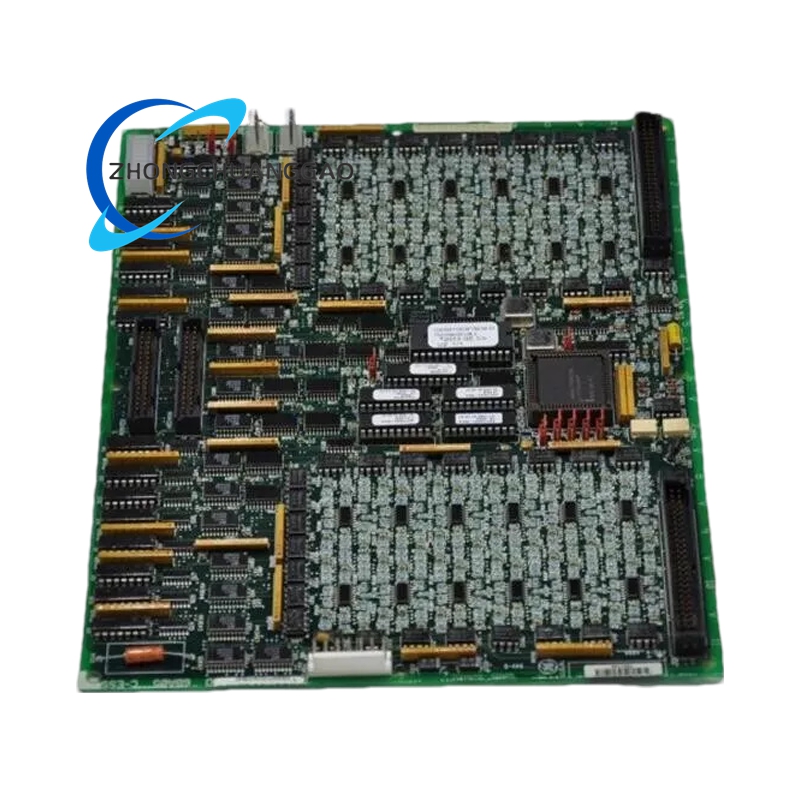
- It is equipped with one microprocessor and multiple PROM modules to support efficient processing of input and output signals and stable storage of control programs.
- It provides 64 digital input channels and 64 digital output channels, along with 16 analog input channels and 16 analog output channels, covering the signal transmission needs of complex turbine control scenarios.
- Interface and Connection Parameters
- It is fitted with two 50-pin connectors and two 3-pin connectors marked JX1 and JX2, which connect to DTBA and DTBB boards through 50-pin ribbon cables for signal transmission.
- It is configured with eight configurable jumpers prefixed with JP, which are used for IONET termination resistor settings, IONET ID selection, and factory testing.
- It relies on the IONET network for data communication, enabling seamless signal transmission with other modules in the Mark V system.
- Physical and Environmental Parameters
- It has dimensions of 2.5 cm × 26.7 cm × 25.4 cm and a weight of 0.8 kg, featuring a compact structure that fits the installation space of Mark V system cabinets.
- It operates at a 24V voltage and has a total current capacity of 5A, with each channel capable of handling a current of 200mA, compatible with the power supply standards of the Mark V system.
- It can operate stably within a temperature range from -40°C to 85°C, with reverse polarity protection and overcurrent protection, and its conformal coated PCB enhances resistance to dust and humidity.
Description
Function Features
- Comprehensive Signal Processing and Transmission
The board efficiently processes a large number of digital and analog signals, integrating 64 channels each for digital input and output, and 16 channels each for analog input and output. It accurately transmits signals between terminal boards, output boards, and control boards in the system, ensuring that the Mark V system can promptly obtain turbine operating data and send control instructions, which is essential for the real-time control of turbines.
- Flexible Configuration via Specialized Jumpers
The eight dedicated jumpers on the board enable targeted configuration adjustments. Some jumpers are used to set IONET termination resistors and select IONET IDs to ensure stable network communication. Others are reserved for factory testing and are not intended for use during normal operation. This jumper design allows the board to adapt to different signal transmission requirements of the Mark V system in various application scenarios without modifying the core hardware.
- Convenient Fault Diagnosis with Test Points and LEDs
It is equipped with multiple test points prefixed with TP and a block of 10 LEDs, plus an additional LED visible from the side of the board. Technicians can use calibrated probes to test each circuit through the test points to identify faults. The LEDs display the board’s operating status in real time, such as power supply, signal transmission, and network connection conditions, enabling quick troubleshooting and reducing maintenance time.
- Reliable System Protection Mechanism
The board is built with reverse polarity and overcurrent protection functions to prevent damage to components caused by abnormal power supply or signal fluctuations. When the connected drive detects a trip condition, the system will automatically shut down, avoiding potential damage to the turbine and the board itself due to malfunction, which effectively guarantees the safety of the entire turbine control system.
- Strong Compatibility with Mark V System
It is fully compatible with the hardware architecture and communication protocols of the Mark V system and can be directly installed on the system’s digital I/O cores. It does not require additional adapters to interface with modules such as TCQC and CTBA, realizing seamless integration and collaborative operation with the entire control system to maintain the stability of the turbine’s operational processes.
Application Scenarios
- Gas and Steam Turbine Control in Power Plants
It is widely used in the Mark V control systems of gas and steam turbines in thermal power plants and industrial power stations. It processes signals such as turbine speed, valve position, and fuel flow, and transmits these signals to the central control module. It ensures the turbine can stably start, adjust loads, and shut down, and helps optimize power generation efficiency while maintaining stable power output.
- Petrochemical Turbine-Driven Equipment
In petrochemical refineries and chemical plants, this board is integrated into the control systems of turbines that drive compressors and pipeline pumps. It handles digital signals from pipeline pressure sensors and pump operation status monitors, coordinating the operation between turbines and connected equipment to ensure stable pressure and flow during the transportation of oil refining products and chemical raw materials.
- Industrial Turbine Systems in Heavy Industry
It is applied to turbine control systems in industries such as metallurgy and glass manufacturing. In metallurgical plants, it supports the operation of turbines for blast furnace air supply systems by processing air pressure and fan speed signals to maintain stable blast furnace operations. In glass factories, it coordinates the operation of turbines in heating systems, ensuring precise control of furnace temperatures to maintain product quality.
- Maintenance of Legacy Mark V Control Systems
It serves as a critical spare part for enterprises still using Mark V series control systems. When the original digital I/O board malfunctions, replacing it with the DS200TCDAH1B can quickly restore the system’s signal transmission function. This avoids the high costs and long-term operational downtime associated with replacing the entire control system, extending the service life of existing industrial equipment.
- Auxiliary Equipment Control in Energy Facilities
It is used in the control systems of auxiliary equipment such as large water pumps and fans in hydropower stations and wind power complexes. It processes operation status signals of these auxiliary devices and transmits control instructions, ensuring they operate in sync with the main power generation equipment. It maintains the stability of the entire energy production process and improves the overall operational efficiency
Reviews
There are no reviews yet.