Product Short Description
Technical Specifications
- Electrical Parameters
- It operates at a 24V DC operating voltage and has a current handling capacity of 1A, which is compatible with the power supply configuration of the Mark V system to ensure stable power for signal conditioning.
- It achieves an input accuracy of 0.1%, guaranteeing the precision of processed analog signals such as pressure and flow, which is crucial for accurate turbine control.
- It processes 4 – 20 mA input and output signals, as well as +/-10V DC input signals, covering the common analog signal ranges required for turbine operations.
- Interface and Connection Parameters
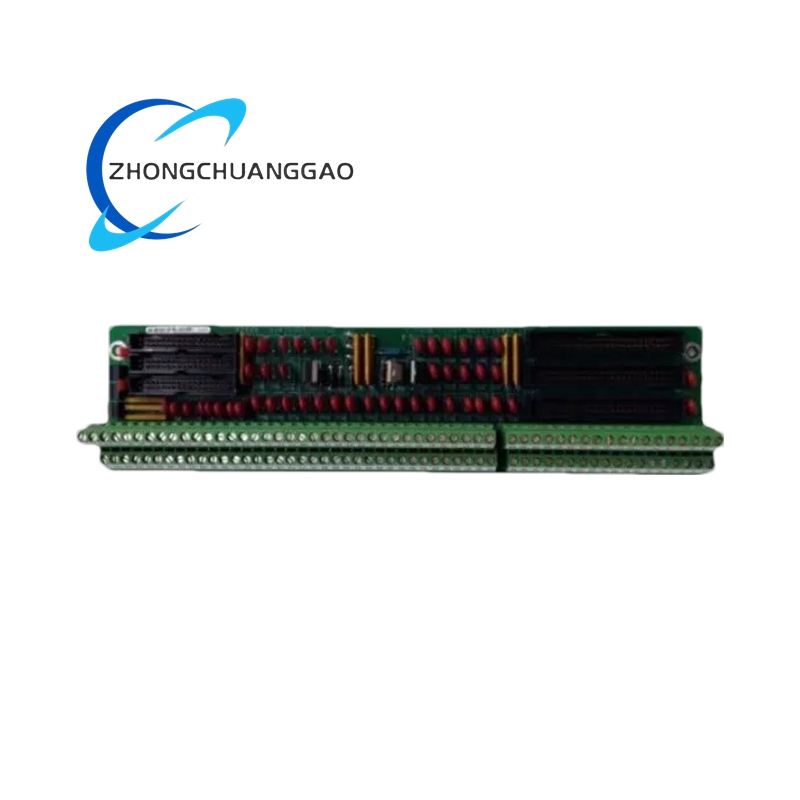
- It is equipped with 2 terminal blocks, each containing 107 terminals for connecting a large number of signal wires to accommodate multi-channel signal transmission needs.
- It features 2 x 5-pin D-sub connectors and 3 34-pin connectors, which realize data transmission and signal interaction with STCA, TCQC, and other boards via interfaces like 3PL and JE.
- It is configured with 2 jumpers marked BJ1 and BJ2, each with 3 pins, and the jumper positions can be adjusted to define the board’s processing functions according to system requirements.
- Physical and Manufacturing Parameters
- It has dimensions of 170mm x 90mm x 5mm and a weight of 0.15kg, with a compact size that facilitates installation in the Mark V system cabinet.
- It adopts a normally coated PCB with a functional revision of 1A, ensuring good heat dissipation and electrical insulation performance.
- It is manufactured in the United States, adhering to GE’s strict industrial production standards for reliable quality.
Description
Function Features
- Comprehensive Analog Signal Conditioning
The board can scale and condition a diverse range of analog signals involved in turbine operations. It processes signals such as compressor stall detection signals and fuel flow pressure signals transmitted via 4 – 20 mA current, as well as vibration inputs and thermocouple temperature signals. This comprehensive signal processing capability ensures that all key operational parameters of the turbine are converted into usable data for the control system.
- Flexible Functional Customization via Jumpers
The two dedicated jumpers (BJ1 and BJ2) on the board allow installers to define the board’s signal processing functions. By covering different combinations of the jumper pins, the board can be adapted to the specific signal processing requirements of different turbine drive assemblies. This flexibility enables the board to be applied to various types of turbines including gas, steam, and wind turbines.
- Reliable Circuit Protection and Durability
It is built with voltage-limiting hardware components that provide effective protection against electrical fluctuations, preventing damage to the board and connected circuits caused by voltage spikes. The use of high-grade copper and FR4 epoxy resin materials, along with a normal PCB coating, enhances its resistance to corrosion and heat, ensuring stable operation even in harsh industrial environments.
- Convenient Debugging and Maintenance
The integrated multiple test points on the board allow technicians to quickly detect signal transmission status and locate faults during debugging. Its standardized design and clear terminal and jumper markings simplify the installation process. When a fault occurs, technicians can quickly identify and replace the board, minimizing system downtime for maintenance.
- Seamless Compatibility with Mark V System
It fully matches the hardware architecture and communication protocols of the Mark V system. It can be directly installed on the system’s I/O cores without the need for additional adapters. It seamlessly interfaces with other modules such as TCQA and STCA through dedicated connectors, forming a complete signal processing chain for the turbine control system.
Application Scenarios
- Gas Turbine Control Systems
It is widely used in gas turbine control systems in power plants and industrial parks. It conditions signals from the turbine’s ignition system, fuel supply valves, and speed sensors, such as fuel flow pressure signals and compressor stall detection signals. It transmits the processed signals to the Mark V control unit, ensuring the gas turbine maintains stable operation during start-up, load adjustment, and shutdown phases.
- Steam Turbine Power Generation Units
In thermal power plants, this board is integrated into the Mark V control system of steam turbines. It processes thermocouple temperature signals from the turbine’s steam path and pressure signals from steam valves. It sends accurate signal data to the control center, which then adjusts the steam flow and pressure to optimize the power generation efficiency of the steam turbine and ensure stable power output.
- Wind Turbine Control Assemblies
It is applied to wind turbine control systems equipped with the Mark V series. It handles vibration input signals and speed pulse signals of wind turbines. It adjusts and transmits these signals to the pitch control mechanism and generator speed control components, enabling the wind turbine to adapt to changes in wind speed in real time and maximize wind energy conversion efficiency while protecting the turbine from damage due to excessive vibration.
- Petrochemical Turbine Supporting Equipment
In petrochemical refineries, it is used in the control systems of turbines that drive compressors and pipeline pumps. It processes pressure and flow signals from the compression system and pipeline transportation process. It ensures the coordination between the turbine and the connected equipment, maintaining stable pressure and flow during oil refining and chemical raw material transportation and avoiding production accidents caused by equipment mismatches.
- Legacy Mark V System Maintenance
It is a critical spare part for the maintenance of aging Mark V control systems in industries such as metallurgy and energy. When the original analog termination board in the system malfunctions, replacing it with the DS200TBQDG1A can quickly restore the system’s signal conditioning function. This avoids the high cost and long downtime associated with replacing the entire control system and extends the service life of existing turbine equipment.
Reviews
There are no reviews yet.