
Product Short Description
Product Name
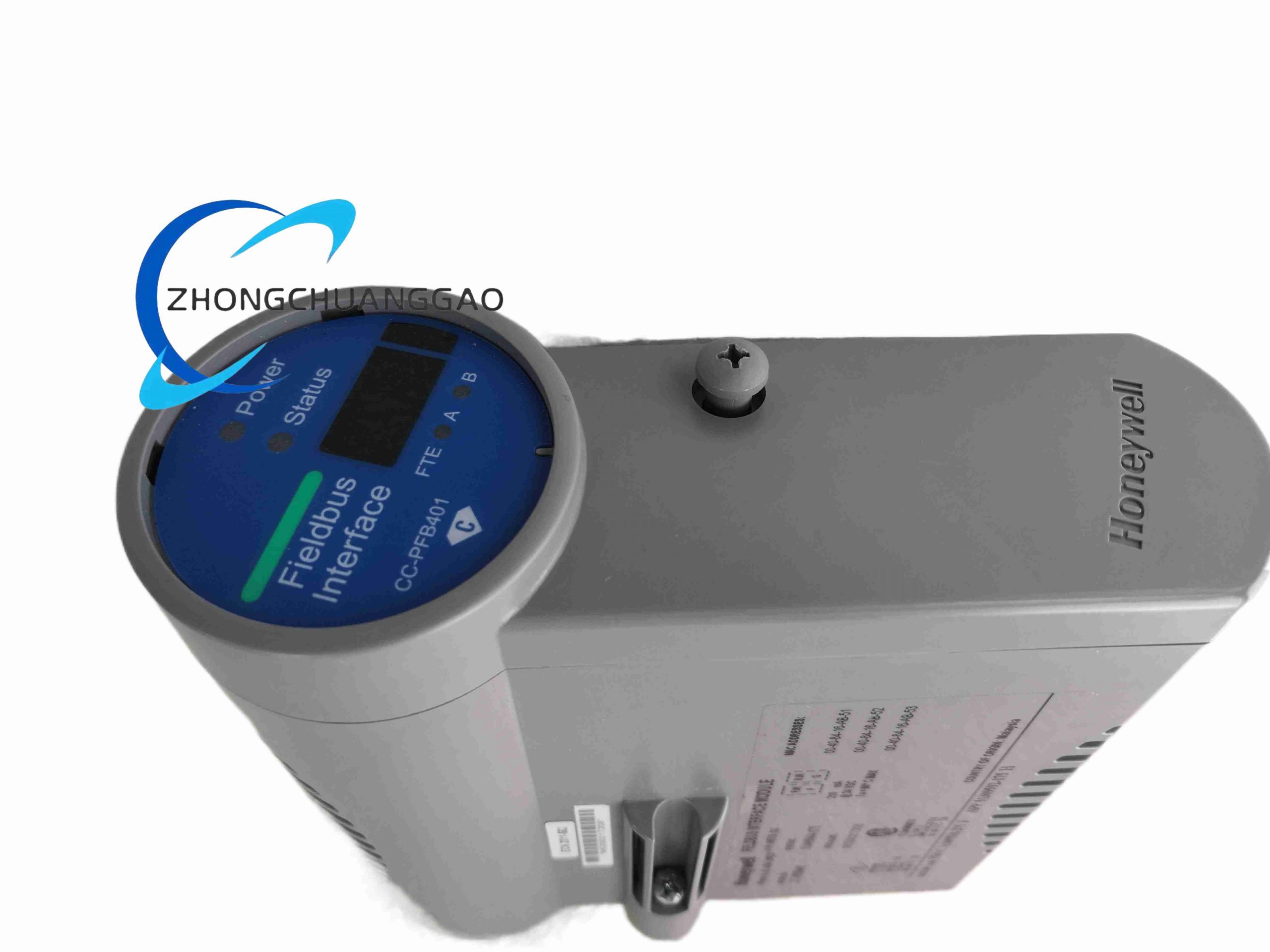
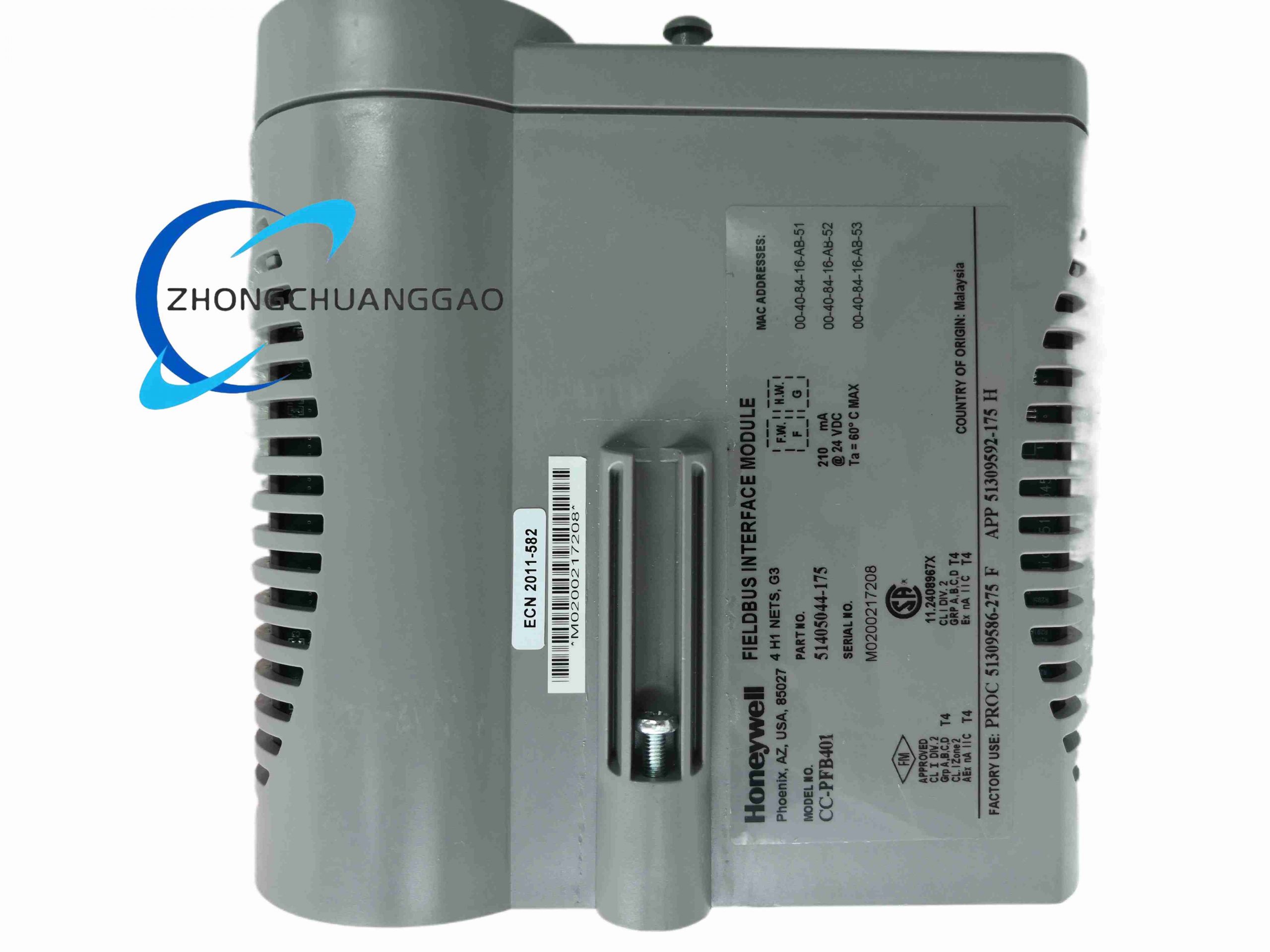
Honeywell CC-PFB401 PROFIBUS-DP Fieldbus Interface Module
Product Introduction
CC-PFB401 provides PROFIBUS-DP master interfacing between Honeywell Series C controllers and external fieldbus networks. It links C300 or compatible control platforms to PROFIBUS remote I/O, drives, instruments and actuators for cyclic and acyclic data exchange.
Description
Technical Specifications
Part numbers: 51405044-175, 51405044-176
Protocol: PROFIBUS-DP, IEC 61158 compliant, DP master Class 1
Ports: 2 independent PROFIBUS-DP channels
Baud rate: 9.6 kbps to 12 Mbps auto or manually configured
Node capacity: up to 125 slave nodes per port under protocol rules
Electrical isolation: galvanic isolation between fieldbus ports and control backplane
Backplane power: supplied from Series C chassis; typical dissipation around 6 W in related PROFIBUS configurations
Indicators: LEDs for power, module health, port activity and fault status
Operating temperature: 0°C to 60°C in standard Series C cabinet installations; some carrier and firmware revisions support -20°C to 55°C
Storage temperature: -40°C to 85°C
Dimensions: approximately 267 mm by 178 mm by 51 mm
Weight: approximately 0.45 kg
Compliance: CE, UL, CSA and relevant industrial EMC standards per revision
Functional Features
Dual-port DP master operation. Cyclic process data exchange and acyclic parameter/read diagnostic exchange. Automatic baud-rate and token management through engineering configuration. Galvanic isolation protects backplane logic from fieldbus transients. Extensive LED diagnostics reduce troubleshooting time.
Application Scenarios
PROFIBUS remote I/O racks, variable-frequency drives, smart transmitters, motor protection relays, valve manifolds, packaging and discrete machines, legacy TPS/TDC3000 expansion where supported, and multi-vendor DCS fieldbus integration.
Performance Parameters
Twelve Mbps maximum segment speed provides high-throughput control data. Each port can address a large slave table; actual scan performance depends on baud rate, telegram size, number of slaves and C300 loading.
Material Composition
Industrial PCB with PROFIBUS transceivers, microprocessor communication fabric, galvanic isolators, metal backplane connector, DB-type or dedicated fieldbus connectors on the IOTA, and molded diagnostic faceplate.
Structural Characteristics
Series C slot module paired with a PROFIBUS IOTA, such as CC-TFB401 or CC-TFB411 depending on system configuration. Field connector and terminators are located at the IOTA or external bus junction, not on the electronic module alone.
Working Principle
The module receives controller data from the Series C backplane. The PROFIBUS stack serializes output telegrams, manages token passing and polls slaves on each port. Return telegrams are decoded into controller memory for process variables, status bits and diagnostic events. Galvanic isolation separates field common-mode voltage from the control system.
Installation Requirements
Mount CC-PFB401 in the assigned Series C slot and connect the PROFIBUS IOTA. Import the correct GSD files into the engineering tool, assign station addresses, set baud rate and segment length according to PROFIBUS distance rules. Install terminating resistors at both physical ends of each 9.6 kbps-to-12 Mbps segment. Bond cable shield to the cabinet ground clamp.
Usage Precautions
Power down the carrier before module replacement unless hot-swap is expressly enabled. Never operate a segment without proper end termination at 12 Mbps. Keep node count, cable length and repeater rules within PROFIBUS standards. Verify galvanic-isolation grounding before connecting devices from different electrical systems. Check LED fault patterns after each configuration download.
-500x500.jpg)
-500x500.jpg)
Reviews
There are no reviews yet.