
Product Short Description
Product Overview
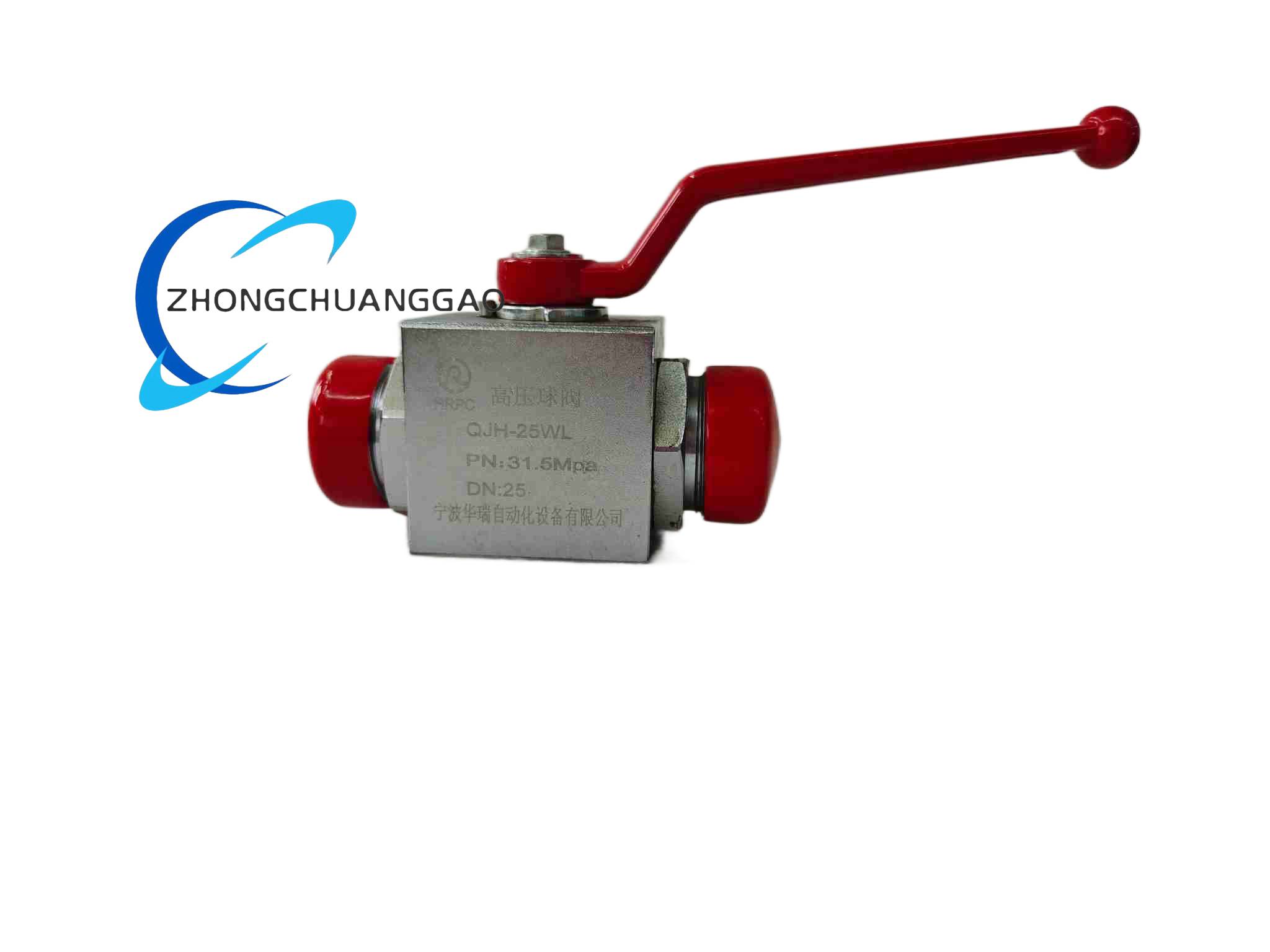
Manual two-way cut-off ball valve specially designed for industrial hydraulic oil pipelines, manufactured by YOUYAN hydraulic component brand. It adopts integral forged valve body structure, with flange connection method, used to fully open or cut off hydraulic oil circuit in hydraulic stations, machine tool hydraulic systems, engineering machinery hydraulic loops.
Description
Core Technical Specifications
- Model Definition: QJH = hydraulic ball valve series; 25 = nominal diameter DN25; WL = flange connection form
- Nominal Diameter: DN25
- Working Pressure Rating: Two standard pressure grades: 21MPa, 31.5MPa
- Applicable Medium: Anti-wear hydraulic oil, hydraulic fire-resistant fluid, lubricating oil
- Medium Operating Temperature Range: -20°C ~ +80°C; customized high-temperature version supports up to 120°C
- Operation Mode: Manual long handle rotary operation, 90° full open / full close stroke
- Flange Standard: GB/T 9113 integral steel flange, matching DN25 hydraulic pipeline flange
- Sealing Performance: Zero leakage under rated working pressure; air tightness test pressure 1.5× rated working pressure
Function Features
- Ultra-Low Fluid Resistance: Spherical flow channel straight-through design, flow resistance loss far lower than globe valves, no pressure loss during full open state
- Quick Switch Operation: Only 90° handle rotation completes full opening or closing; rapid cut-off prevents pipeline pressure impact damage to downstream components
- Replaceable Wear Parts: Ball sealing ring, valve stem packing can be individually replaced without replacing the entire valve body, greatly reducing maintenance spare part costs
- High Pressure Bearing Capacity: Integral steel forging eliminates casting pores, can stably bear 31.5MPa industrial high-pressure hydraulic system long-term operation
- Anti-Leakage Dual Sealing Design: Valve ball PTFE composite sealing ring + valve stem fluorine rubber packing double sealing structure, resistant to hydraulic oil corrosion, long service life
- Surface Anti-Corrosion Treatment: Valve body outer surface chrome plating treatment, wear-resistant, rust-proof, easy to clean oil stains
Application Scenarios
- Central hydraulic station oil supply main pipeline cut-off control
- CNC lathe, machining center hydraulic oil circuit on-off
- Injection molding machine, die-casting machine hydraulic system pipeline isolation
- Hydraulic test bench, hydraulic press equipment oil circuit maintenance isolation
- Construction machinery, metallurgical equipment auxiliary hydraulic loop cut-off
Material & Structural Characteristics
- Valve Body Material: Carbon steel integral forging; optional stainless steel 304 for anti-corrosion fluid medium
- Spherical Core Material: Stainless steel solid ball, mirror polishing surface to reduce sealing ring wear
- Sealing Components: Main sealing ring: reinforced PTFE filled with carbon fiber; valve stem packing: fluorine rubber FKM
- Handle Material: Carbon steel bent long handle, surface spray anti-slip black paint; handle and valve stem fixed by anti-loose pin
- Flange Structure: Integrated flange and valve body forging, evenly distributed bolt holes, high connection rigidity under high pressure
- Internal Flow Channel: Smooth straight-through circular flow channel, no dead oil cavity, prevent hydraulic oil carbon deposition
Working Principle
- Open State: Rotate the manual handle 90° counterclockwise, drive the internal spherical core to rotate synchronously; the through hole on the spherical core aligns completely with the pipeline flow channel, hydraulic oil passes through unobstructed
- Closed State: Rotate the handle 90° clockwise, the spherical core rotates to block the pipeline flow channel completely; the PTFE sealing ring closely fits the spherical core surface to block all hydraulic oil flow, achieving zero leakage cut-off
- Sealing Compensation Mechanism: The valve body internal spring pre-tightens the sealing ring, automatically compensates for sealing ring wear after long-term use, maintains long-term zero leakage performance
Installation Requirements
- Pipeline Installation Direction: The valve can be installed horizontally or vertically on the pipeline, no flow direction restriction (bidirectional cut-off function)
- Flange Matching Requirement: Use standard DN25 carbon steel flange with matching bolt hole spacing; install fluorine rubber flange gaskets between two flange surfaces to prevent interface oil leakage
- Handle Operation Space: Reserve at least 150mm clearance around the valve handle to ensure unobstructed 90° rotation without collision with surrounding pipelines or equipment frames
- Pipeline Stress Elimination: Do not install the valve at the position where the pipeline bears bending stress; add pipeline fixed supports on both sides of the valve to avoid flange deformation caused by pipeline vibration
- Cleanliness Before Installation: Thoroughly flush the entire pipeline with clean hydraulic oil before valve installation to remove iron filings, welding slag and other impurities, prevent hard particles from scratching the spherical sealing surface
Operation & Maintenance Notes
- Do not use pipe wrenches, extension bars to force the valve handle for opening/closing; excessive torque will twist off the valve stem or damage the internal spherical core
- Regularly check flange bolts every 6 months; re-tighten loose bolts caused by hydraulic pipeline vibration to prevent flange surface oil leakage
- If internal leakage occurs after long-term use, only replace the PTFE sealing ring; the spherical core and valve body can be reused without replacement
- The valve stem packing will age after long-term high-temperature working environment; if oil seeps from the valve stem gap, replace the fluorine rubber packing in time
- When the hydraulic system is performing maintenance and oil drainage, fully close this ball valve to isolate the equipment hydraulic loop, avoid system oil backflow polluting maintenance components
- Store spare valves in dry indoor environment; seal flange ports with plastic plugs to prevent dust, moisture entering the valve body and corroding internal spherical components


Reviews
There are no reviews yet.