
Product Short Description
Product Introduction
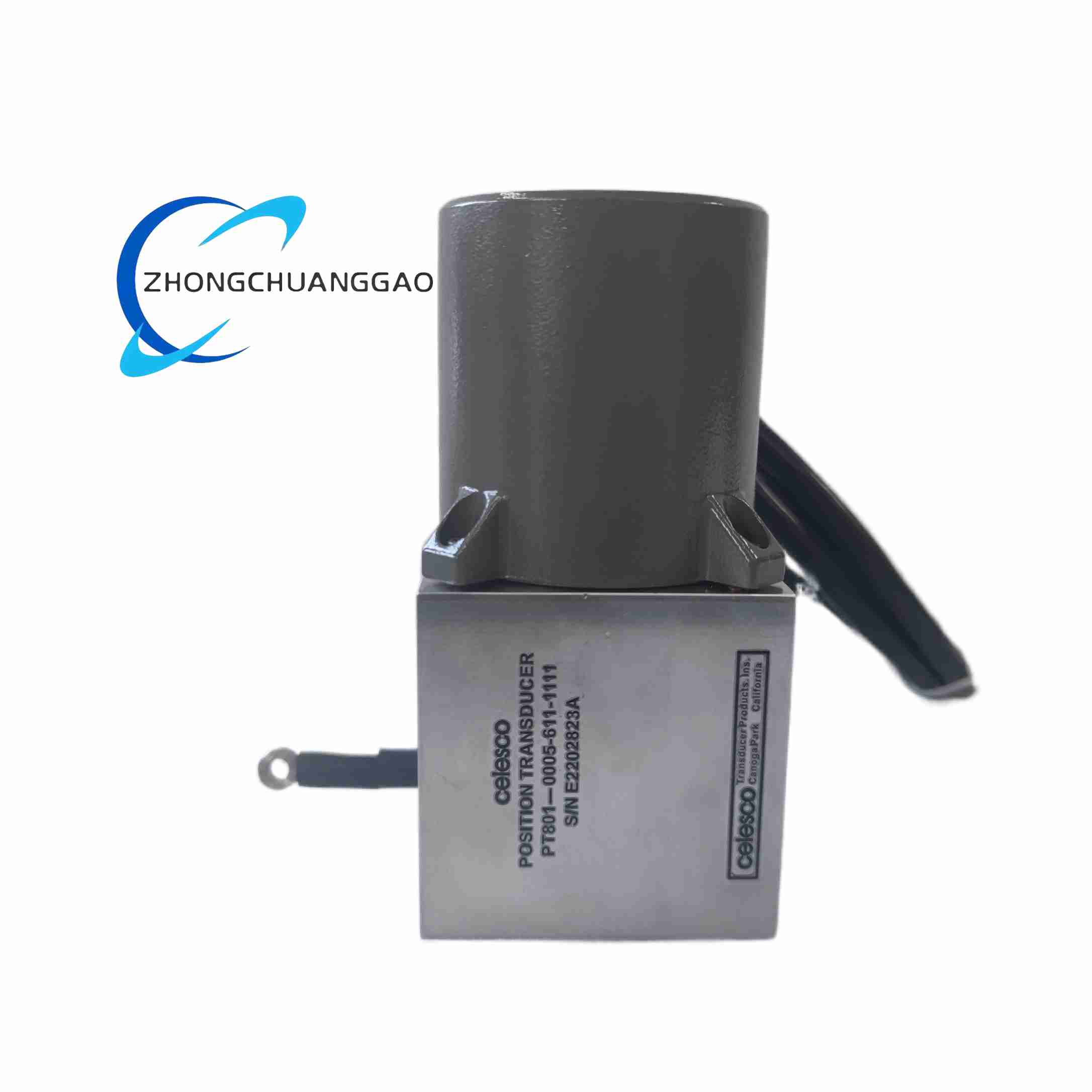
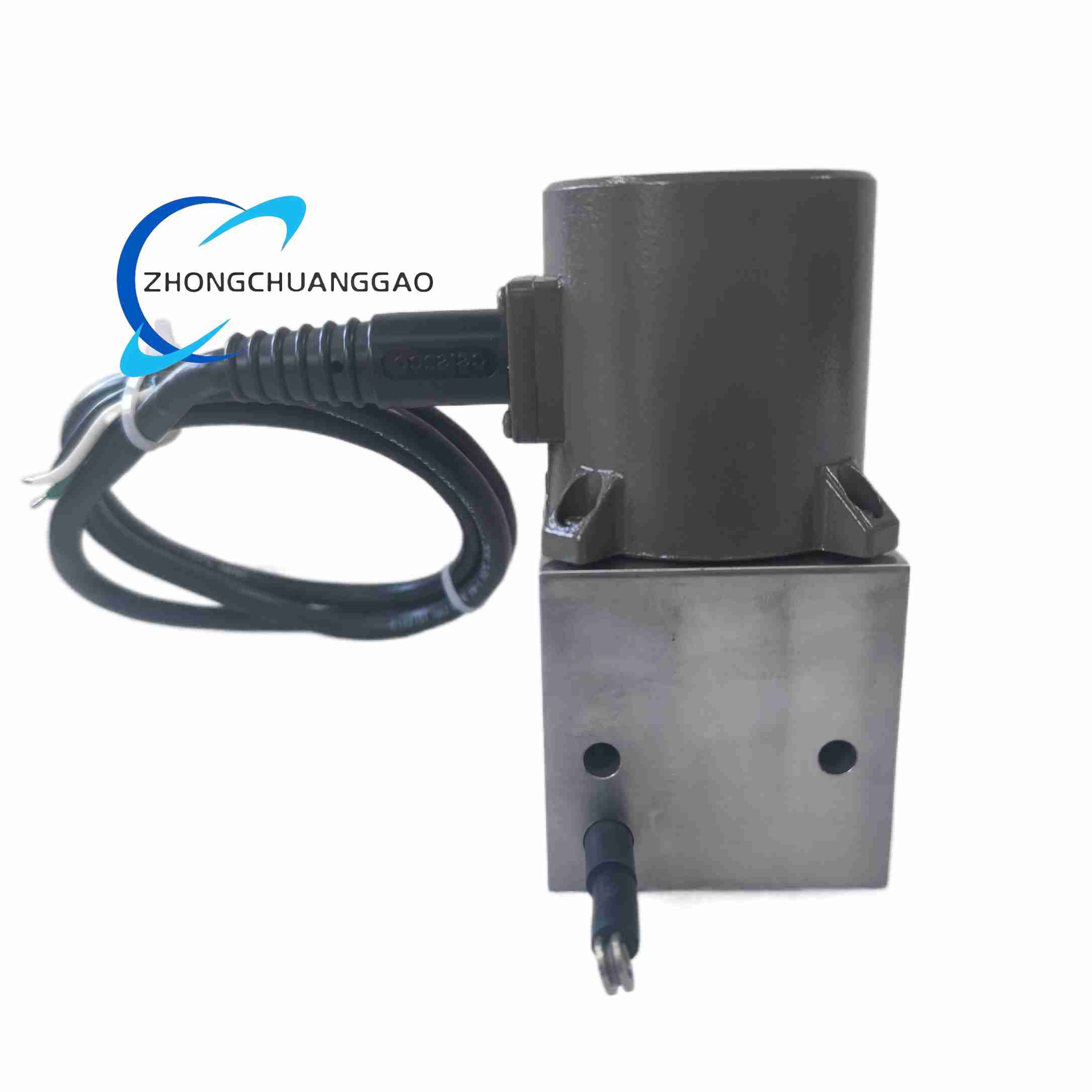
Manufactured by TE Connectivity CELESCO brand, PT801 series is heavy-duty submersible draw-wire linear position sensor, model PT801-0005-611-111 is configured with full measurement stroke range of 5 inches (127 mm), two-wire 4–20 mA analog current output signal, stainless steel fully sealed housing with IP68 submersible protection grade. It converts linear mechanical displacement motion of moving industrial equipment components into proportional standard analog electrical signal output
Description
Core Technical Specifications
- Displacement Measurement Mechanical Parameters
- Full Stroke Measuring Range: 5 inches / 127 mm linear travel
- Retractable Measuring Cable Material: High-strength stainless steel multi-strand wire cable, diameter 0.6 mm
- Built-in Return Spring Type: High fatigue stainless steel constant force spiral spring, uniform cable retraction tension without tension fluctuation at different stroke positions
- Maximum Allowable Cable Pull Speed: 1.2 m/s linear pull speed continuous operation
- Mechanical Service Life: Minimum 1,000,000 full stroke extension-retraction cycles without spring fatigue failure
- Electrical Output & Power Supply Parameters
- Supply Input Voltage Range: 10 V DC ~ 36 V DC universal industrial DC power supply
- Output Signal Type: Two-wire loop powered 4–20 mA analog current signal
- Output Signal Correspondence: 4 mA current output corresponds to 0 mm minimum stroke position; 20 mA current output corresponds to full 127 mm maximum stroke position
- Minimum Loop Load Resistance: 0 Ω, maximum allowable loop load resistance 500 Ω under 24 V DC supply voltage
- Electrical Isolation: Full galvanic isolation between internal potentiometer measuring circuit and external two-wire output loop circuit, isolation voltage 1500 V DC
- Accuracy & Linear Performance Parameters
- Independent Linear Error (Full Scale): ±0.25% FS maximum deviation
- Hysteresis Error: ≤ ±0.05% FS bidirectional stroke measurement return error
- Repeatability Error: ≤ ±0.02% FS repeated stroke position measurement consistency deviation
- Temperature Drift Coefficient: ±0.015% FS per ℃ temperature variation within operating temperature range
- Physical & Mechanical Dimensions Parameters
- Sensor Main Housing Outer Diameter: 63.2 mm
- Overall Housing Length (Excluding Cable Outlet Fitting): 82 mm
- Measuring Cable Exit Fitting Thread Standard: 1/2 NPT sealed waterproof threaded connector
- Net Weight of Complete Sensor Unit: 480 g
- Environmental Operating & Protection Parameters
- Operating Temperature Range: -18 ℃ ~ +93 ℃ (0 °F ~ 200 °F)
- Storage Temperature Range: -40 ℃ ~ +100 ℃
- Submersible Waterproof Protection Grade: IP68 fully sealed, continuous submersion up to 300 feet water depth (130 psi water pressure)
- Environmental Media Resistance: Resistant to fresh water, salt water, hydraulic oil, cutting coolant, weak acid and alkaline industrial cleaning liquid
- Shock & Vibration Standard: IEC 60068-2-27 shock test (50 g peak acceleration), IEC 60068-2-6 vibration test compliant for heavy machinery and marine equipment applications
- Compliance Certification Standards
- Industrial Product Certification: CE, RoHS, UL industrial sensor safety certification
- Marine & Offshore Equipment Compliance: DNV GL marine equipment environmental adaptability standard qualified
Function & Feature Highlights
- Fully sealed stainless steel IP68 submersible housing design, capable of continuous long-term operation fully submerged in fresh water, salt water or industrial hydraulic oil tanks, no internal circuit water leakage short-circuit failure risk, uniquely applicable to underwater hydraulic cylinder, marine mechanical equipment displacement measurement scenarios unavailable to ordinary non-submersible draw-wire sensors.
- Two-wire loop powered 4–20 mA standard industrial analog output signal, compatible with all mainstream industrial PLC analog input modules, DCS system analog signal acquisition cards, digital display meters and data recorders; single pair of shielded twisted-pair wires completes both sensor power supply and displacement signal transmission, greatly simplifying field wiring harness layout and reducing cable material cost.
- High-precision conductive plastic multi-turn precision potentiometer internal measuring element, low wear sliding contact structure, stable long-term measurement linearity and minimal hysteresis error, measurement accuracy far superior to carbon film potentiometer draw-wire sensors for precision closed-loop motion control applications requiring strict position feedback accuracy.
- Built-in constant force stainless steel retraction spring assembly with balanced tension design: measuring cable maintains consistent retraction pulling force at any stroke extension position, eliminating uneven cable tension caused by variable spring compression that leads to measuring signal jitter and inaccurate position feedback during dynamic reciprocating motion of industrial equipment.
- Integrated heavy-duty mechanical cable guide outlet structure with wear-resistant ceramic cable eyelet liner at cable exit point: stainless steel measuring cable slides against smooth ceramic liner surface during repeated extension and retraction cycles, drastically reducing cable surface friction wear, extending service life of the thin stainless steel measuring cable by more than 3 times compared to plastic or metal bare cable outlet fittings.
- Wide universal DC supply voltage compatibility range (10–36 V DC), compatible with all standard industrial control cabinet DC power supplies (12 V DC, 24 V DC, 30 V DC), no need to select different sensor models matched to different on-site DC supply voltage specifications, simplifying spare parts inventory management for maintenance teams.
- Complete internal overvoltage, reverse polarity and transient surge protection circuit integrated inside sensor sealed housing: external power supply reverse positive/negative wiring, transient voltage surge spikes generated by nearby frequency converters or switching relays will not damage internal precision potentiometer and signal conditioning circuit components, greatly reducing on-site sensor failure rate caused by field wiring errors and industrial electromagnetic interference noise.
Material & Structural Composition
- Main Sensor Housing Material: 316 marine grade stainless steel seamless tube housing, fully CNC machined integrated one-piece housing structure without split housing assembly seams, all housing threaded joints equipped with fluorosilicone rubber O-ring sealing gaskets for full IP68 waterproof sealing performance; 316 stainless steel material provides excellent corrosion resistance to salt water, brine, chemical weak corrosive liquid media compared to ordinary 304 stainless steel.
- Measuring Cable Material: Multi-strand 304 stainless steel wire braided cable with thin low-friction polyurethane outer coating; polyurethane coating prevents stainless steel wire strands from fraying and reduces sliding friction coefficient against ceramic cable guide liner, resisting hydrolysis degradation under long-term underwater submerged operation environment.
- Internal Measuring Element Core Material: High-precision conductive plastic multi-turn potentiometer, potentiometer resistance track made of wear-resistant carbon conductive plastic composite material, sliding contact arm made of platinum-rhodium alloy precious metal with ultra-low contact resistance and anti-oxidation performance for long-term stable analog signal output.
- Retraction Spring Assembly Material: High fatigue strength silicon-chromium alloy stainless steel spiral constant force spring, heat-treated to eliminate internal residual stress after forming, maintaining uniform constant retraction tension over millions of reciprocating extension cycles without spring elastic fatigue degradation and tension attenuation.
- Sealing & Insulation Auxiliary Materials: All internal circuit board insulating substrates are high Tg FR4 flame-retardant circuit boards; internal wire harness insulation sleeves made of fluorosilicone high-temperature resistant rubber; all sealing gaskets and O-rings use fluorosilicone rubber material with excellent resistance to hydraulic oil, coolant, salt water and high temperature aging degradation, service life far exceeding ordinary nitrile rubber sealing materials.
- Cable Outlet Guide Fitting Material: CNC machined 316 stainless steel threaded fitting with embedded solid alumina ceramic wear-resistant eyelet liner at cable sliding passage; alumina ceramic material possesses ultra-high surface hardness and extremely low friction coefficient, minimizing abrasion damage to polyurethane coated stainless steel measuring cable during repeated sliding motion.
Working Principle
- Mechanical Displacement Transmission Stage: The free end of the sensor’s stainless steel measuring cable is mechanically fixed to the moving target industrial equipment component whose linear displacement requires measurement (hydraulic cylinder piston rod, mechanical sliding table, valve spool). When the target component moves linearly outward to extend the measuring cable, the internal constant force retraction spring assembly is mechanically compressed by cable pulling tension; when the target component retracts linearly inward, the compressed spring releases stored mechanical elastic energy to pull the measuring cable back into the sensor housing automatically without cable slack accumulation.
- Mechanical Rotation Conversion Stage: The stainless steel measuring cable winds onto a precision machined cylindrical spool drum mounted coaxially with the multi-turn conductive plastic potentiometer rotating shaft; linear extension or retraction motion of the measuring cable drives synchronous rotational rotation of the spool drum and potentiometer rotating shaft, converting the straight-line linear displacement motion of the target equipment into proportional rotational angular displacement of the potentiometer rotating shaft.
- Analog Electrical Signal Conversion Stage: The multi-turn conductive plastic potentiometer connected to the rotating shaft forms a variable resistance voltage divider circuit powered by the external 10–36 V DC two-wire loop supply voltage; rotation of the potentiometer shaft changes the sliding contact position along the potentiometer conductive plastic resistance track, generating a variable analog voltage signal proportional to the rotational angle (and thus proportional to the linear measuring cable stroke displacement). The built-in signal conditioning circuit converts this variable voltage signal into standard two-wire loop powered 4–20 mA analog current output signal: minimum 4 mA output corresponds to zero cable extension stroke, maximum 20 mA output corresponds to full 127 mm maximum cable extension stroke, linear proportional correspondence between measured physical displacement value and output analog current signal magnitude.
- Signal Output & Fault Protection Stage: The conditioned 4–20 mA analog current signal is transmitted through the two-wire shielded cable to external data acquisition equipment (PLC analog input module, digital display meter, data logger). The internal integrated protection circuit continuously monitors input supply voltage polarity and voltage magnitude; if reverse power supply wiring, overvoltage surge or short-circuit loop fault occurs, the hardware protection circuit instantly limits output current magnitude to prevent permanent damage to internal potentiometer and signal conditioning circuit components, maintaining sensor integrity until the external wiring fault is eliminated.
Reviews
There are no reviews yet.