
Product Short Description
Product Brief Introduction
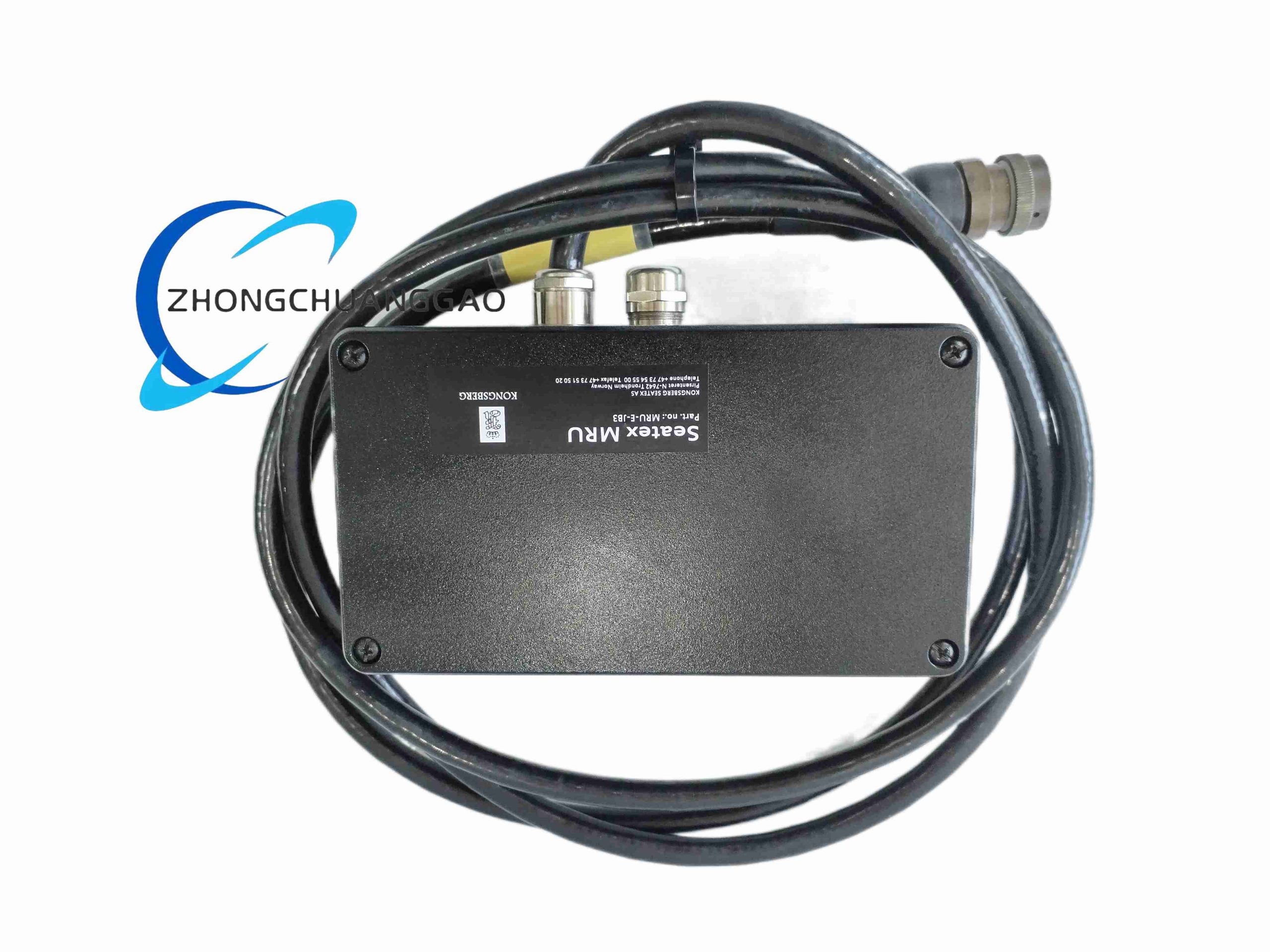
High-precision marine inertial motion measurement unit developed by Kongsberg Maritime, integrated with dedicated JB3 junction box for ship wiring expansion, uses MEMS inertial sensor to measure real-time vessel heave, roll, pitch and three-axis acceleration, core component of marine dynamic positioning and helideck monitoring systems.
Description
Core Technical Specifications
- Sensing Core: 3-axis MEMS accelerometer + 3-axis MEMS gyroscope solid-state sensor
- Measurement Accuracy: Roll/Pitch ±0.05° full range
- Measurable Motion Parameters: Heave displacement, heave velocity, roll angle, pitch angle, three-axis linear acceleration
- Built-in Algorithm: PFreeHeave phase-free heave compensation algorithm
- Power Supply: 10–30 VDC wide range marine DC power
- Communication Interfaces: Ethernet TCP/IP, RS422 serial port
- Protection Rating: IP67 fully sealed stainless steel housing
- Overall Dimensions: 100 mm × 100 mm × 50 mm (sensor main unit); JB3 junction box matched split assembly
- Operating Temperature: -25 °C ~ +70 °C
- Shock Resistance: 10g peak vibration impact resistance, marine standard DNV certified
Function & Performance Features
- Solid-state sensor without mechanical rotating parts, zero mechanical wear, long service life at sea
- PFreeHeave algorithm eliminates phase delay of heave signal, accurate measurement under long ocean swell conditions
- Support external ship speed and heading signal input to optimize motion calculation accuracy during vessel turning
- JB3 junction box realizes multi-channel signal branching, one MRU-E unit can supply motion data to multiple on-board equipment simultaneously
- Windows configuration software supports vector arm calibration, adjust measurement compensation point according to actual installation position
- DNV marine equipment certification, meets offshore platform and ship safety equipment standards
Working Principle
- MEMS gyroscope measures angular velocity of roll and pitch motion; accelerometer collects three-axis linear acceleration data
- Built-in high-speed MCU integrates inertial data, uses PFreeHeave filtering algorithm to separate heave motion from vessel horizontal movement
- External ship speed and heading signals are fused to correct motion calculation error caused by vessel turning acceleration
- Real-time motion data is output via Ethernet/serial port to dynamic positioning system, multi-beam sonar and helideck monitoring host
- JB3 junction box distributes single sensor signal to multiple receiving devices without signal attenuation
Material Composition & Structural Characteristics
- Sensor Main Unit Housing: 316L stainless steel integrated casting, salt spray corrosion resistant for marine environment
- JB3 Junction Box: Glass fiber reinforced plastic sealed shell, internal terminal block with anti-loose spring wiring terminals
- Internal Sensor Chip: Hermetically sealed MEMS inertial chip, humidity and moisture isolation protection
- Cable Interface: Waterproof marine grade cable gland, fluorine rubber sealing ring to prevent seawater fog infiltration
Installation Requirements
- Install sensor main unit at vessel center of gravity or helideck geometric center as specified by system design
- Fix unit with four M8 stainless steel bolts, mounting base must be horizontal to avoid initial measurement offset
- JB3 junction box can be installed separately in electrical room, use shielded marine cable to connect sensor and junction box
- All cable glands must be tightened with waterproof sealant filling to resist seawater mist corrosion
- Reserve 100 mm maintenance space around unit for regular calibration and wiring inspection
Application Scenarios
- Offshore vessel dynamic positioning (DP) systems
- Ship helideck motion severity index (MSI) monitoring
- Multi-beam echo sounder seabed mapping attitude compensation
- ROV/AUV underwater robot attitude measurement
- Offshore wind turbine installation vessel heave compensation control
- Marine seismic survey ship motion correction
Usage Precautions
- Execute vector arm recalibration after any vessel refit or sensor position change
- Clean stainless steel housing salt spray deposits every month when operating in coastal high-salinity waters
- Do not install near large marine thrusters to avoid vibration interference affecting measurement precision
- Regularly check junction box terminal tightness every quarter to prevent signal open circuit caused by sea vibration
- Avoid impact collision during ship maintenance; MEMS sensor internal chip is sensitive to strong impact
Reviews
There are no reviews yet.