
Product Short Description
Product Overview
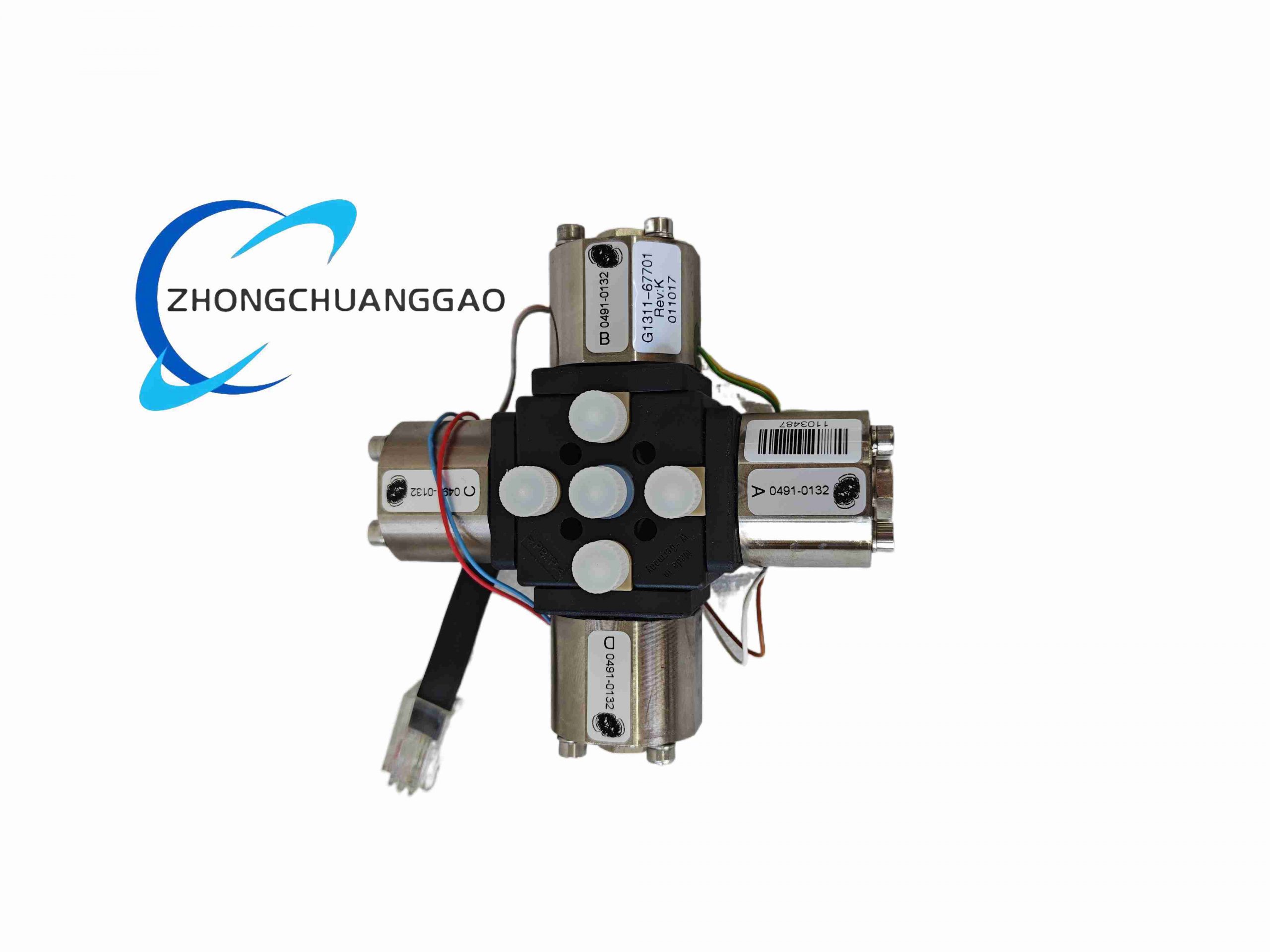
This assembly is the core gradient mixing actuator for Agilent analytical high-performance liquid chromatography systems, responsible for proportional metering of four independent mobile-phase solvent channels to generate continuous linear, step, and segmented elution gradients. It directly determines chromatogram retention time reproducibility, peak symmetry, and quantitative analysis accuracy in LC separation workflows.
Description
Technical Specifications
- Channel Count: 4 independent solvent inlet channels (Channel A/B/C/D)
- Working Pressure Range: 0–400 bar maximum system backpressure
- Gradient Composition Precision RSD: ≤1% (OEM factory calibrated; OQ acceptance standard RSD <2%)
- Solenoid Operating Voltage: 24 VDC pulse-width modulation drive signal
- Switching Response Time: ≤12 ms single channel open/close actuation
- Nominal Flow Compatibility: 0.01–10 mL/min full pump flow range
- UNSPSC Classification Code: 41115700
Material Composition
- Valve Sealing Core: Synthetic ruby single-piece poppet with PTFE composite spring retainer
- Fluid Contact Manifold: 316L stainless steel corrosion-resistant alloy
- Solenoid Housing: High-temperature reinforced PA66 glass-filled plastic
- Connection Fittings: 1/16 inch standard HPLC stainless steel compression ferrules
- Wiring Harness: Shielded fluoropolymer insulated multi-conductor cable
Structural Characteristics
- Integrated four-solenoid compact cross manifold monolithic structure
- Central shared mixing outlet port for combined four-solvent effluent
- Standard 8-pin pluggable electrical signal connector for pump motherboard communication
- Modular single-unit design, fully pre-assembled as a drop-in OEM replacement part
Working Principle
Pulse-width modulation (PWM) signals transmitted from the HPLC pump mainboard independently control energization duration of each of the four solenoids. When energized, electromagnetic force retracts the ruby poppet against the internal spring to open solvent flow; de-energization releases the poppet to seal the fluid channel. The volumetric mixing ratio of each solvent is precisely regulated by adjusting the percentage of open time within each 100 ms PWM cycle, achieving continuous gradient blending without mechanical mixing chambers.
Function & Feature Highlights
- Four-solvent simultaneous gradient preparation for reversed-phase, normal-phase, ion-exchange, and size-exclusion chromatography
- Integrated passive fluid damping to eliminate pressure ripple during rapid solvent ratio switching
- OEM factory pre-calibration eliminates on-site gradient correction post-installation
- Inter-channel cross-contamination isolation design prevents solvent carryover between inlet lines
- Built-in passive degassing auxiliary flow path compatible with online vacuum degasser modules
- Real-time solenoid fault diagnostic feedback transmitted to instrument control software
Core Advantages
- Full OEM mechanical and electrical interchangeability with original factory equipment
- Long service cycle: minimum 2,000,000 switching cycles before seal degradation
- Uniform fluidic path inertness compatible with aqueous, organic, buffered, and acidic mobile phases
- Compact footprint occupies minimal internal pump cabinet space
- Direct traceability to Agilent instrument qualification (IQ/OQ/PQ) compliance standards
Applicable Industries
Pharmaceutical quality control labs, biotech separation research, environmental water pollutant testing, food safety residue detection, clinical diagnostic analytical labs, petrochemical hydrocarbon analysis, forensic toxicology testing laboratories
Installation Requirements
- Vertical mounting orientation matching original manifold gravity flow geometry
- Torque specification for fluid fittings: 0.8 N·m fixed compression torque to avoid tube crimping or leakage
- Complete flushing of all four channels with HPLC-grade methanol prior to instrument power-up
- Shielded wiring harness must be routed separated from high-voltage lamp power cables to eliminate electrical noise interference
- All inlet tubing must use 1/16 inch PEEK or stainless steel HPLC tubing only
Usage Precautions
- Never operate without solvent priming; dry solenoid cycling causes irreversible ruby poppet surface scratching
- Strong oxidizing mobile phases (≥30% hydrogen peroxide, concentrated perchloric acid) permanently degrade PTFE spring components
- System pressure exceeding 400 bar ruptures internal manifold fluid seals and causes permanent assembly failure
- Annual preventative maintenance mandatory: disassembly ultrasonic cleaning of ruby poppets and replacement of PTFE spring gaskets
- Storage of spare assemblies requires submersion in 20% aqueous isopropanol to prevent mineral salt crystallization blockages
Reviews
There are no reviews yet.